Source: Wikimedia Commons
Brown Basilisk
IntermediateBasiliscus vittatus
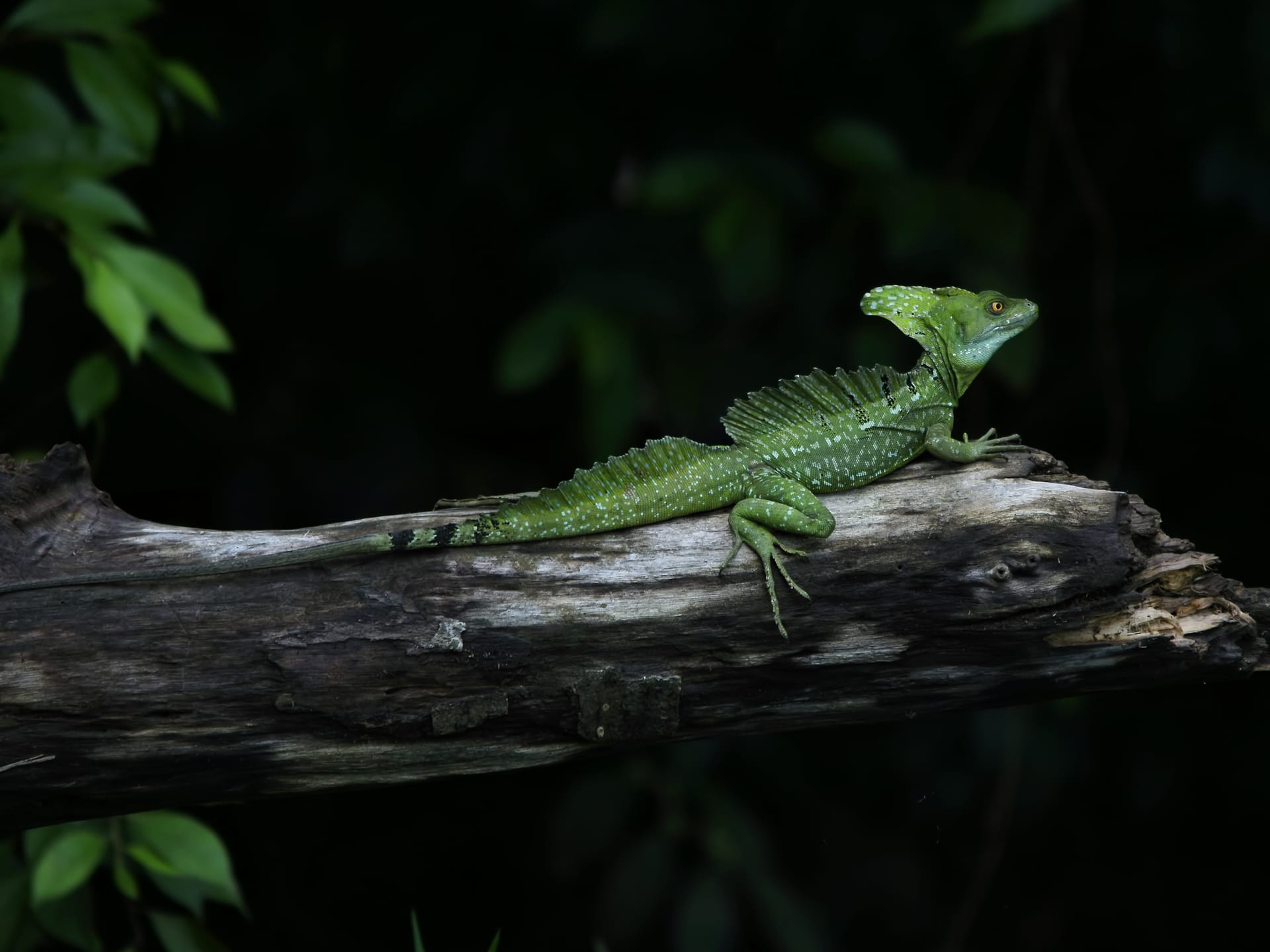
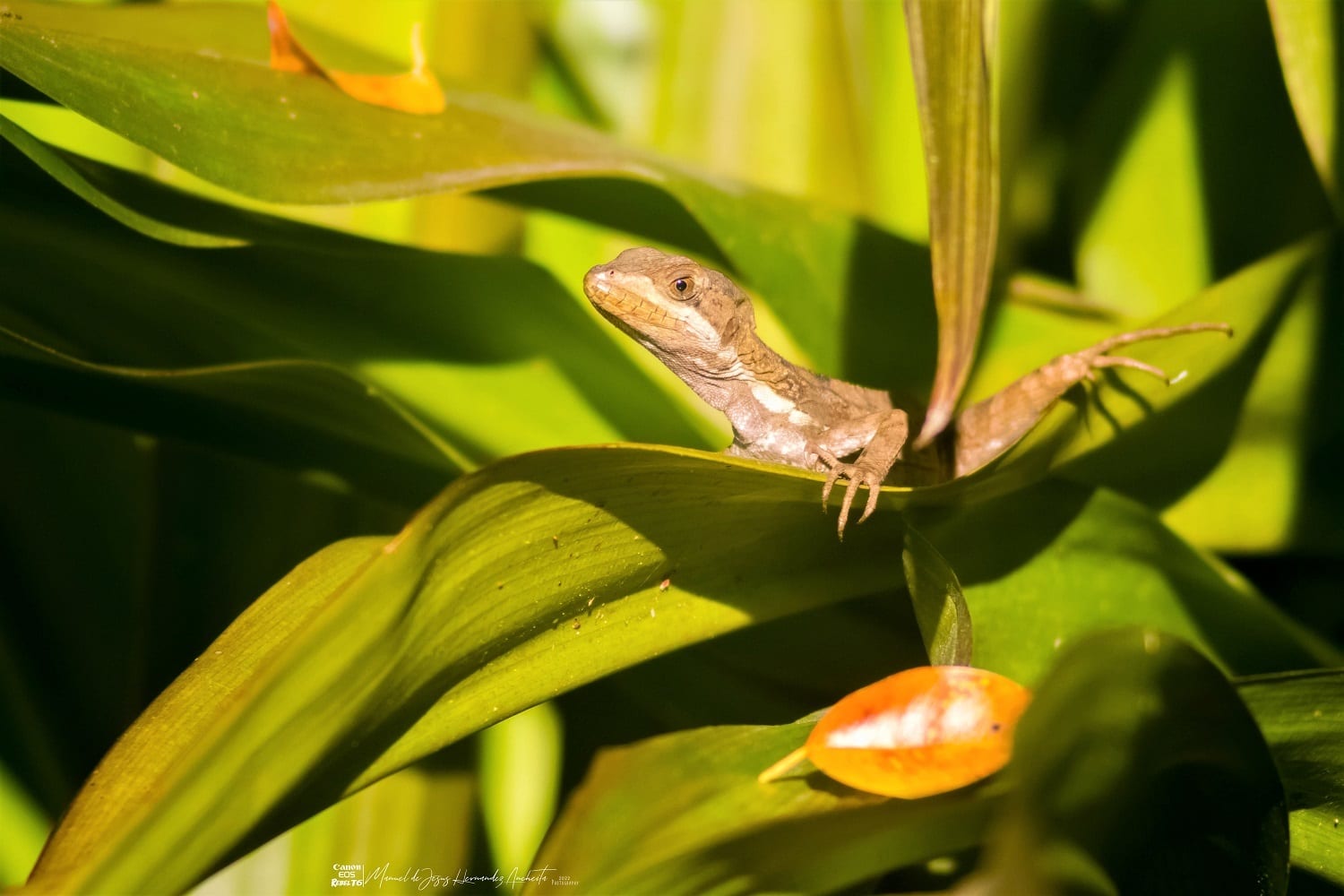
A basilisk in brown to olive-brown with black crossbands and a white stripe running from the eye to the hind legs. It carries a three-part crest on head, back and tail, larger in males, and runs across water on the skin flaps fringing its hind toes.
Difficulty
Intermediate
Lifespan
12-15 years
Size
Males up to 61cm total length, females somewhat smaller; 200-600g
Humidity
45〜75%
Diet
Omnivorous with a strong animal bias: insects, other arthropods, small reptiles, birds and mammals, and fruit
About
The brown basilisk (Basiliscus vittatus) is a corytophanid lizard ranging from Mexico through Central America. Colour is brown to olive brown, with black crossbands on the flanks and dorsal crest and a white stripe running from the eye to the hind legs. Crests are developed at three points, on the head, back and tail, and are larger in males. The hind feet are large, with narrow flaps of skin along the outer edge of each toe that support its ability to run across water. Startled, it either drops into the water or rears onto its hind legs and sprints across the surface. It lives in riparian forest and spends much of its time on branches overhanging water. Omnivorous with a strong animal bias, it takes insects and other arthropods as well as small vertebrates and fruit. It is established as an invasive species in Florida. Large and hardy for the genus, it is nonetheless territorial and has a nervous streak.
Source: Wikipedia (CC BY-SA 4.0)
Lifespan of the Brown Basilisk
The Brown Basilisk lives 12-15 years.
Size of the Brown Basilisk
The Brown Basilisk grows to Males up to 61cm total length, females somewhat smaller; 200-600g.
Males reach 61 cm in total length and females are somewhat smaller, with weights of 200-600 g.
Basic Info
Origin
Mexico through Central America (Guatemala, Belize, El Salvador, Honduras, Nicaragua, Costa Rica and Panama) in riparian forest at 120-1,400 m; introduced to Florida in the United States
Lifespan
12-15 years
Care Specifications
Semi-aggressiveSolitaryBreeding: Moderate
Sources: Reptiles Magazine: Basilisk Lizard Information And Care / Reptiles Magazine: Basilisk Lizard Care And Information / Reptile Database: Basiliscus vittatus
References & Sources
Edited & verified by: BreederDirect editorial team
The taxonomic, regulatory, and husbandry data on this page are compiled and verified against the authoritative primary sources below.
Taxonomy & Authority
Accepted name: Basiliscus vittatus Wiegmann, 1828
Synonyms: Cristasaurus mitrella Gray, 1852, Dactylocalotes elisa Werner, 1893
Authority databases: GBIF · Reptile Database
Nomenclature follows global taxonomic authority databases.
Regulations & Conservation Status
Not CITES-listedIUCN LC · Least Concern
It is not listed in the CITES appendices (no record in Species+). Its IUCN Red List assessment is Least Concern (LC). It is not included among the designated animals specified in the Act on Welfare and Management of Animals Enforcement Decree, nor among the designated invasive species under the Invasive Species Law Enforcement Decree. It is established as an invasive species in Florida, United States.
Sources: CITES Species+ (species not listed) / IUCN Red List
Regulations may change. Always verify the latest information with the relevant authorities.
Brown Basilisk Listings
Loading latest listingsFind listings for this species