Source: Wikimedia Commons
Trinket Snake
IntermediateCoelognathus helena
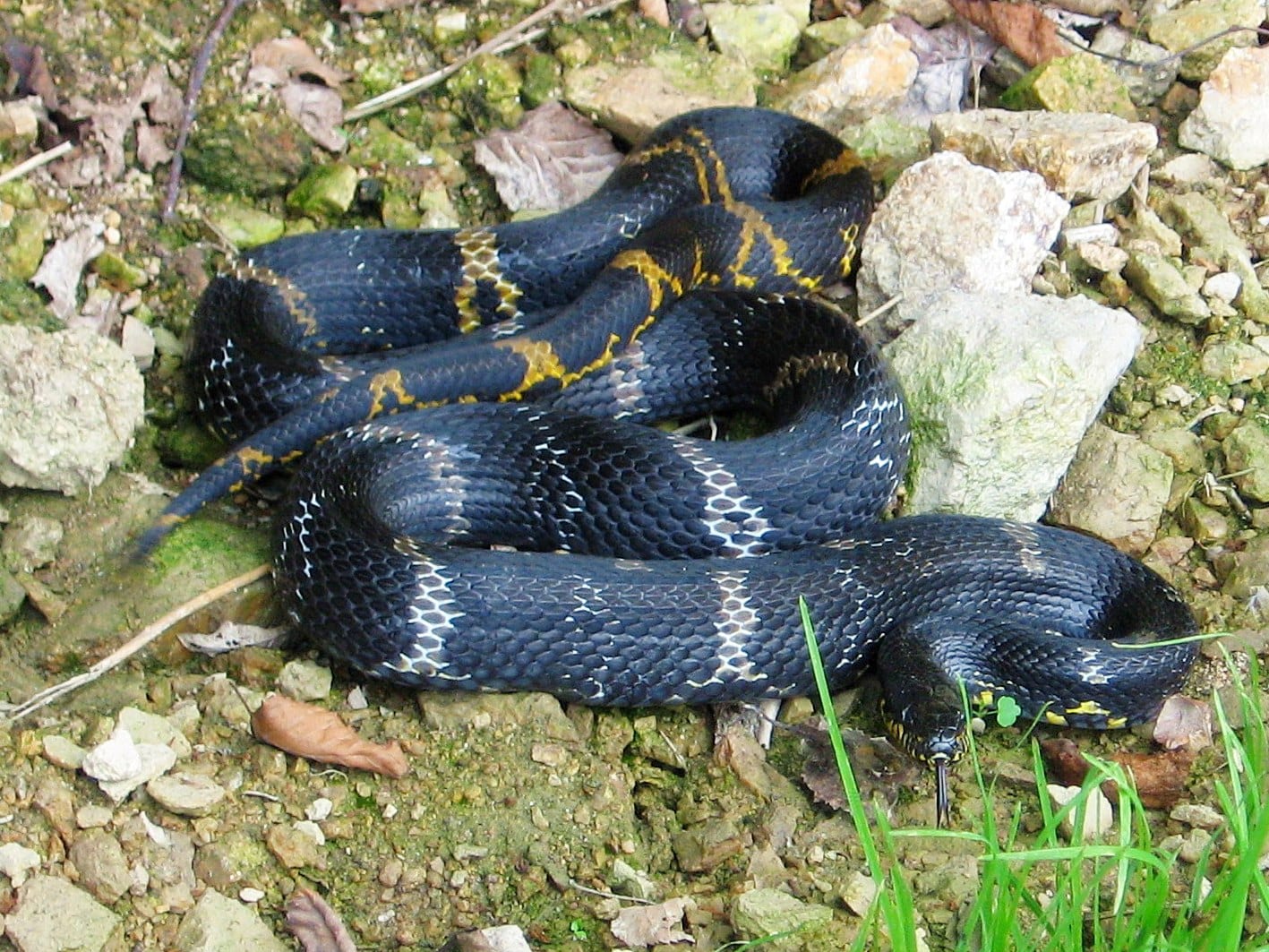
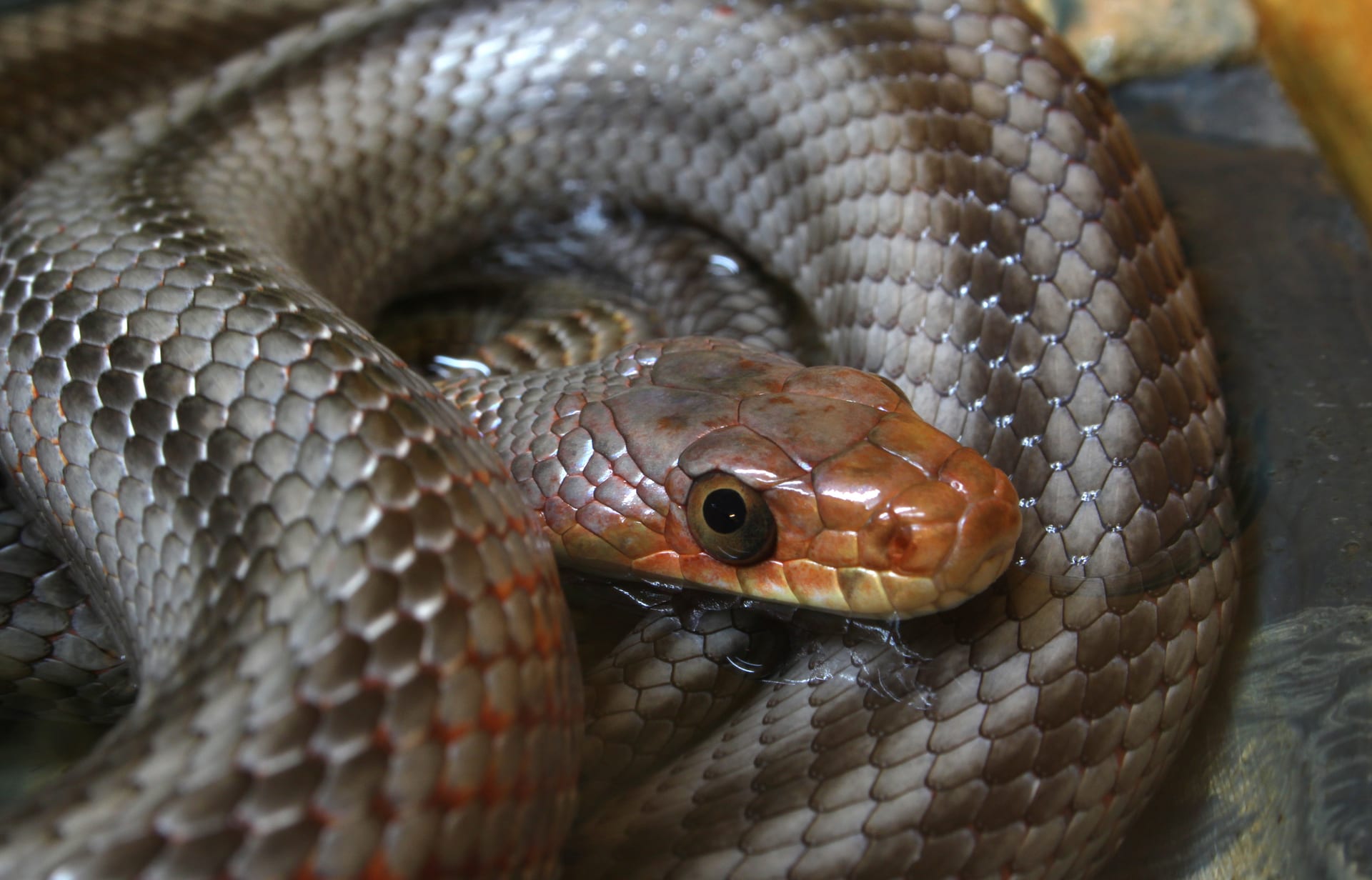
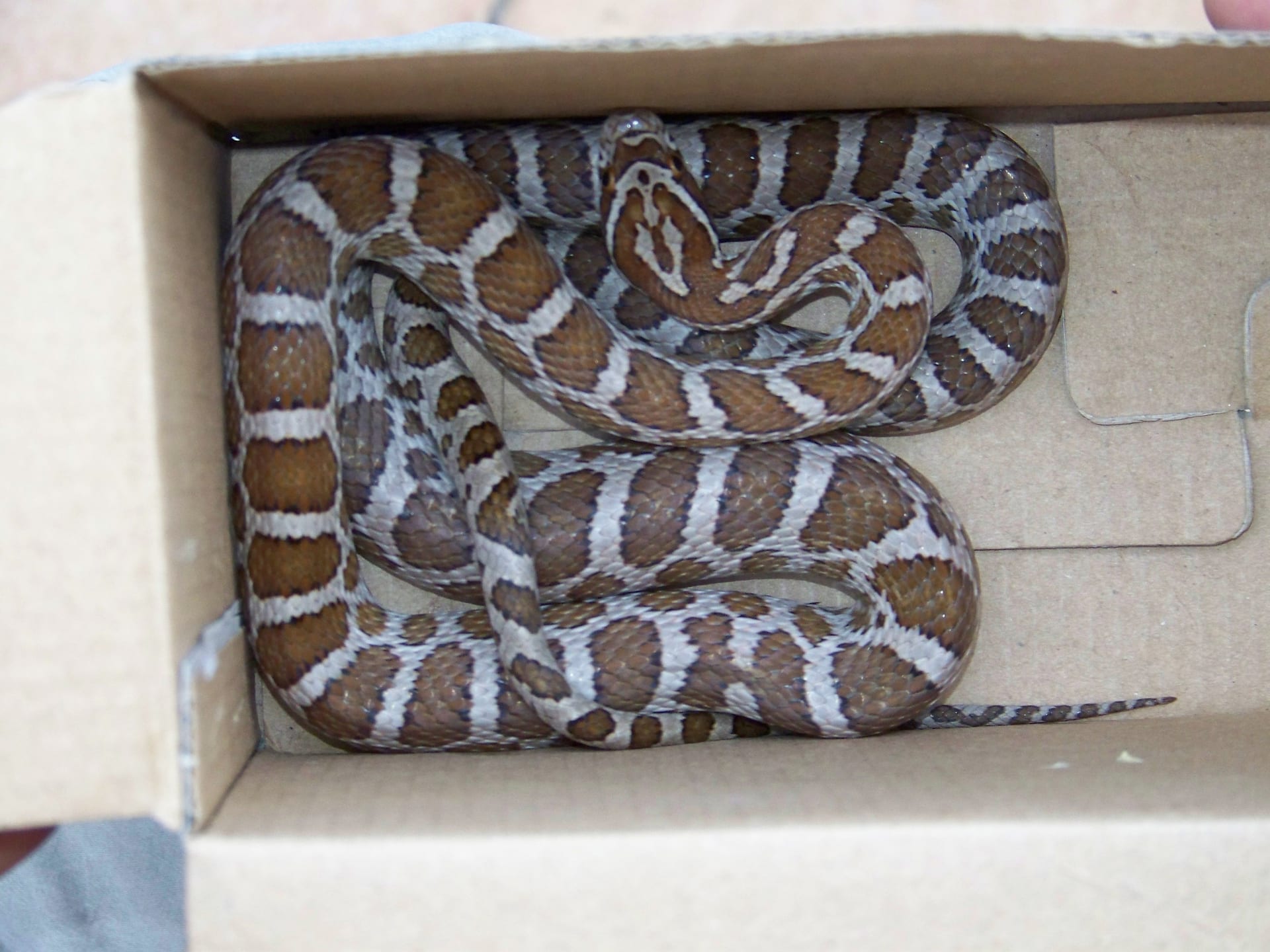
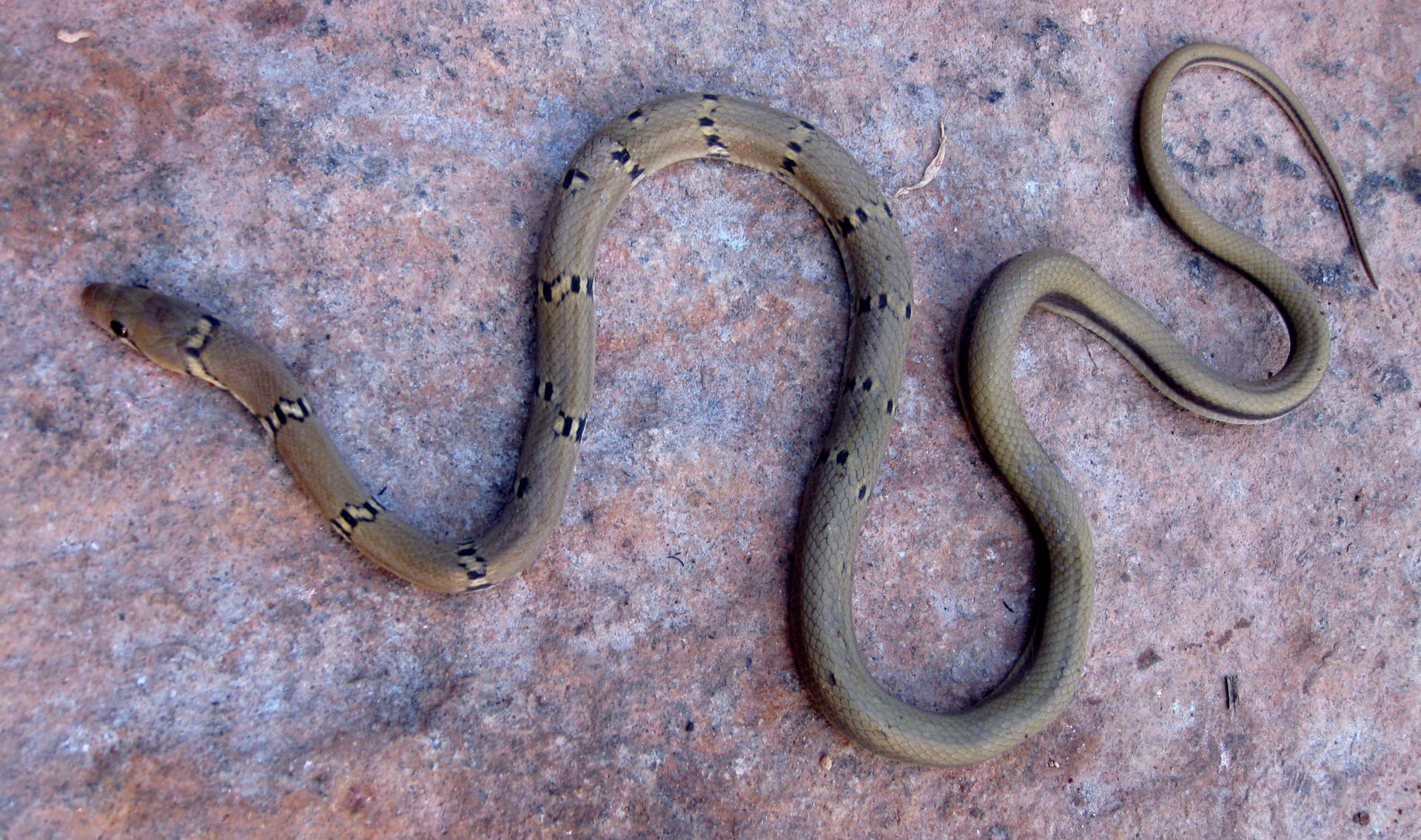
A colubrid in pale brown with dark brown crossbands, the bands on the flanks enclosing white spots that grow fainter towards the rear of the body. A vertical black streak below the eye and an oblique one behind it are diagnostic.
Difficulty
Intermediate
Temperature
25〜32℃
Lifespan
10-15 years
Size
90-130cm total length, with a maximum of 1.4m including a tail of about 25cm
Humidity
40〜70%
Diet
Carnivorous: small mammals such as mice, rats and squirrels, small snakes, geckos, frogs and birds
About
The trinket snake (Coelognathus helena) is a colubrid of South Asia, 90-130 cm long and reaching 1.4 m, of which about 25 cm is tail. Juveniles are pale brown with black crossbands, each enclosing four to six white ocelli. Adults are a darker brown, the crossbands becoming a transverse series of squarish black spots or fading to mere traces of the juvenile pattern. A vertical black streak runs below the eye and an oblique one behind it. Some animals have a white, black-edged collar and others two black stripes on the head. The underside is yellowish. There are 23-27 rows of dorsal scales at midbody, 220-265 ventrals and 75-94 subcaudals. It occurs in forest from sea level to 2,500 m and is also found around houses. Partly arboreal, it adopts a distinctive threat posture, raising the head and compressing and kinking the neck laterally. Besides mice, rats and squirrels it preys on small snakes, geckos and frogs.
Source: Wikipedia (CC BY-SA 4.0)
Lifespan of the Trinket Snake
The Trinket Snake lives 10-15 years.
Size of the Trinket Snake
The Trinket Snake grows to 90-130cm total length, with a maximum of 1.4m including a tail of about 25cm.
Basic Info
Origin
Sri Lanka, India, Nepal and Bangladesh, in forest from sea level to 2,500 m, and also around human habitation
Lifespan
10-15 years
Size
90-130cm total length, with a maximum of 1.4m including a tail of about 25cm
Care Specifications
Semi-aggressiveSolitaryBreeding: Moderate
Sources: Reptile Database: Coelognathus helena / Wikipedia (English): Trinket snake / Wikipedia (Japanese)
References & Sources
Edited & verified by: BreederDirect editorial team
The taxonomic, regulatory, and husbandry data on this page are compiled and verified against the authoritative primary sources below.
Taxonomy & Authority
Accepted name: Coelognathus helena (Daudin, 1803)
Synonyms: Coluber helena Daudin, 1803, Elaphe helena (Daudin, 1803), Cynophis bistrigatus Gray, 1849
Authority databases: GBIF · Reptile Database
Nomenclature follows global taxonomic authority databases.
Regulations & Conservation Status
Not CITES-listedIUCN LC · Least Concern
Not listed in any CITES appendix (no listing record in Species+). The IUCN Red List assessment is Least Concern (LC). This species is neither included among the designated animals listed in the Act on Welfare and Management of Animals Ordinance Schedule nor designated as an alien species under the Invasive Species Act Ordinance.
Sources: CITES Species+ (species not listed) / IUCN Red List
Regulations may change. Always verify the latest information with the relevant authorities.
Trinket Snake Listings
Loading latest listingsFind listings for this species