Source: Wikimedia Commons
Russian Rat Snake
IntermediateElaphe schrenckii
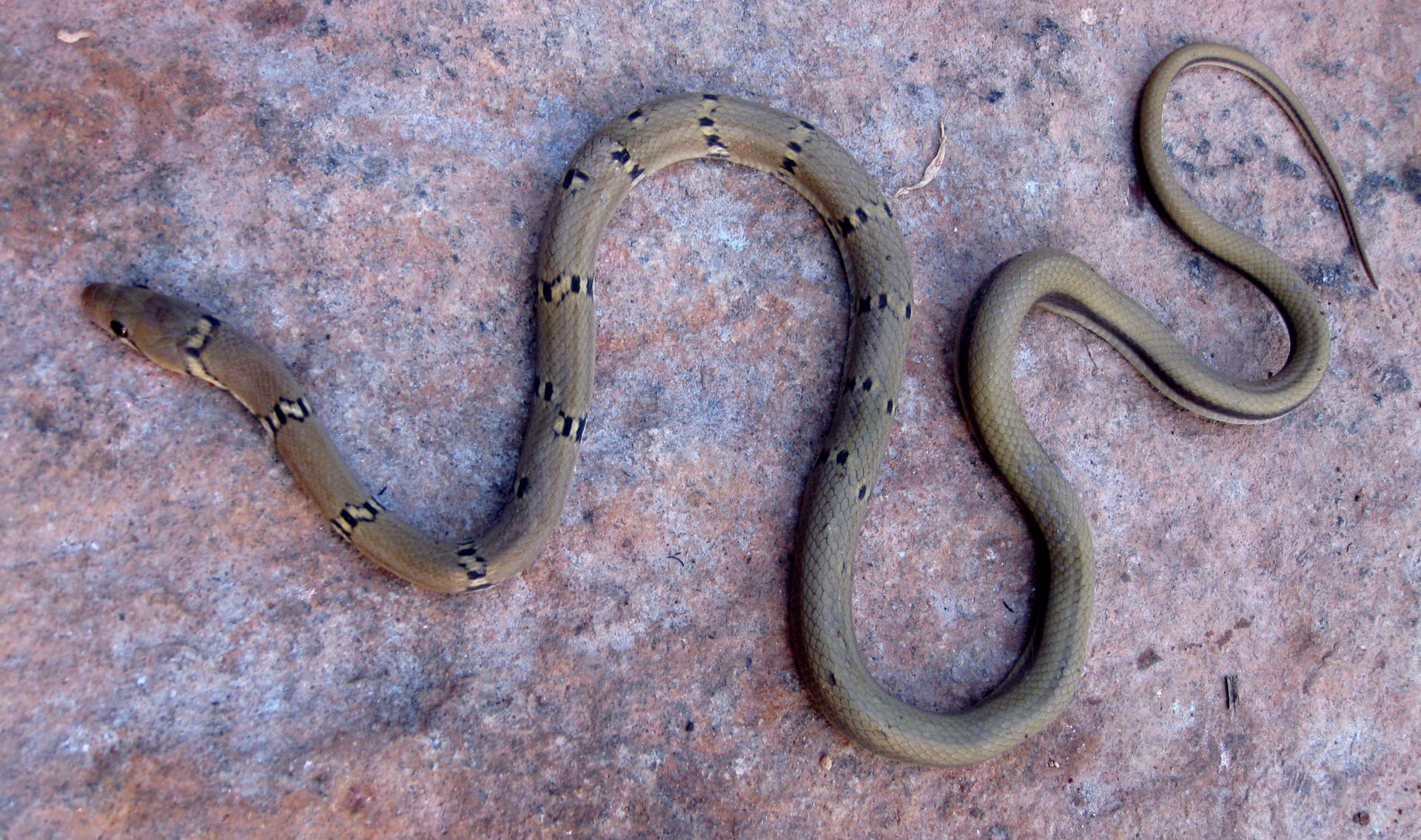
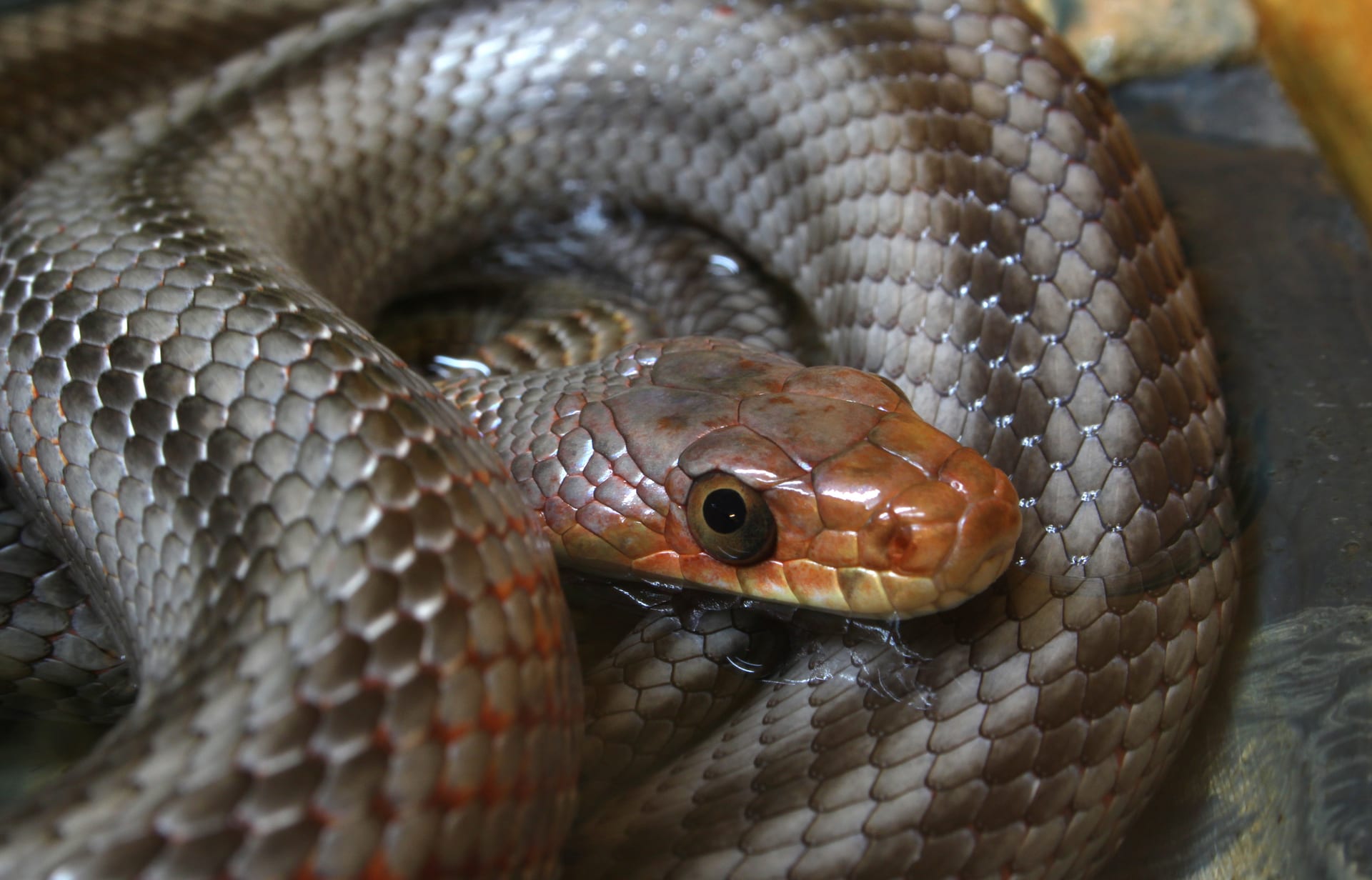
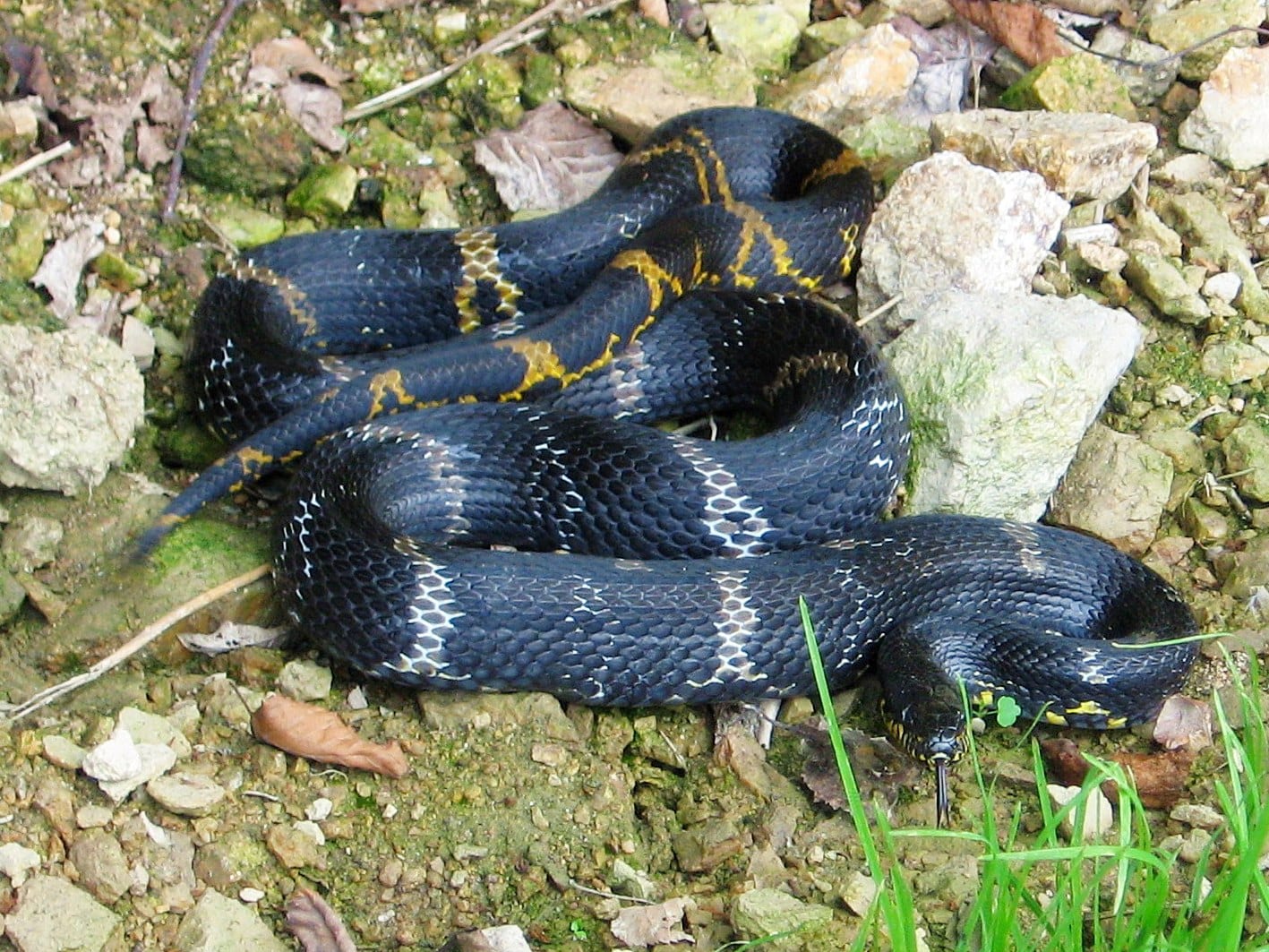
A large colubrid: adults are brown to black above with oblique white or yellow crossbars that fork on the flanks. The crown is uniformly black and the upper labials are yellow with black seams, and adults show a strong bluish iridescent sheen.
Difficulty
Intermediate
Temperature
25〜32℃
Lifespan
15-20 years
Size
Adults reach 2m in total length; the specimen used in the description measured 1,950mm
Humidity
40〜70%
Diet
Carnivorous: small mammals, birds and their eggs
About
The Amur rat snake (Elaphe schrenckii) is a colubrid ranging from the Russian Far East through the Korean Peninsula to northern China and eastern Mongolia. The head is only weakly set off from the neck. Adults are brown to black above with oblique white, yellow or brownish-yellow crossbars that fork on the flanks. The crown is uniformly black and all but the last upper labial are yellow with black seams, while a black stripe runs from behind the eye to the corner of the mouth and the belly is yellow. Entirely black individuals occur very rarely, and adults carry a strong bluish sheen. Juveniles look quite different, brown with broad, irregular, black-edged crossbars. It is semi-arboreal and is known to produce fertile hybrids with the Japanese rat snake. It is legally protected in Russia and South Korea and listed as Vulnerable on the China Species Red List.
Source: Wikipedia (CC BY-SA 4.0)
Lifespan of the Russian Rat Snake
The Russian Rat Snake lives 15-20 years.
Size of the Russian Rat Snake
The Russian Rat Snake grows to Adults reach 2m in total length; the specimen used in the description measured 1,950mm.
Adults reach 2 m, the body as thick as an adult human's wrist, and males are usually larger than females; the tail is between a fifth and a quarter of the body length.
Basic Info
Origin
Russia (the Amur basin of Siberia and Primorsky Krai), the Korean Peninsula, northern and central China and eastern Mongolia; introduced to the Netherlands
Lifespan
15-20 years
Care Specifications
Semi-aggressiveSolitaryBreeding: Moderate
Sources: Reptile Database: Elaphe schrenckii / Wikipedia (English) / Wikipedia (Russian): Amurskiy poloz
References & Sources
Edited & verified by: BreederDirect editorial team
The taxonomic, regulatory, and husbandry data on this page are compiled and verified against the authoritative primary sources below.
Taxonomy & Authority
Accepted name: Elaphe schrenckii Strauch, 1873
Synonyms: Coluber virgatus Boettger, 1888, Elaphe schrenckii schrenckii Strauch, 1873
Authority databases: GBIF · Reptile Database
Nomenclature follows global taxonomic authority databases.
Regulations & Conservation Status
Not CITES-listedIUCN LC · Least Concern
Not listed in the CITES Appendix (no record in Species+). The IUCN Red List global assessment is Least Concern (LC), but it is legally protected in Russia and South Korea, and listed as Vulnerable (VU) on China's Red List. The species is not included in the designated animals listed in the annexes of the Order for Enforcement of the Act on Welfare and Management of Animals, nor in the designated invasive species under the Invasive Species Law Enforcement Order.
Sources: CITES Species+ (species not listed) / IUCN Red List
Regulations may change. Always verify the latest information with the relevant authorities.
Russian Rat Snake Listings
Loading latest listingsFind listings for this species