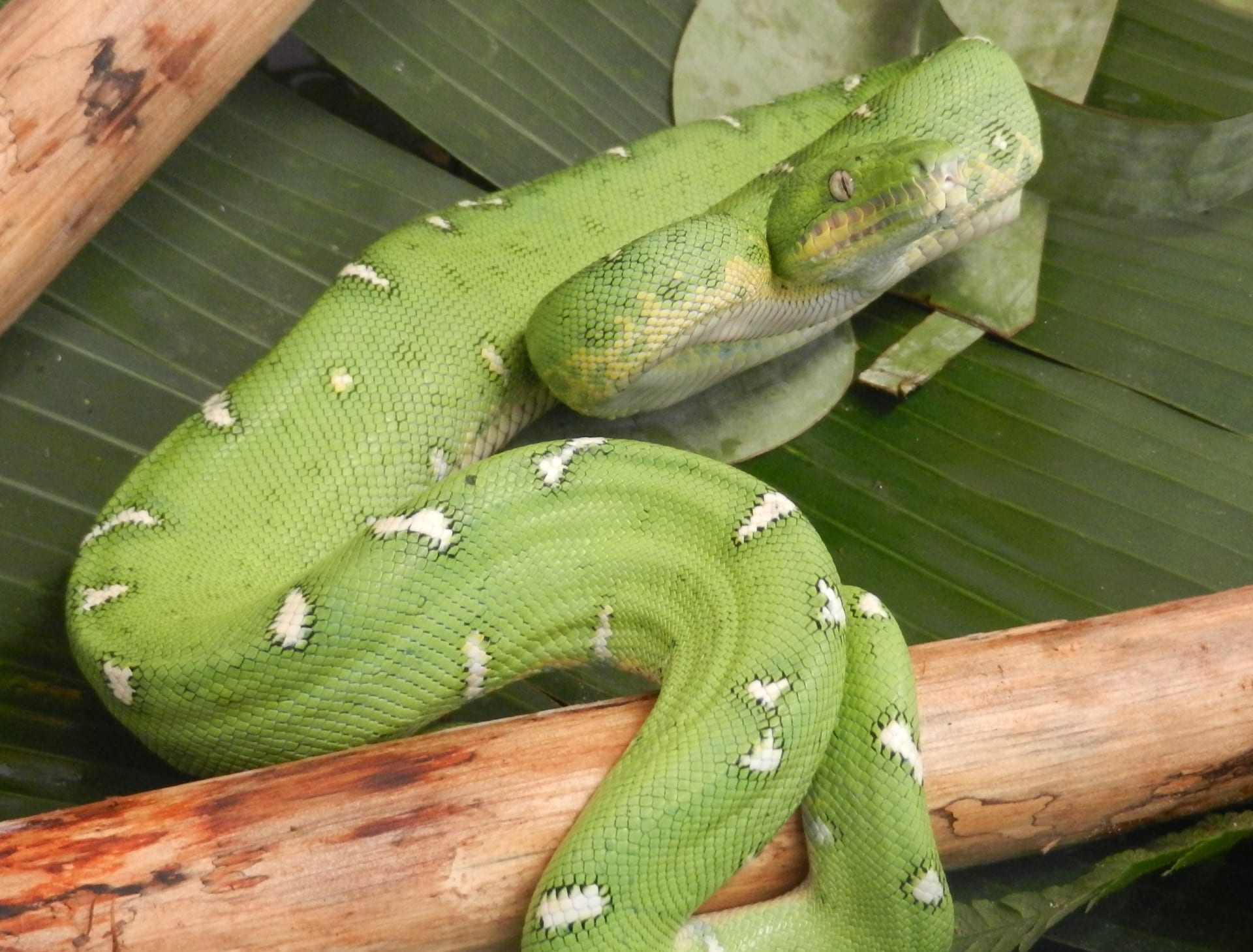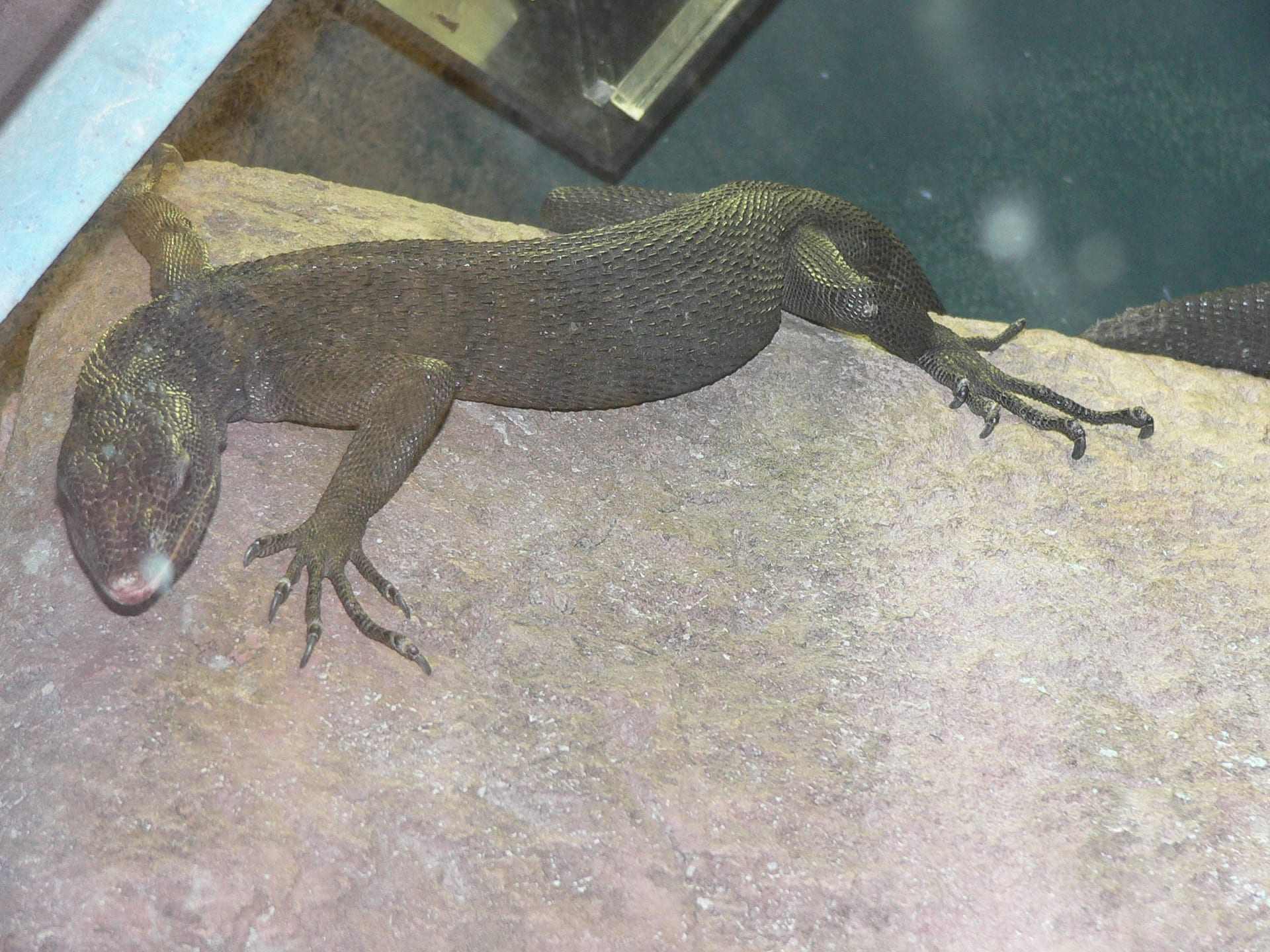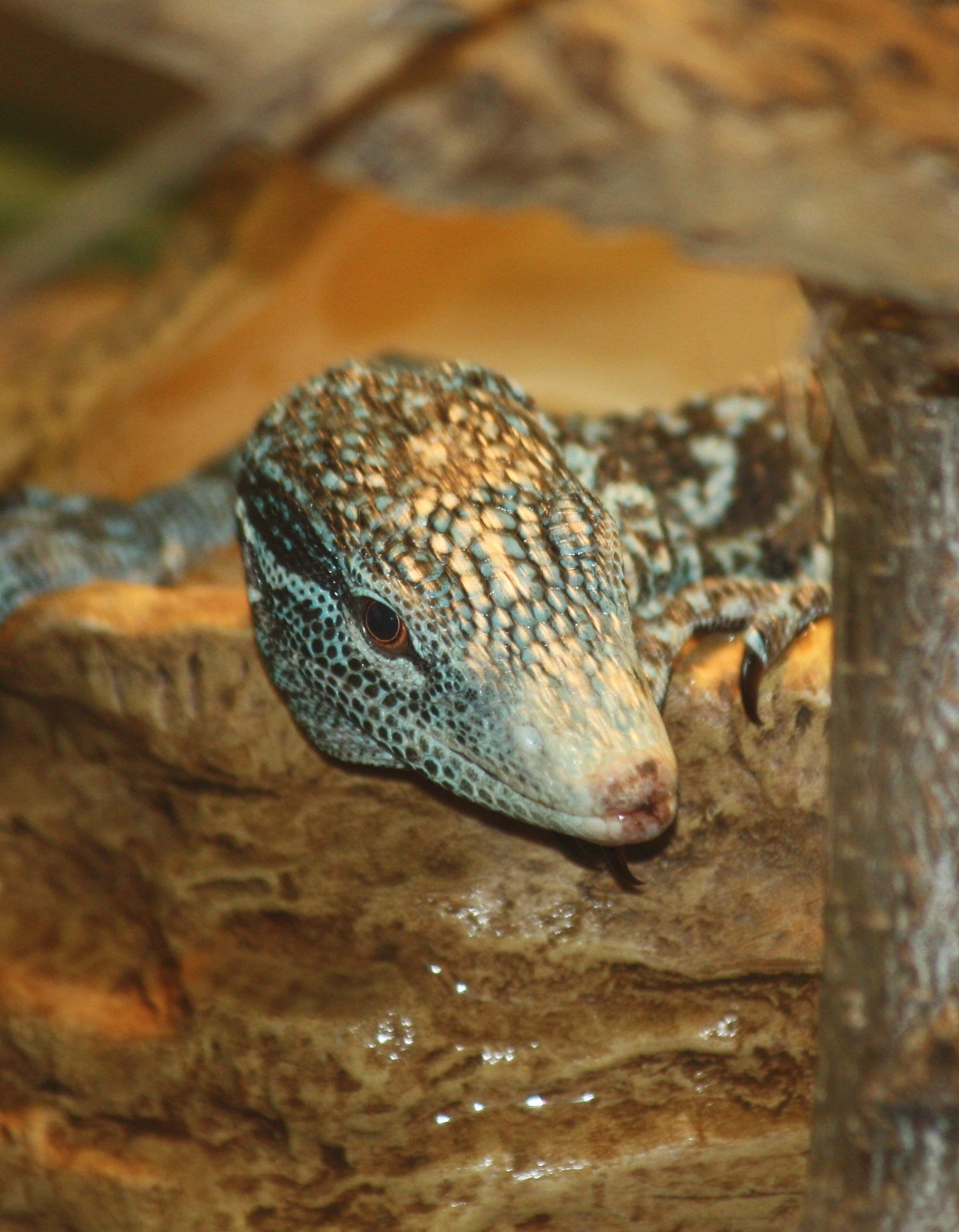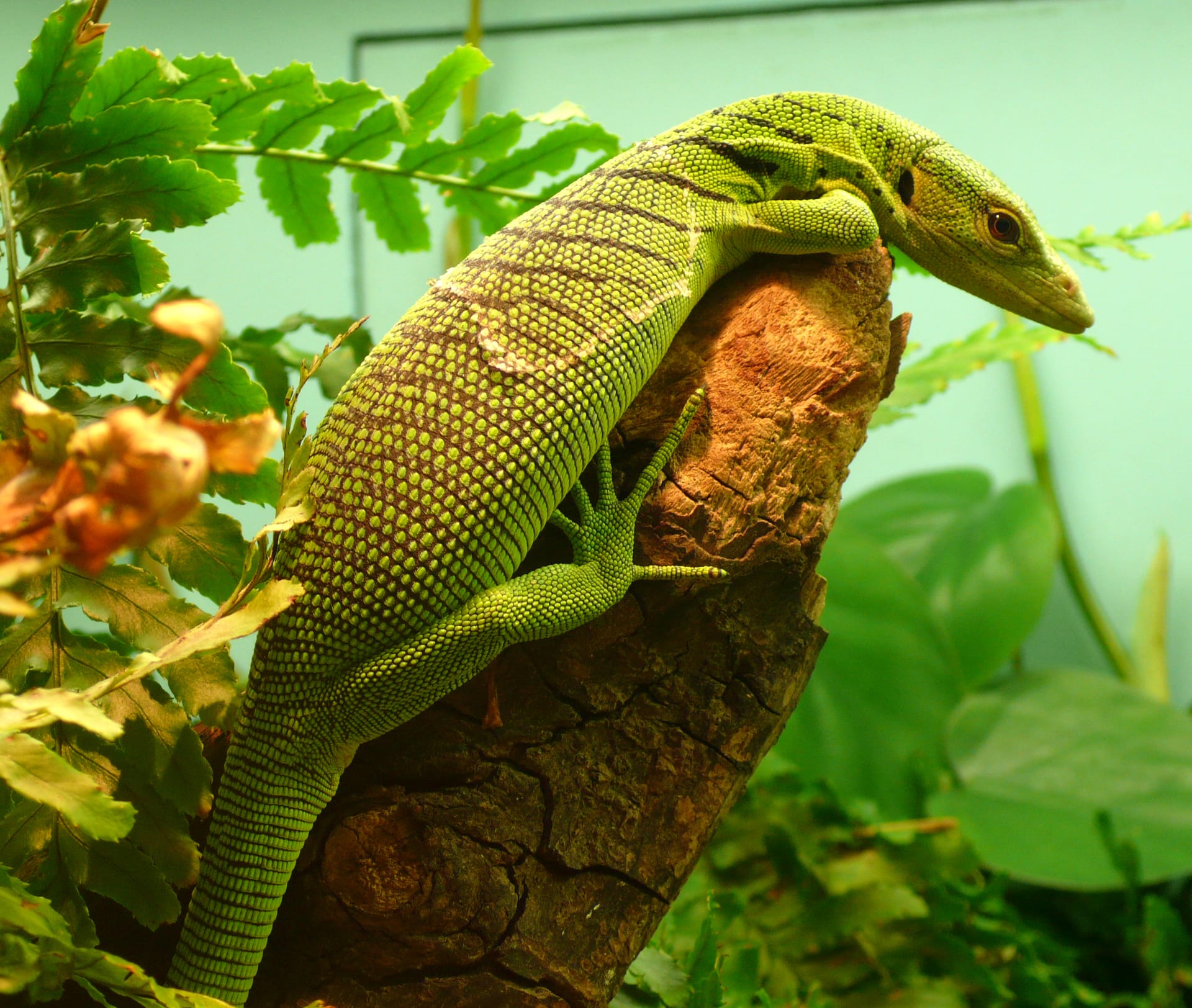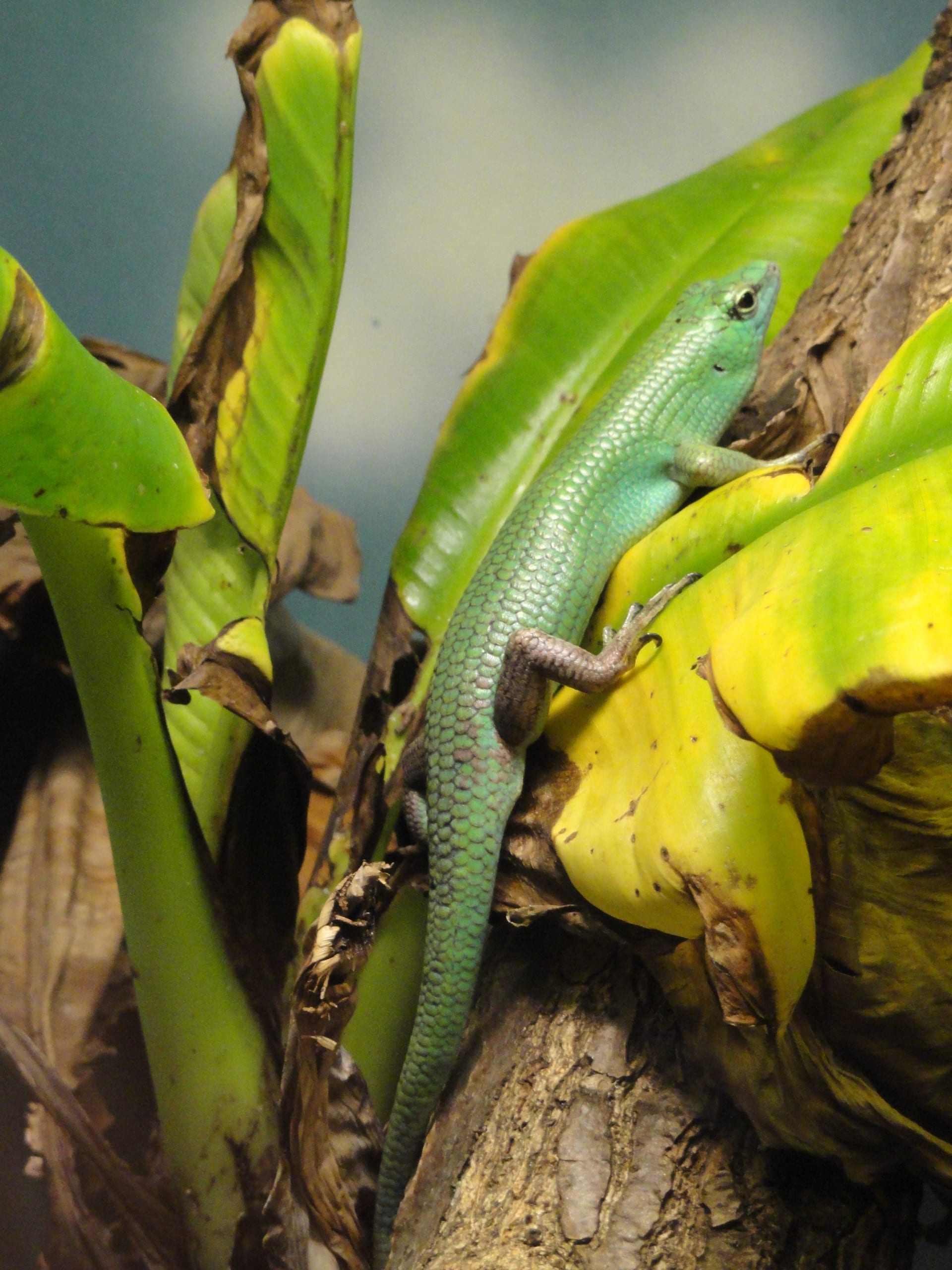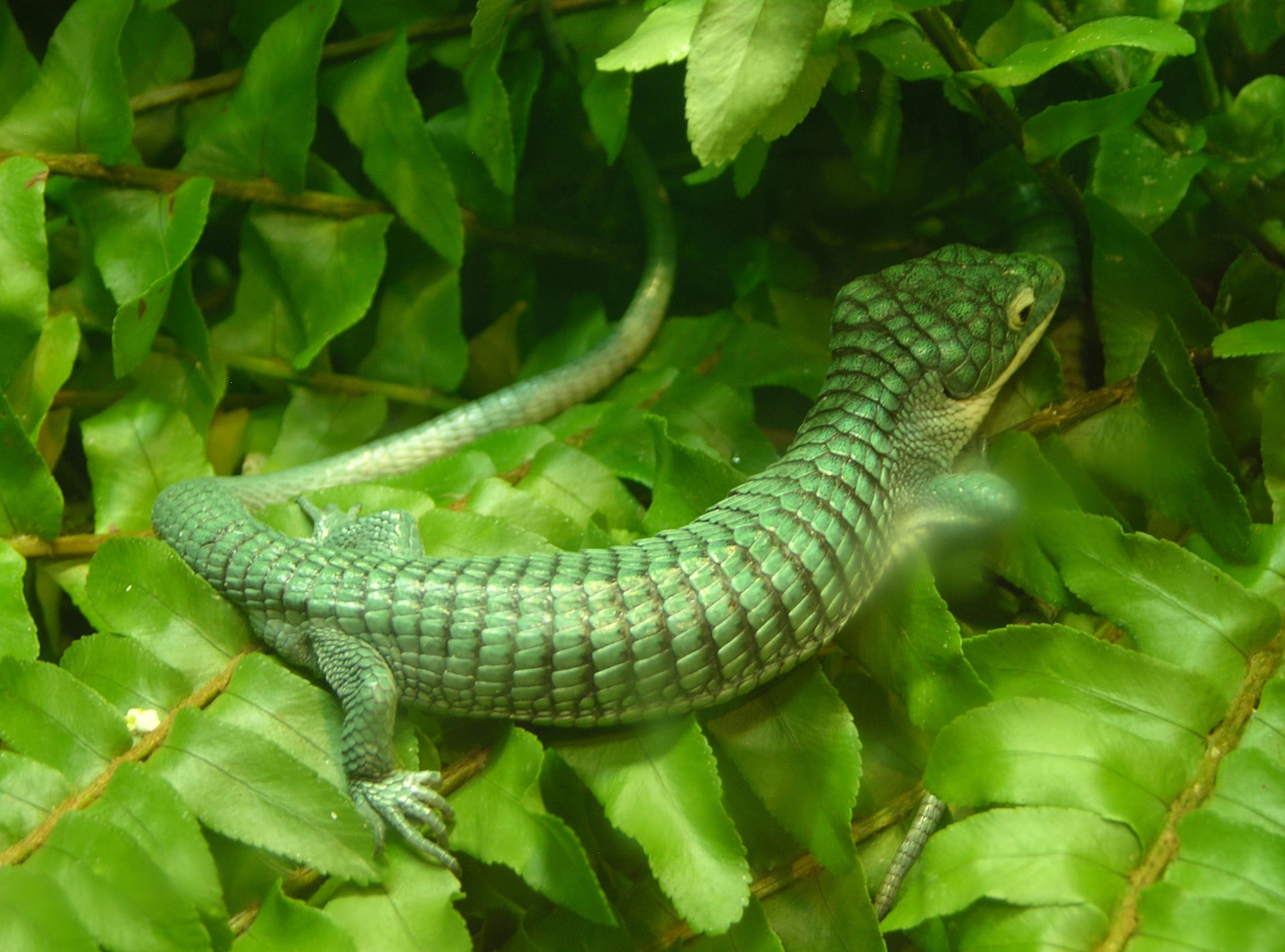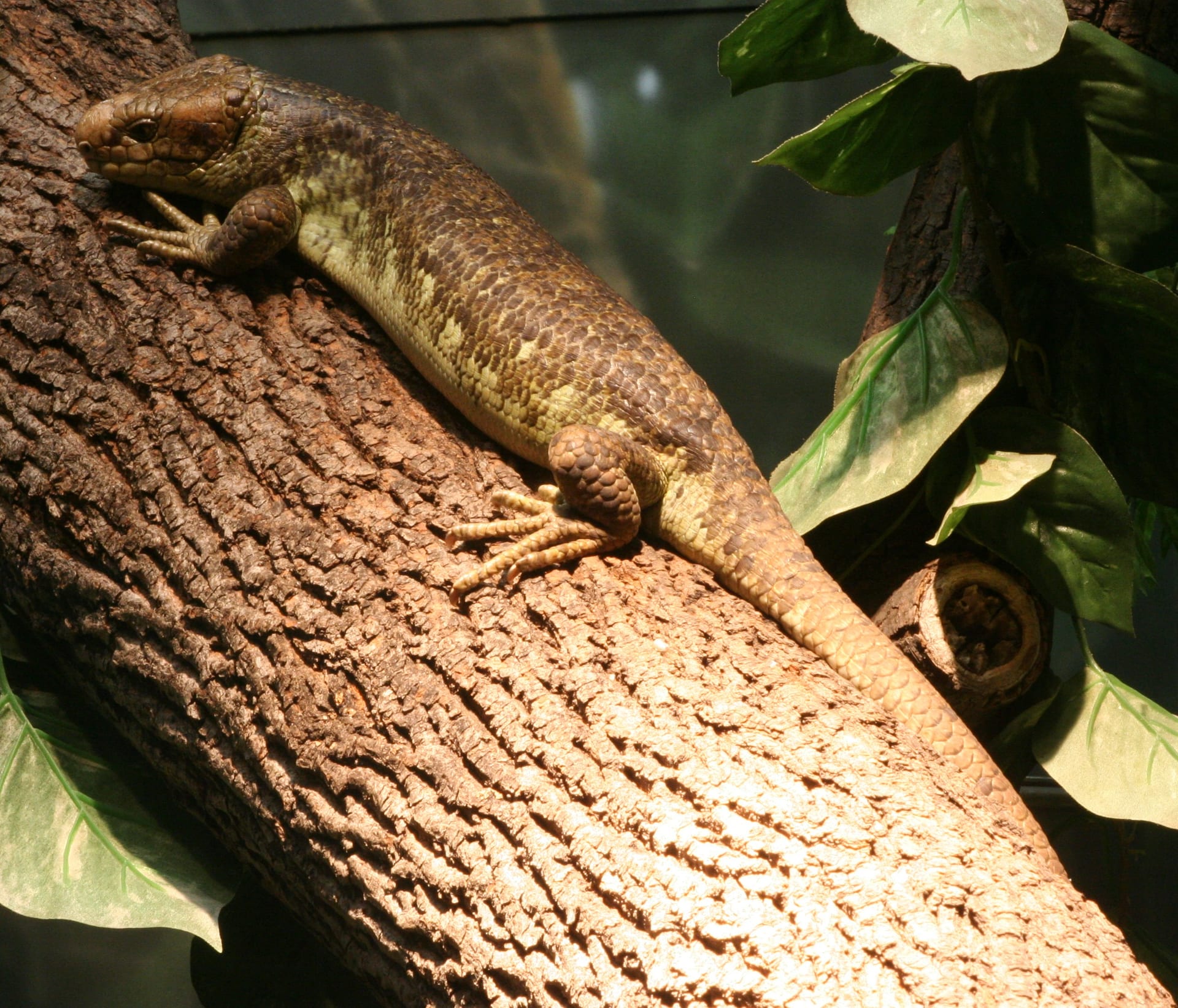
Source: Wikimedia Commons
Monkey-Tailed Skink
AdvancedCorucia zebrata
The largest extant skink, reaching 80 cm. Its long prehensile tail gives it both its Japanese and English names. It grips branches with sharply hooked claws and is, unusually for a skink, fully arboreal, nocturnal and herbivorous.
Difficulty
Advanced
Temperature
25〜32℃
Lifespan
15-25 years
Size
80cm total length
Humidity
40〜70%
Diet
Herbivorous: leaves, especially of aroids, and fruit
About
The monkey-tailed skink (Corucia zebrata) is a skink endemic to the Solomon Islands and the sole member of its genus. Reaching 80 cm, it is the largest living skink. The head is large with a rounded snout, and because it eats tough plant material it has rows of fine sharp teeth and powerful jaws. The digits are long and the claws sharply hooked for gripping branches, and the long prehensile tail gives the animal both its Japanese and English names. It lives in forest, is fully arboreal and nocturnal, and rests by day in tree hollows. Unusually for a skink it is entirely herbivorous, eating leaves, especially of aroids, and fruit. It is viviparous: after a gestation of six to eight months the female produces one or two young, which she protects for a time. The species forms family-based social groups and both sexes are territorial and hostile to animals outside the group. Logging, hunting for food and export for the pet trade have reduced wild populations.
Source: Wikipedia (CC BY-SA 4.0)
Lifespan of the Monkey-Tailed Skink
The Monkey-Tailed Skink lives 15-25 years.
Size of the Monkey-Tailed Skink
The Monkey-Tailed Skink grows to 80cm total length.
Basic Info
Origin
Endemic to the Solomon Islands, with the subspecies alfredschmidti on Bougainville in Papua New Guinea, in tropical forest
Lifespan
15-25 years
Size
80cm total length
Care Specifications
Semi-aggressiveGroupBreeding: Very hard
Sources: Reptile Database: Corucia zebrata / Wikipedia (Japanese) / Reptiles Magazine: Breeding Prehensile-Tailed Skinks
References & Sources
Edited & verified by: BreederDirect editorial team
The taxonomic, regulatory, and husbandry data on this page are compiled and verified against the authoritative primary sources below.
Taxonomy & Authority
Accepted name: Corucia zebrata Gray, 1855
Authority databases: GBIF · Reptile Database
Nomenclature follows global taxonomic authority databases.
Regulations & Conservation Status
CITES Appendix IIIUCN NT · Near Threatened
Listed in CITES Appendix II, effective 11 June 1992. As an Appendix II species, special international registration is not required. IUCN Red List assessment: Near Threatened (NT). Exports from the Solomon Islands are restricted. It is not designated as a Special Animal under the Animal Welfare and Management Act nor as a Designated Invasive Species.
Sources: CITES Species+ (Corucia zebrata, Appendix II, effective 11 June 1992) / IUCN Red List
Regulations may change. Always verify the latest information with the relevant authorities.
Monkey-Tailed Skink Listings
Loading latest listingsFind listings for this species