Source: Wikimedia Commons
Japanese Rat Snake
BeginnerElaphe climacophora
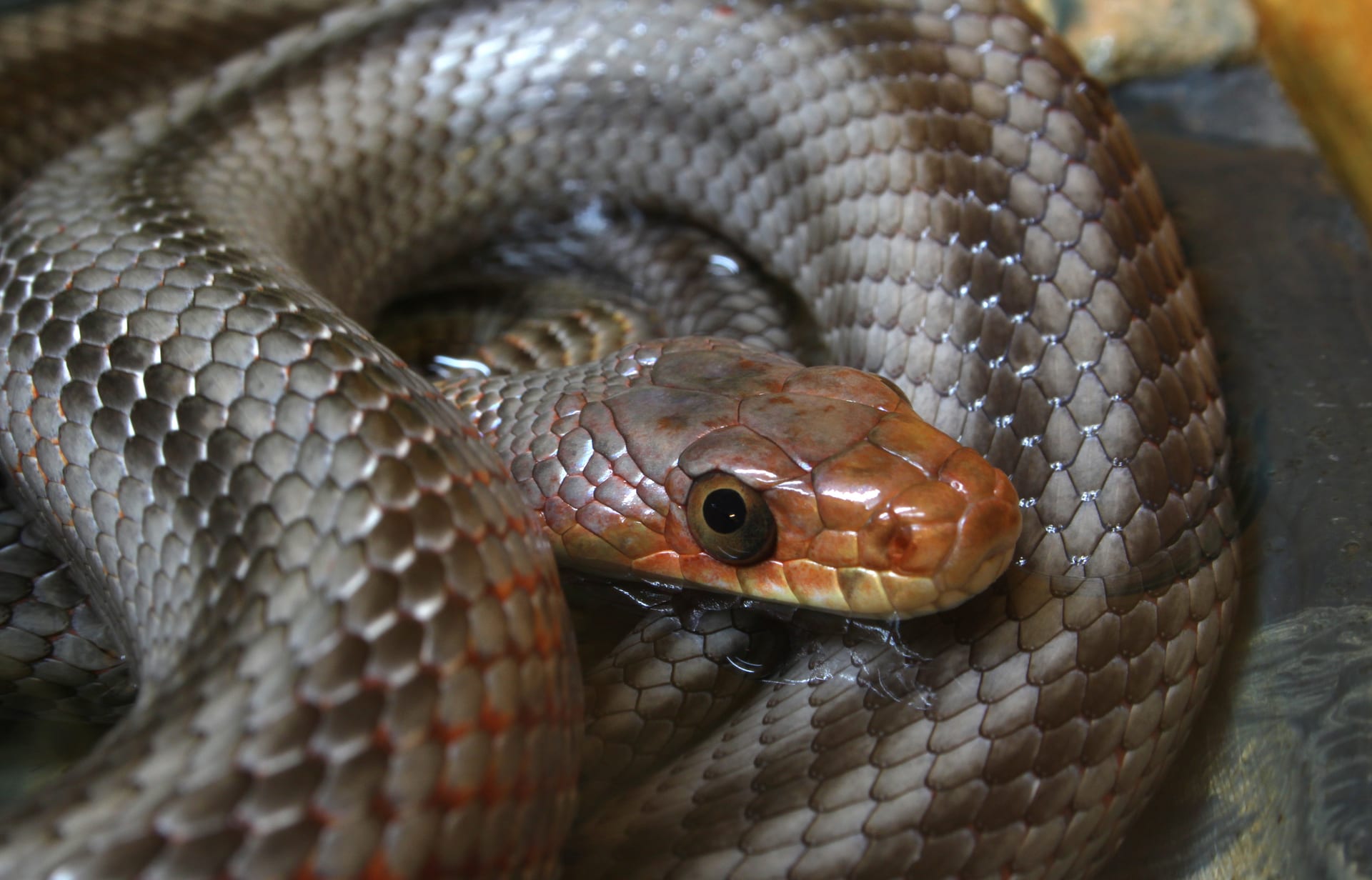
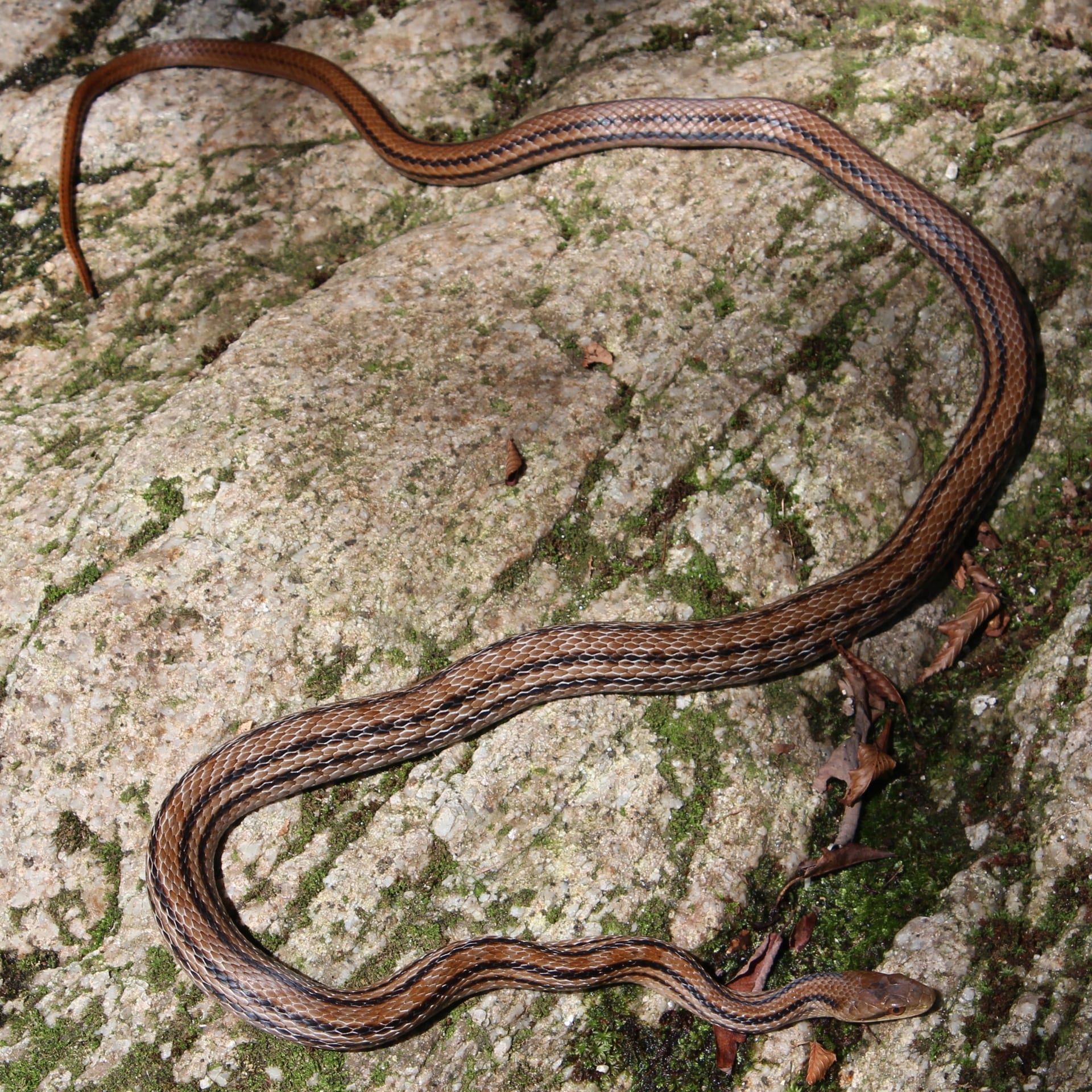
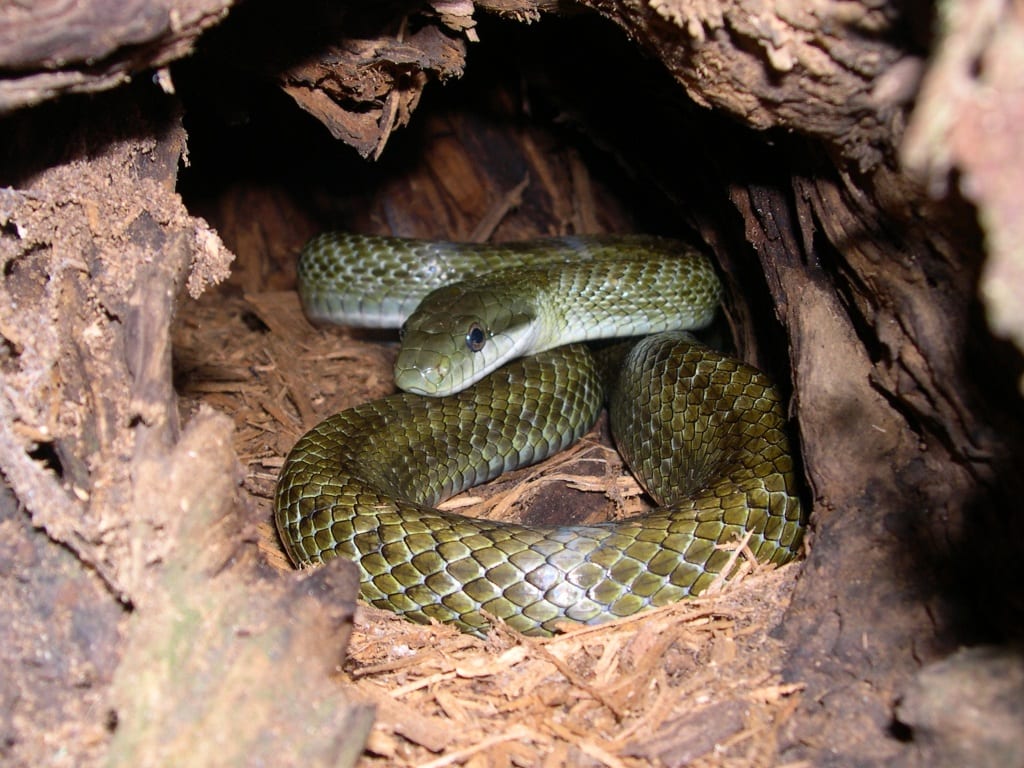
The largest snake on mainland Japan, olive with a strong brown cast and four indistinct blackish-brown stripes running from head to tail. Strong keels along the edges of the ventral scales let it hook onto bark and climb vertically. It is non-venomous.
Difficulty
Beginner
Temperature
25〜32℃
Lifespan
A captive record of 17 years and 7 months
Size
100-200cm total length, about 5cm in girth
Humidity
40〜70%
Diet
Carnivorous: rodents, birds and their eggs, frogs, lizards and shrews
About
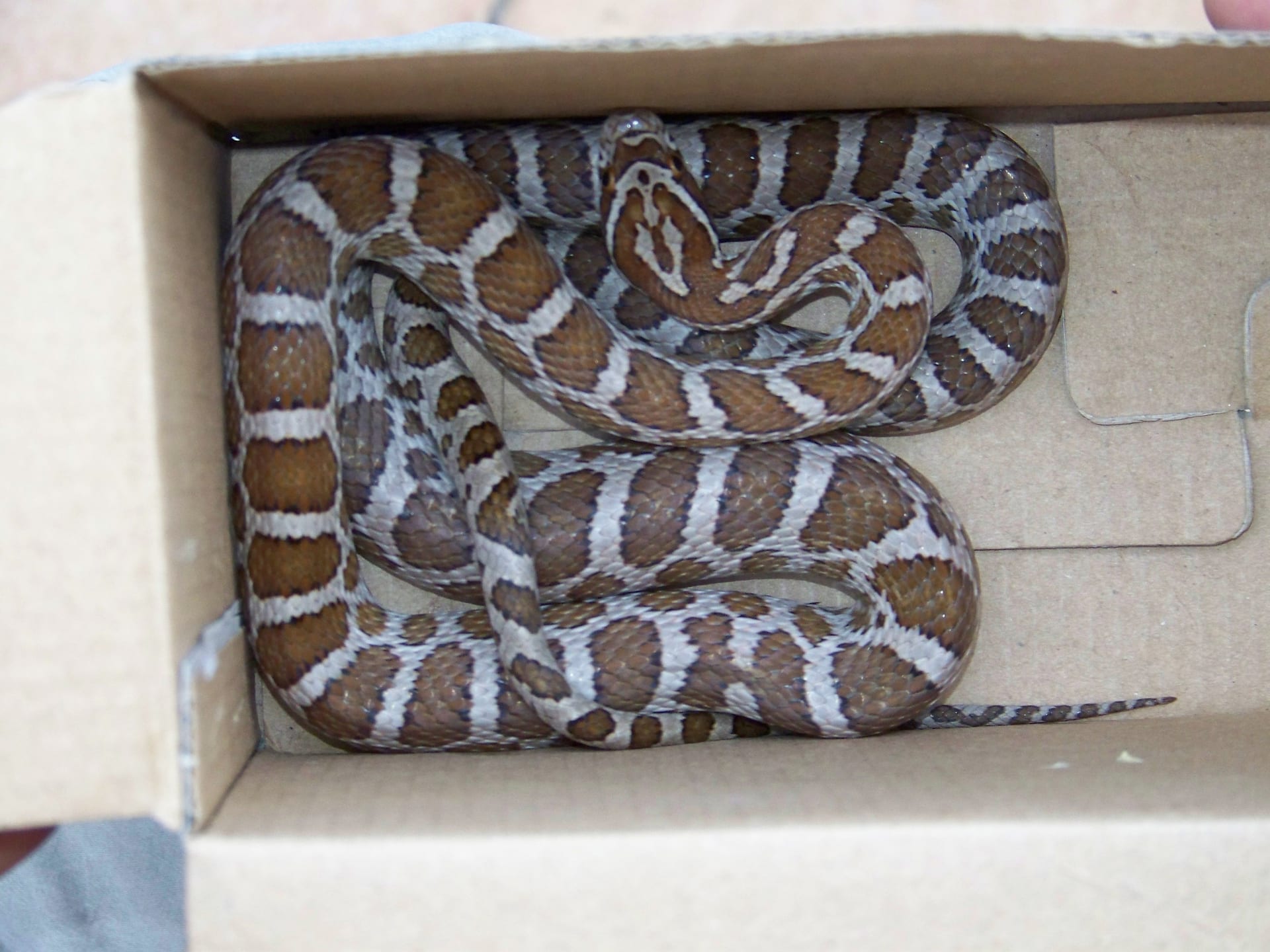
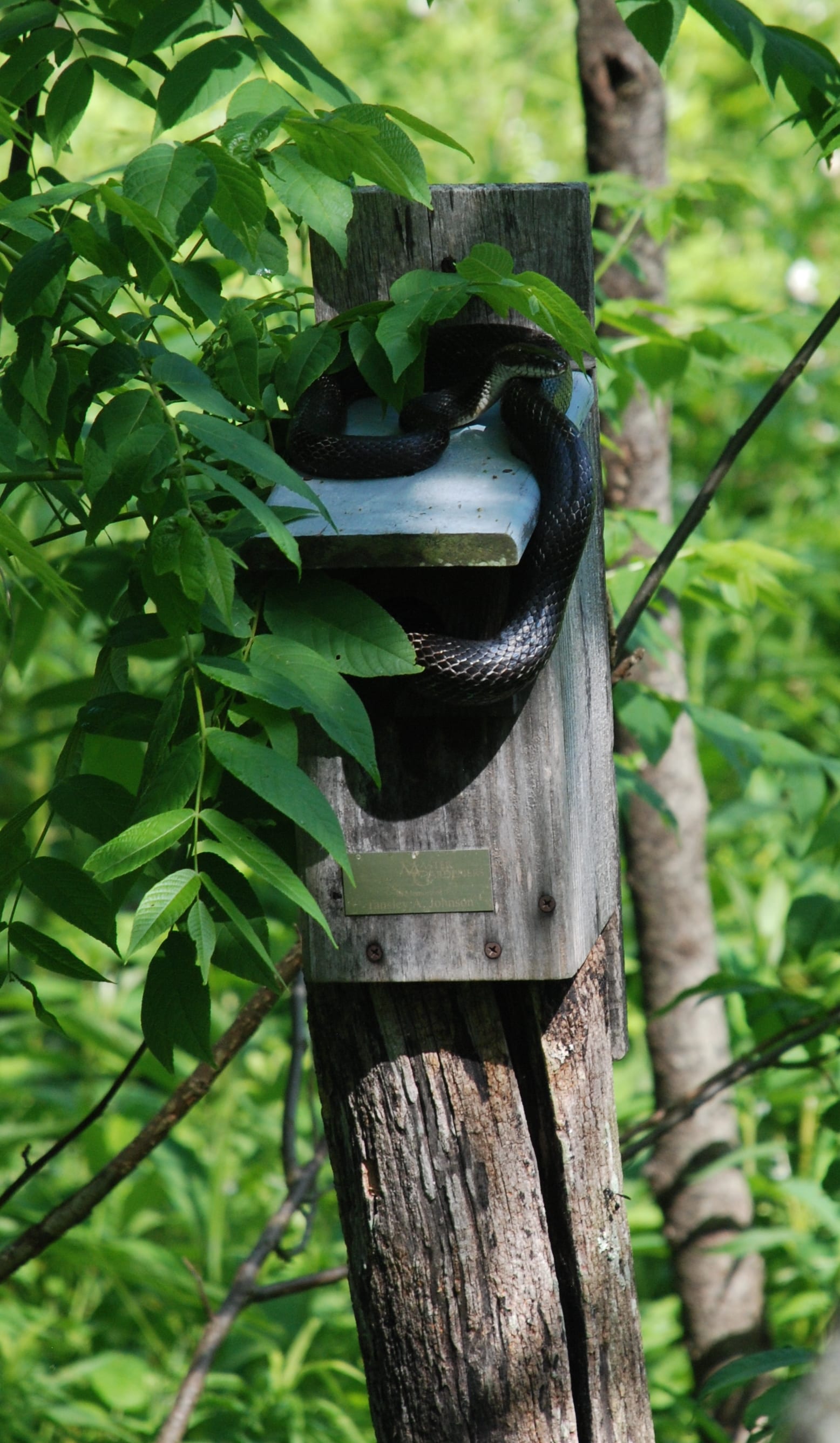
The Japanese rat snake (Elaphe climacophora) is a colubrid of the genus Elaphe found throughout the Japanese archipelago. It measures 100-200 cm with a girth of about 5 cm, making it the largest snake on mainland Japan outside the Ryukyus. Colour varies widely from dark yellowish brown to a dull green, with notably bluish animals in Hokkaido. Most individuals show four indistinct blackish-brown stripes along the back, though some are unstriped. Juveniles are grey with ladder-like brown blotches, thought to mimic the venomous Japanese pit viper. Strong keels along the edges of the ventral scales let it hook onto trunks and branches and climb vertically, which helps it thrive even in urban settings. It is chiefly diurnal. Non-venomous, it constricts larger prey before swallowing, and it swallows eggs whole, breaking them against projections beneath the vertebrae in its oesophagus. It mates in May and June and lays 4-17 eggs in July and August, which hatch in 47-63 days. An albino population around Iwakuni in Yamaguchi Prefecture has been designated a national monument since 1924.
Source: Wikipedia (CC BY-SA 4.0)
Lifespan of the Japanese Rat Snake
The Japanese Rat Snake lives A captive record of 17 years and 7 months.
Size of the Japanese Rat Snake
The Japanese Rat Snake grows to 100-200cm total length, about 5cm in girth.
Basic Info
Origin
The Japanese archipelago and adjacent islands including the Izu, Oki and Tsushima groups, with its southern limit at Kuchinoshima in the Tokara Islands and no populations south of the Amami group, plus Russian-administered Kunashir, in forest, farmland and built-up areas from the lowlands into the hills
Care Specifications
PeacefulSolitaryBreeding: Moderate
Sources: Wikipedia (Japanese) / Wikipedia (English): Japanese rat snake / Reptile Database: Elaphe climacophora
References & Sources
Edited & verified by: BreederDirect editorial team
The taxonomic, regulatory, and husbandry data on this page are compiled and verified against the authoritative primary sources below.
Taxonomy & Authority
Accepted name: Elaphe climacophora (Boie, 1826)
Synonyms: Coluber climacophorus Boie, 1826, Coluber virgatus Schlegel, 1837, Elaphis virgatus Duméril, Bibron & Duméril, 1854
Authority databases: GBIF · Reptile Database
Nomenclature follows global taxonomic authority databases.
Regulations & Conservation Status
Not CITES-listedIUCN LC · Least Concern
Not listed in CITES Appendices (no listing record in Species+). IUCN Red List assessment is Least Concern (LC). This species is not designated as a special animal specified in the Cabinet Order for the Law Concerning the Protection and Management of Animals, nor is it designated as a designated alien species in the Cabinet Order for the Alien Species Act. This species is native to Japan, and collection from the wild may be subject to municipal ordinances or protected area regulations. The albino population in Iwakuni, Yamaguchi Prefecture was designated as a natural monument in 1924.
Sources: CITES Species+ (species not listed) / IUCN Red List
Regulations may change. Always verify the latest information with the relevant authorities.
Japanese Rat Snake Listings
Loading latest listingsFind listings for this species