Source: Wikimedia Commons
Carrot-Tail Viper Gecko
BeginnerHemidactylus imbricatus
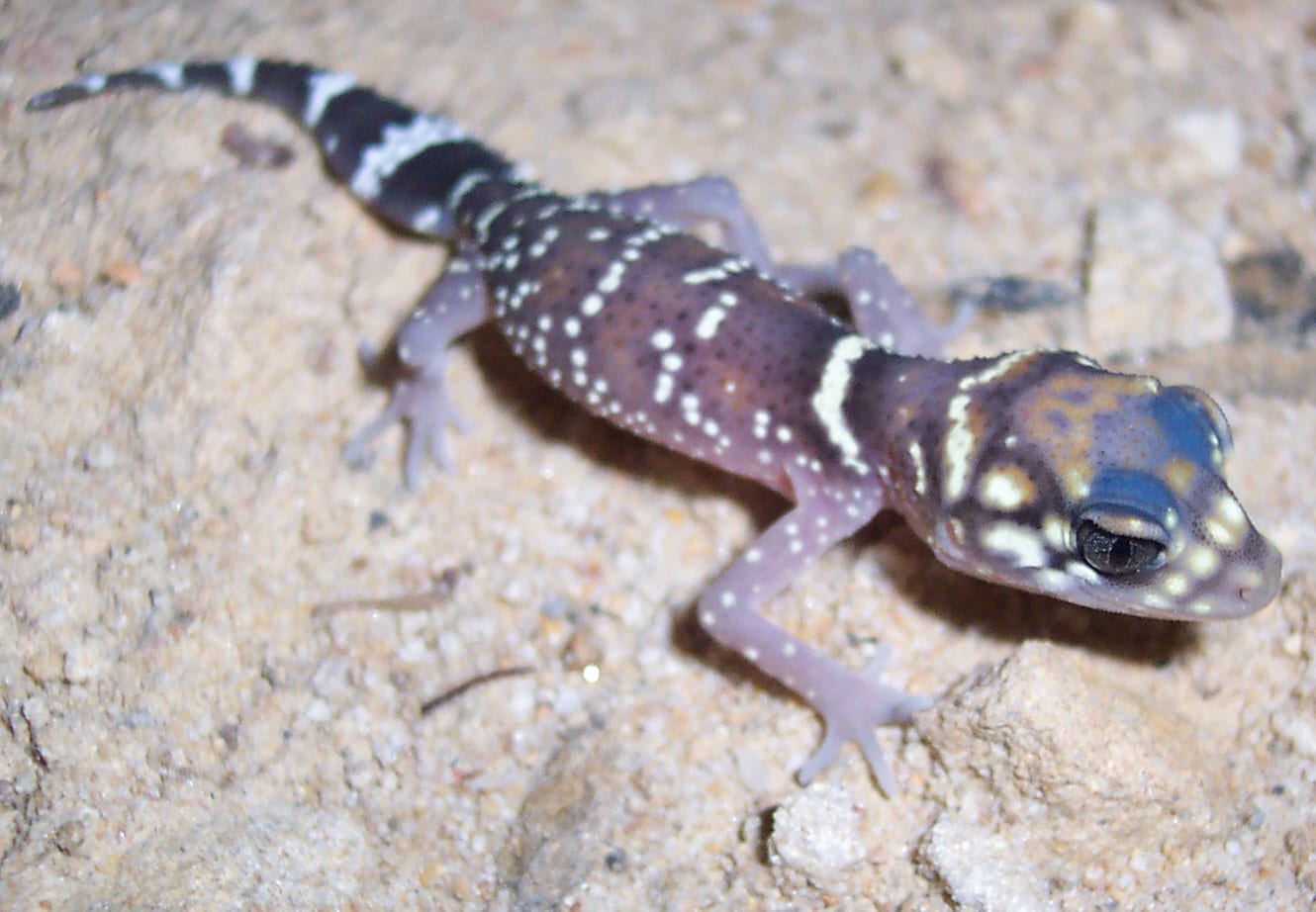
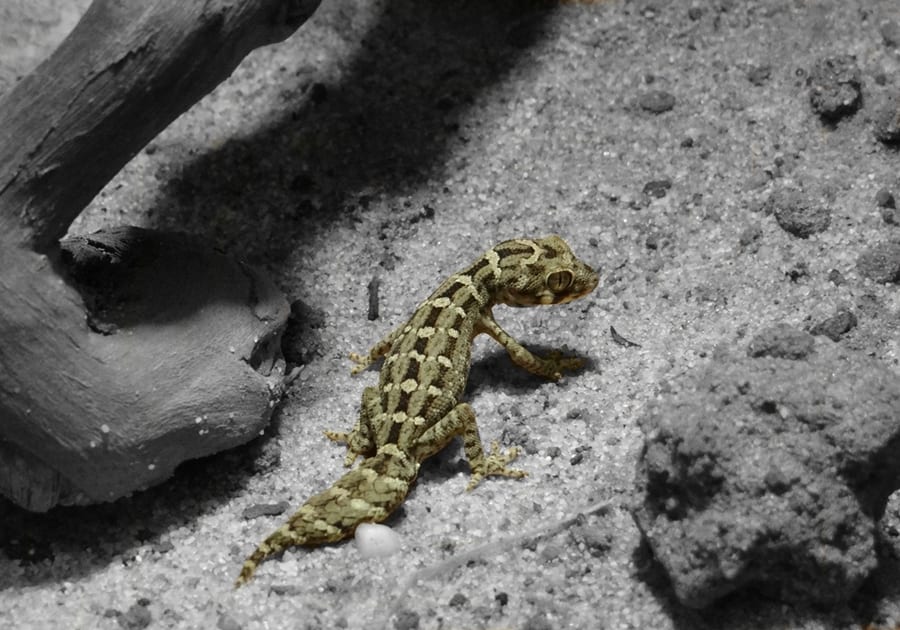
A small gecko whose tail swells and is clad in large imbricate scales like a pine cone. The ground colour is greyish brown with dark longitudinal stripes and pale spots. The fat tail serves as a fat store and can exceed the head or body in girth.
Difficulty
Beginner
Lifespan
10-15 years with proper care
Size
8-10cm total length (up to 10.5cm)
Humidity
50%
Diet
Carnivorous: insects and other arthropods
About
The carrot-tail viper gecko (Hemidactylus imbricatus) is a small gecko of the semi-deserts from Pakistan to the eastern edge of the Iranian plateau. It measures 8-10 cm, with large individuals reaching about 10.5 cm. The swollen tail is covered in overlapping large scales that resemble a pine cone, the source of both its Japanese and English names, and it serves as a fat store, sometimes exceeding the head or body in girth. The ground colour is greyish to brown with five dark longitudinal stripes overlaid by pale spots. It lacks well-developed toe pads, cannot climb vertical surfaces and lives mainly on the ground, sheltering by day in rock crevices and emerging at night. Females lay two eggs at a time and repeat this more than ten times in a season, making it highly prolific. Once expensive, it is now bred in quantity in Japan and prices have settled.
Source: Wikipedia (CC BY-SA 4.0)
Lifespan of the Carrot-Tail Viper Gecko
The Carrot-Tail Viper Gecko lives 10-15 years with proper care.
Size of the Carrot-Tail Viper Gecko
The Carrot-Tail Viper Gecko grows to 8-10cm total length (up to 10.5cm).
Basic Info
Origin
From the eastern edge of the Iranian plateau through Pakistan (Sindh) to the western Thar Desert and the Indus delta, in semi-desert and desert with sandy soil and sparse vegetation
Lifespan
10-15 years with proper care
Size
8-10cm total length (up to 10.5cm)
Care Specifications
PeacefulGroupBreeding: Easy
Sources: ReptiFiles: Viper Gecko Care Sheet / Wikipedia (Japanese) / Reptile Database: Hemidactylus imbricatus
References & Sources
Edited & verified by: BreederDirect editorial team
The taxonomic, regulatory, and husbandry data on this page are compiled and verified against the authoritative primary sources below.
Taxonomy & Authority
Accepted name: Hemidactylus imbricatus (Bauer, Giri, Greenbaum, Jackman, Dharne & Shouche, 2008)
Synonyms: Homonota fasciata Blyth, 1853, Teratolepis fasciata (Blyth, 1853)
Authority databases: GBIF · Reptile Database
Nomenclature follows global taxonomic authority databases.
Regulations & Conservation Status
Not CITES-listedIUCN LC · Least Concern
Not listed in any CITES appendix (not recorded in Species+). IUCN Red List assessment: Least Concern (LC). This species is not included in either the specified animals listed in the appended table of the Ordinance for Enforcement of the Animal Welfare and Management Law, nor the specified invasive alien species under the Ordinance for Enforcement of the Invasive Alien Species Act.
Sources: CITES Species+ (species not listed) / IUCN Red List
Regulations may change. Always verify the latest information with the relevant authorities.
Carrot-Tail Viper Gecko Listings
Loading latest listingsFind listings for this species