Source: Wikimedia Commons
Striped Mud Turtle
BeginnerKinosternon baurii
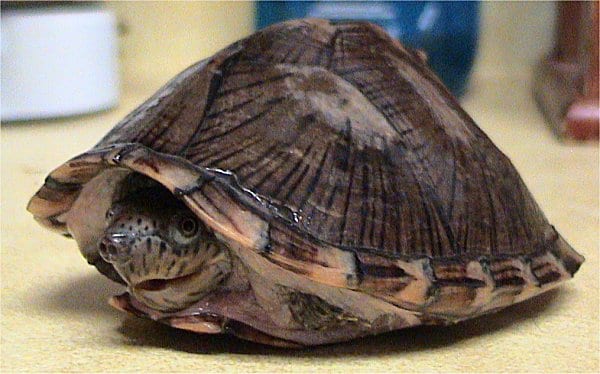
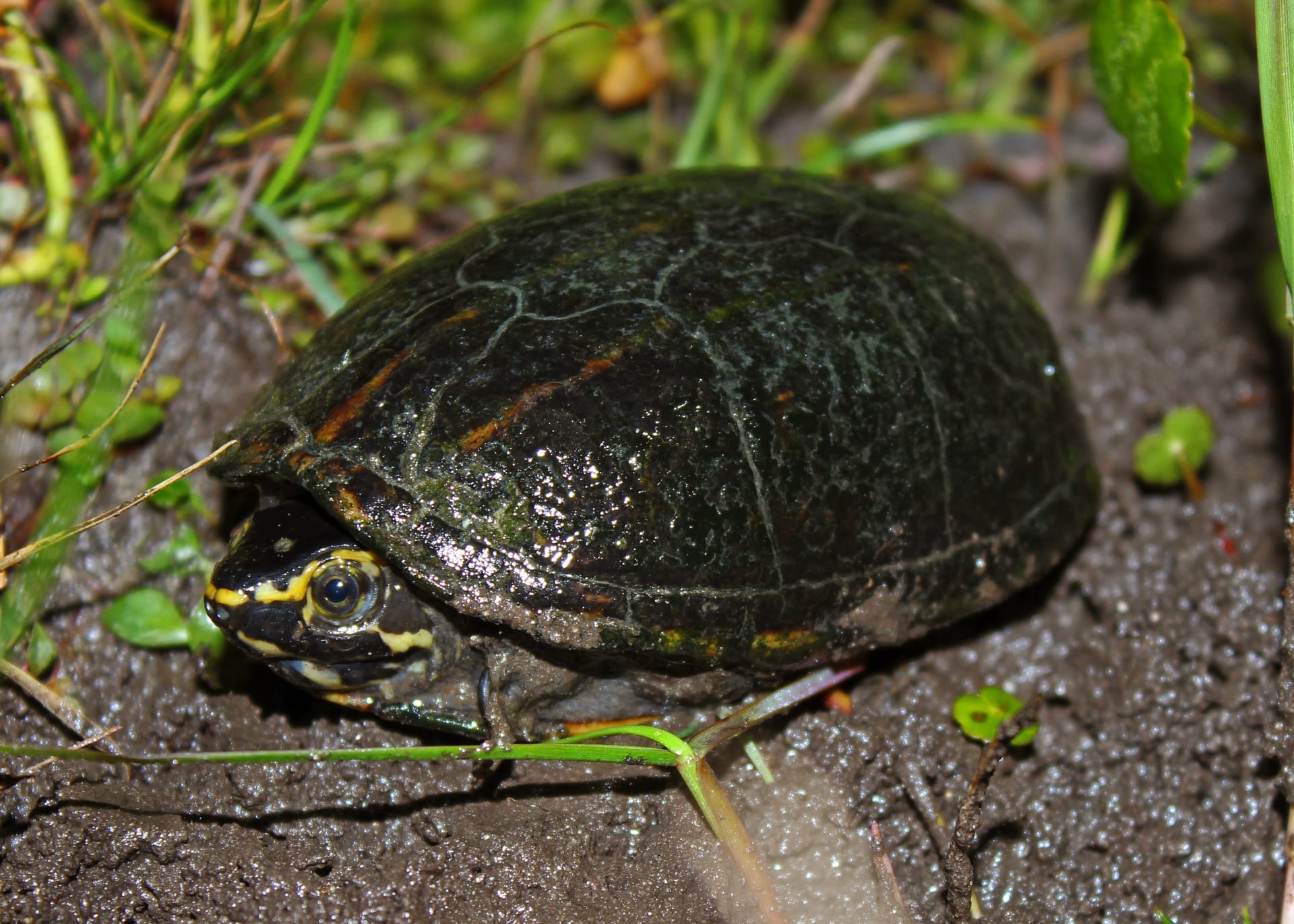
A small mud turtle widespread in the fresh waters of the south-eastern United States. Three pale stripes running the length of the smooth carapace give it its name, and it wanders on land more than any other mud turtle.
Difficulty
Beginner
Temperature
22〜27℃、29〜34℃
Lifespan
20-35 years
Size
8-12cm straight carapace length
Humidity
40〜70%
Diet
Turtle pellets as the staple, plus insects, worms, snails, algae and plant matter
About
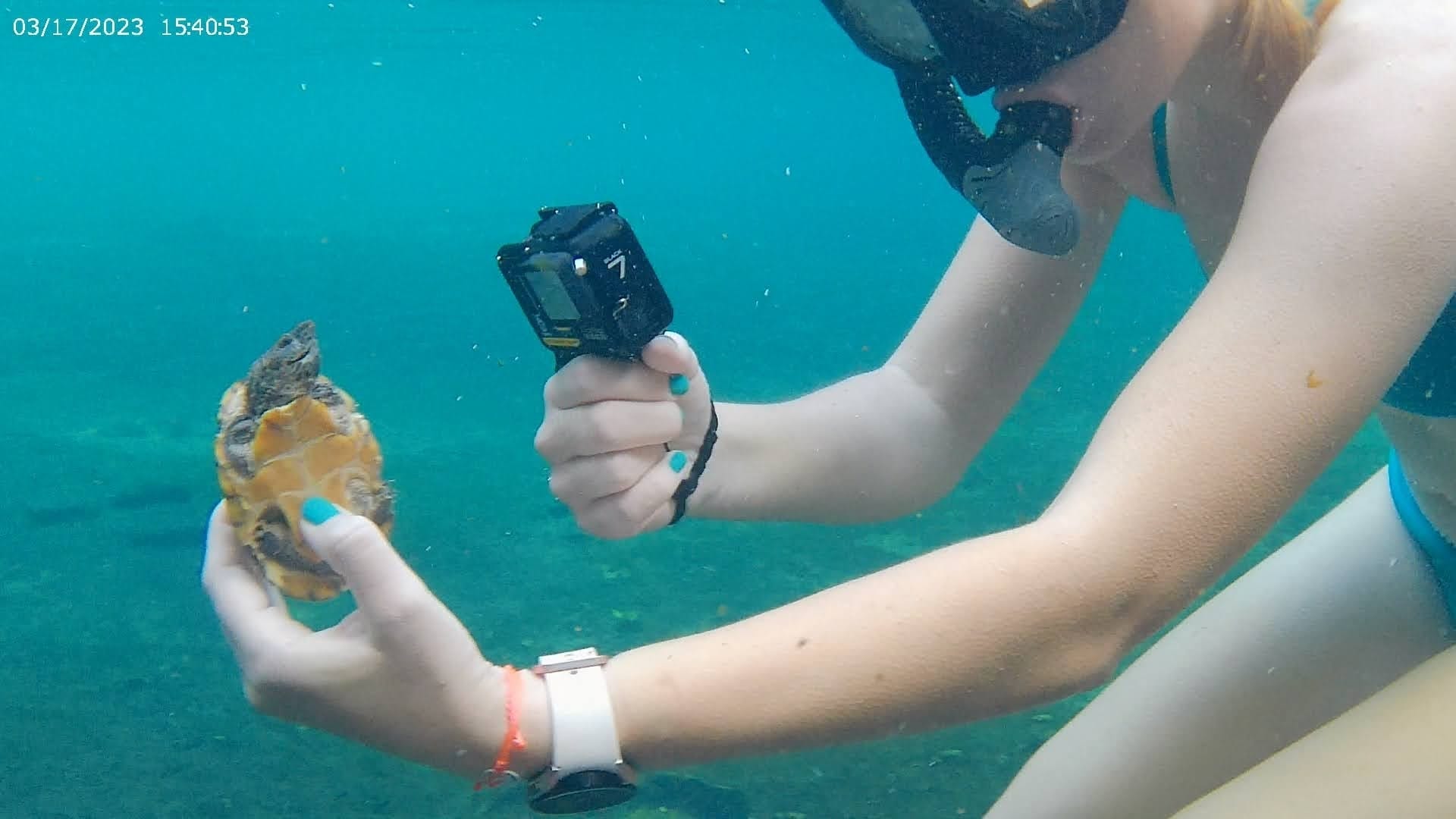
Kinosternon baurii is a turtle of the family Kinosternidae found in the fresh waters of the south-eastern United States. Straight carapace length is 8 to 12 cm, and most individuals stay under 10 cm. Three pale stripes run the length of the smooth carapace, which is where its name comes from. It is omnivorous, eating insects, snails, fish, carrion, algae, plants and seeds, with slow-moving prey predominating in keeping with its own unhurried nature. It wanders on land more than any other mud turtle and has been seen foraging in cow dung. It lives in ponds and ditches. Females nest from September to June, laying up to six clutches a year, four on average, of one to six eggs each. The eggs hatch in 70 to 120 days, and incubation above 27.8 C produces mostly females. Captive-bred animals are relatively widely available.
Source: Wikipedia (CC BY-SA 4.0)
Lifespan of the Striped Mud Turtle
The Striped Mud Turtle lives 20-35 years.
Size of the Striped Mud Turtle
The Striped Mud Turtle grows to 8-12cm straight carapace length.
Temperature & humidity for the Striped Mud Turtle
The ideal temperature for the Striped Mud Turtle is 22〜27℃.
Basic Info
Origin
The south-eastern United States from southern Virginia through North Carolina, South Carolina and Georgia across all of Florida to the Keys, in fresh water such as ponds and ditches
Lifespan
Care Specifications
Semi-aggressiveSolitaryBreeding: Moderate
Sources: Reptiles Magazine: Striped Mud Turtle Care And Breeding / Reptiles Magazine: Mud And Musk Turtles / Wikipedia (English)
References & Sources
Edited & verified by: BreederDirect editorial team
The taxonomic, regulatory, and husbandry data on this page are compiled and verified against the authoritative primary sources below.
Taxonomy & Authority
Accepted name: Kinosternon baurii (Garman, 1891)
Synonyms: Cinosternon baurii Garman, 1891, Cinosternum baurii Garman, 1891, Kinosternon bauri palmarum Stejneger, 1925
Authority databases: GBIF · Reptile Database
Nomenclature follows global taxonomic authority databases.
Regulations & Conservation Status
CITES Appendix IIIUCN LC · Least Concern
Mud turtles, Kinosternon spp., have been listed in Appendix II as of February 23, 2023 (adopted at CoP19 in 2022, Species+). Because of Appendix II status, no individual registration certificate under the international rare and endangered species regulation is required. This species is not listed in the special animal table of the Enforcement Ordinance of the Animal Welfare and Management Act.
Sources: CITES Appendices (Kinosternon spp., Appendix II, effective 23 February 2023) / IUCN Red List
Regulations may change. Always verify the latest information with the relevant authorities.
Striped Mud Turtle Listings
Loading latest listingsFind listings for this species