Source: Wikimedia Commons
Razorback Musk Turtle
BeginnerSternotherus carinatus
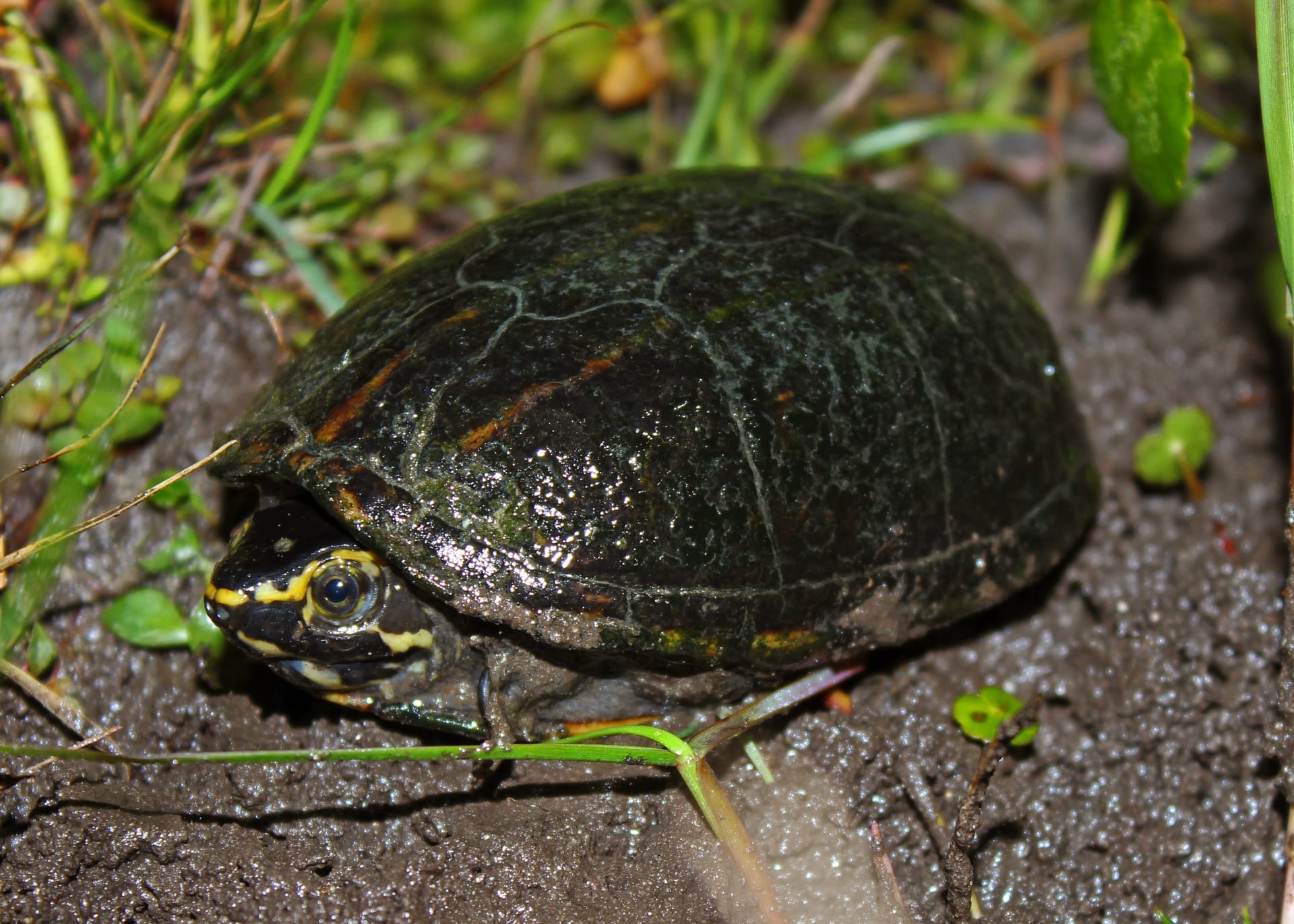
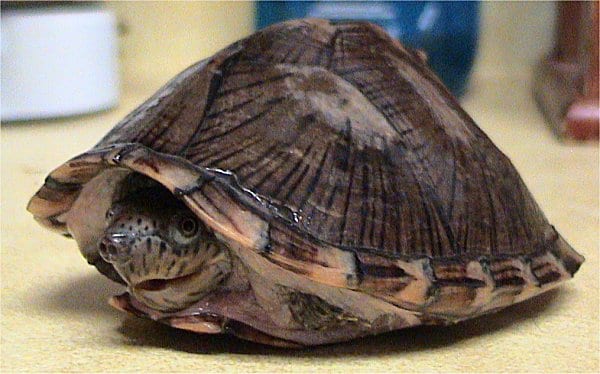
One of the larger musk turtles, from the southern United States. A single sharp keel runs down the centre of the carapace, giving the species both its English and Japanese names. It is almost entirely aquatic.
Difficulty
Beginner
Temperature
24〜27℃、29〜32℃
Lifespan
20-30 years in the wild, up to 50 years in captivity
Size
About 15cm straight carapace length
Humidity
40〜70%
Diet
Turtle pellets, insects such as crickets, and small feeder fish
About
Sternotherus carinatus is a turtle of the family Kinosternidae from the southern United States. It reaches about 15 cm in straight carapace length, making it one of the largest musk turtles. The carapace is brown with black markings at the edges of each scute and carries a single sharp keel down the midline; this raised ridge gives the species its name, is most pronounced in juveniles and tends to flatten with age. The body is grey-brown with black spotting and the head is distinctly bulbous, with a long neck, short legs and a sharp beak. The plastron is small with a single anterior hinge, there is no gular scute, and barbels are present only on the chin. It defends itself with secretions from its musk glands, though this species produces less odour than its relatives, especially in captivity. It is almost entirely aquatic, spending most of its time swimming in slow, heavily vegetated water.
Source: Wikipedia (CC BY-SA 4.0)
Lifespan of the Razorback Musk Turtle
The Razorback Musk Turtle lives 20-30 years in the wild, up to 50 years in captivity.
Size of the Razorback Musk Turtle
The Razorback Musk Turtle grows to About 15cm straight carapace length.
Temperature & humidity for the Razorback Musk Turtle
The ideal temperature for the Razorback Musk Turtle is 24〜27℃.
Basic Info
Origin
The southern United States, in south-eastern Oklahoma, southern and eastern Texas, southern Arkansas, Louisiana, south-central Mississippi, extreme south-western Alabama and Florida, in slow, heavily vegetated creeks, ponds and swamps
Care Specifications
PeacefulSolitaryBreeding: Moderate
Sources: TurtleHolic: Razorback Musk Turtle Profile / Reptiles Magazine: Mud And Musk Turtles / Wikipedia (English)
References & Sources
Edited & verified by: BreederDirect editorial team
The taxonomic, regulatory, and husbandry data on this page are compiled and verified against the authoritative primary sources below.
Taxonomy & Authority
Accepted name: Sternotherus carinatus (Gray, 1856)
Synonyms: Aromochelys carinata Gray, 1856, Goniochelys triquetra Agassiz, 1857, Kinosternon carinatum (Gray, 1856)
Authority databases: GBIF · Reptile Database
Nomenclature follows global taxonomic authority databases.
Regulations & Conservation Status
CITES Appendix IIIUCN LC · Least Concern
The genus Sternotherus (Sternotherus spp.) has been listed on Appendix II since 23 February 2023 (adopted at CoP19 in 2022, Species+). As an Appendix II species, no registration certificate for internationally rare wild fauna and flora is required. This species is not included in the designated animals listed in the Schedule of the Order for Enforcement of the Law Concerning the Protection and Management of Animals.
Sources: CITES Appendices (Sternotherus spp., Appendix II, effective 23 February 2023) / IUCN Red List
Regulations may change. Always verify the latest information with the relevant authorities.
Razorback Musk Turtle Listings
Loading latest listingsFind listings for this species