Source: Wikimedia Commons
Rough-Scaled Sand Boa
BeginnerEryx conicus
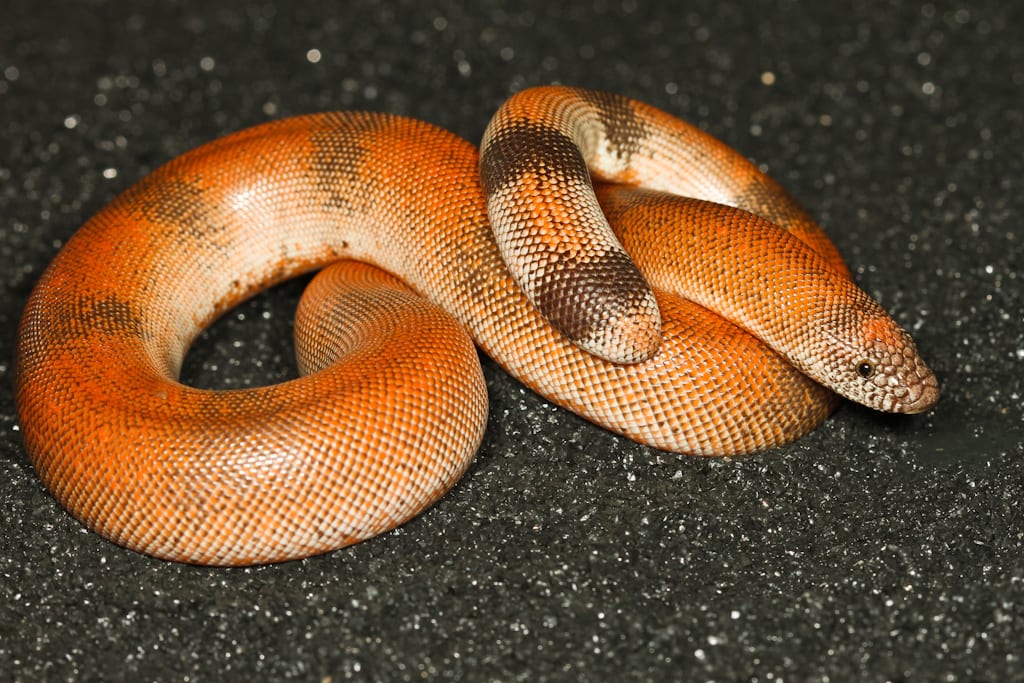
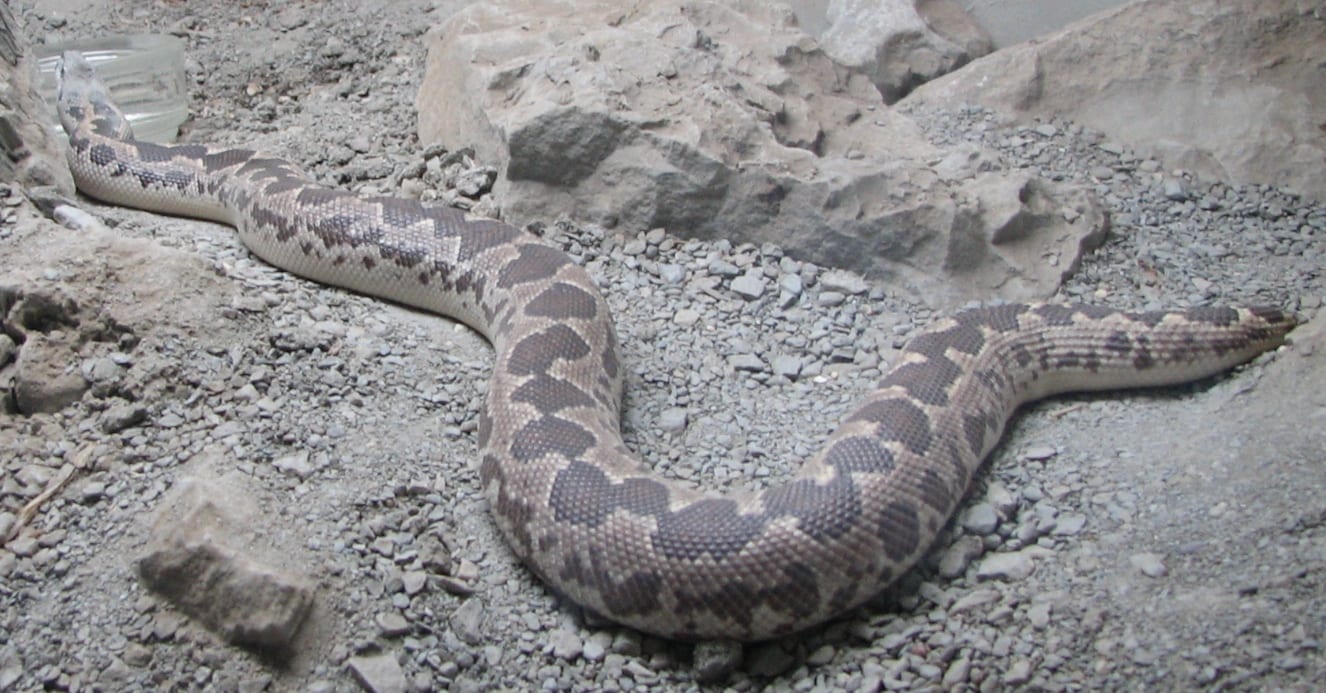
A small fossorial sand boa just under a metre long, found in the dry country from India to northern Sri Lanka. It is marked by sharply keeled dorsal scales and a zigzag pattern resembling the venomous Russell's viper, and spends most of the day buried in sand.
Difficulty
Beginner
Temperature
27〜32℃
Lifespan
15-18 years
Size
Up to 99cm
Humidity
50〜65%
Diet
Thawed frozen mice
About
Eryx conicus is a boid of the family Boidae found in dry country across India south of roughly 30 degrees N, Nepal, Bangladesh and the arid north of Sri Lanka. It reaches a total length of 99 cm, of which about 8 cm is tail. The head is covered in small scales and the eye is small with a vertical pupil. The dorsal scales are strongly keeled and grow sharper towards the rear, enough that a struggling specimen is painful to hold bare-handed. A dark brown zigzag band or row of blotches runs along a yellowish or greyish brown ground colour, and the belly is uniform white. Because that pattern resembles the highly venomous Russell's viper, some herpetologists regard it as Batesian mimicry. It is active at dusk and at night, constricting birds and small mammals. It is viviparous. In captivity the essentials are a substrate it can burrow into and localised belly heat; 10 to 20 gallons is enough even for adults.
Source: Wikipedia (CC BY-SA 4.0)
Lifespan of the Rough-Scaled Sand Boa
The Rough-Scaled Sand Boa lives 15-18 years.
Size of the Rough-Scaled Sand Boa
The Rough-Scaled Sand Boa grows to Up to 99cm.
Temperature & humidity for the Rough-Scaled Sand Boa
The ideal temperature for the Rough-Scaled Sand Boa is 27〜32℃. Ideal humidity is 50〜65%.
Basic Info
Origin
India (south of about 30 degrees N), Nepal, Bangladesh and the arid north of Sri Lanka
Lifespan
Care Specifications
PeacefulSolitaryBreeding: Moderate
Sources: Reptiles Magazine: Care, Breeding And Caudal Luring Of The Rough-Scaled Sand Boa / Wikipedia (English) / Reptile Database
References & Sources
Edited & verified by: BreederDirect editorial team
The taxonomic, regulatory, and husbandry data on this page are compiled and verified against the authoritative primary sources below.
Taxonomy & Authority
Accepted name: Eryx conicus (Schneider, 1801)
Synonyms: Boa conica Schneider, 1801, Gongylophis conicus (Schneider, 1801), Eryx conicus brevis Deraniyagala, 1951
Authority databases: GBIF · Reptile Database
Nomenclature follows global taxonomic authority databases.
Regulations & Conservation Status
CITES Appendix IIIUCN NT · Near Threatened
Listed in Appendix II as Boidae spp. since February 4, 1977 (registered as Gongylophis conicus in Species+). As an Appendix II species, an international endangered species certificate is not required. This species is not included in the designated animals listed in the enforcement regulations of the Animal Protection and Management Act.
Sources: CITES Appendices (Boidae spp., Appendix II, effective 4 February 1977) / IUCN Red List
Regulations may change. Always verify the latest information with the relevant authorities.
Rough-Scaled Sand Boa Listings
Loading latest listingsFind listings for this species