A Complete Guide to Chinchilla Dust Baths | Choosing the Right Sand, Frequency, and Creating the Ideal Environment
This guide explains dust bathing methods essential for chinchillas. We introduce the optimal sand types, frequency and duration of dust baths, how to choose containers, and tips for maintaining coat quality.
Key Takeaways
This guide explains dust bathing methods essential for chinchillas. We introduce the optimal sand types, frequency and duration of dust baths, how to choose containers, and tips for maintaining coat quality.
Related Species
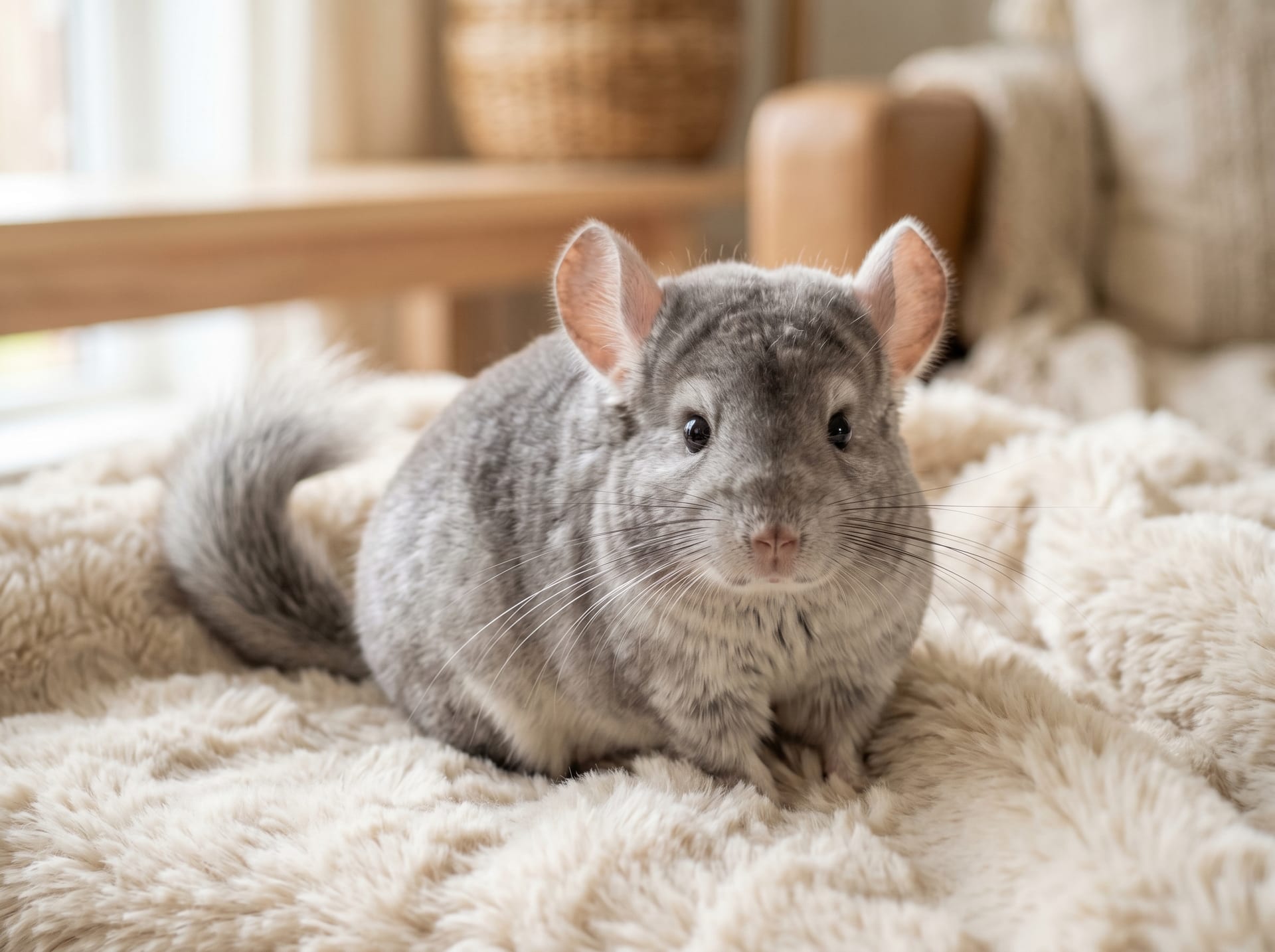
For chinchillas, dust bathing is an essential behavior for maintaining cleanliness. A chinchilla's fur consists of 60-80 extremely fine hairs growing densely from each hair follicle, and when washed with water, they take an extremely long time to dry and can cause skin disease. For this reason, instead of water bathing, chinchillas remove excess oils and dirt from their bodies through dust bathing. In this article, we provide a detailed explanation of chinchilla dust bathing.
Choosing the Best Sand for Chinchillas
The basic principle is to select dedicated chinchilla sand (chinchilla dust) for use in chinchilla dust baths. Chinchilla-specific sand consists of extremely fine particles that penetrate between the chinchilla's densely packed hairs and absorb excess oils. Garden sand or general hamster dust bath sand has particles that are too coarse to be effective on chinchilla fur.
Sand types are broadly divided into two categories: natural mineral-based and volcanic ash-based.
Type
Raw Material
Characteristics
Natural Mineral-Based
Finely ground minerals such as aluminum silicate
Excellent at adsorbing oils
Volcanic Ash-Based
Finely ground pumice
Slightly less effective at adsorption than natural mineral-based, but tends to produce less dust
Particle fineness is an important consideration. The ideal particle size for chinchilla dust is approximately 100-200 microns. If particles are too coarse, they cannot penetrate between the hairs; if too fine, they place stress on the respiratory system. When you open the bag and touch it with your finger, it should feel both smooth like powder and have a slight sand-like texture—this balance is ideal.
✍️
BreederDirect Editorial
The BreederDirect editorial team specializes in care information for animals, covering veterinary care and breeding to deliver beginner-friendly guides.
Find Small Animals on BreederDirect
Buy directly from verified breeders
Browse Related Listings
Find Small Animals listings related to this article on BreederDirect. Buy directly from verified breeders.
Replace used sand after approximately 3-4 uses. Hygiene issues arise if the sand becomes moist or mixed with feces. After each use, if you remove feces and hair with a sieve, it can be reused 2-3 times. However, if the sand is clearly wet or has an odor, replace it promptly.
Frequency and Duration Guidelines for Dust Baths
Typically, chinchillas should dust bathe once daily for approximately 10-15 minutes. If dust bathing time is too short, excess oils in the fur cannot be adequately removed, which can cause matting or greasy fur. Conversely, prolonged exposure to sand can over-dry the skin, causing dandruff or itching.
Frequency should be adjusted based on season and humidity. During Japan's rainy season and summer, when humidity is high and chinchilla fur easily absorbs moisture, dust bathing may be necessary twice daily. Conversely, during the dry winter months, bathing every other day may be sufficient. Check the condition of the coat by touch—if it feels smooth and dry, frequency is appropriate; if it feels greasy, increase dust bath frequency.
The best time for dust bathing is from evening through night, when chinchillas become active. Since chinchillas are crepuscular to nocturnal animals, they prefer dust bathing in the evening and beyond rather than during the day. Providing dust baths at the same time each day helps establish it as part of the chinchilla's routine.
Few chinchillas dislike dust bathing, but newly arrived animals may not dust bathe due to stress. Wait a few days until they acclimate to their new environment, then introduce the dust bath container. If they still do not dust bathe, changing the sand type may spark their interest.
Choosing and Placing a Dust Bath Container
A dust bath container must be large enough for a chinchilla to roll around and rotate its body inside. A container with a diameter of at least 25cm and depth of at least 15cm is ideal. Because chinchillas roll vigorously during dust bathing, a heavy ceramic container with good stability is most suitable. Plastic containers are light, easily tipped over, and may be gnawed and damaged.
Dedicated chinchilla bath houses are also available commercially. House-style models with roofs can prevent sand from scattering, but because the interior becomes dark, chinchillas may become too comfortable inside and use it as a toilet—a significant drawback. This problem can be prevented by removing the container from the cage outside of dust bathing time.
Opinion differs on whether to keep the dust bath container constantly in the cage. Most keepers use the method of placing the container only during dust bathing time and removing it afterward.
Advantages: Chinchillas can dust bathe whenever they wish
Disadvantages: Chinchillas may defecate or urinate in the sand, the sand absorbs moisture and loses effectiveness, and excessive dust bathing may over-dry the skin
A sand depth of 3-5cm is appropriate. If too deep, there is excessive sand waste; if too shallow, the chinchilla cannot roll adequately. Sand will inevitably scatter around the container during dust bathing, so placing newspaper or pet sheets around the container makes cleanup easier.
The Relationship Between Dust Bathing and Coat Quality
Chinchillas' beautiful coat quality is maintained through proper dust bathing. Chinchilla fur has the highest density among mammals, with approximately 20,000 hairs per square centimeter. While this ultra-high-density coat excels in thermal insulation, it has the characteristic of easily accumulating sebum and moisture.
The fine particles of dust penetrate between these densely packed hairs, adsorbing excess sebum and carrying it away. Through this action, individual hairs remain separated from each other, creating a fluffy, velvety texture. Insufficient dust bathing causes hairs to clump together, losing shine and resulting in poor appearance and feel.
Coat condition is also a barometer of health. If the coat remains greasy despite regular dust bathing, nutritional imbalance or skin disease may be the cause. If hair loss increases, consider the possibility of stress or fungal infection (ringworm). If any abnormalities are observed, consult a veterinarian experienced with small animals.
During shedding season, it is beneficial to increase dust bath frequency slightly. During the period until new fur fully grows in, coat quality tends to deteriorate, making dust bath care especially important. Using brushing and dust bathing together helps chinchillas comfortably get through shedding season.
Common Dust Bath Problems and Solutions
Sneezing: A temporary reaction from sand dust entering the nose will usually stop shortly after dust bathing. However, if sneezing continues after dust bathing or if nasal discharge appears, the sand particles may be too fine or there may be a respiratory issue; try changing sand brands or consult a veterinarian.
Using the dust bath container as a toilet: Limiting dust bath time and removing the container before the chinchilla eliminates is effective. Observe the chinchilla's toilet habits and adjust the timing of dust baths and toilet breaks accordingly.
Sand getting in the eyes and causing irritation: Usually, tears naturally wash it away, but if redness persists or eye discharge appears, consult a veterinarian for possible conjunctivitis.
Sand dust accumulating on room walls and furniture: A common concern among chinchilla keepers. Designate a specific area for dust bathing and keep it easy to clean, and use an air purifier to reduce dust spread.
At BreederDirect, you can welcome chinchillas directly from breeders known for beautiful coat quality. By asking breeders about the sand brand they use and their dust bath frequency, you can smoothly continue the same care after bringing your chinchilla home. Chinchilla offspring born from parents with beautiful coats are likely to genetically possess high-quality fur.