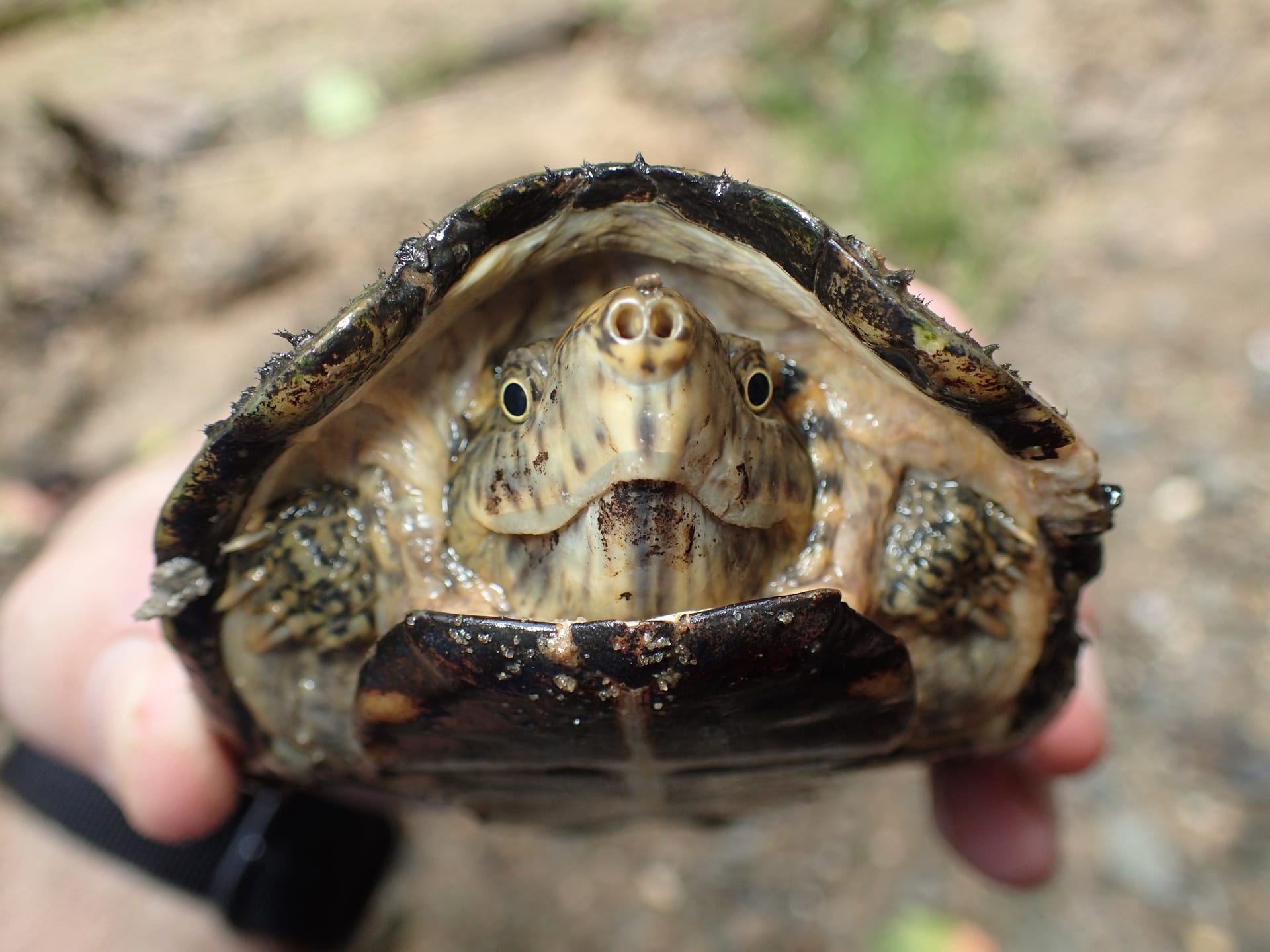
 © John P Friel / CC BY 4.0
Stripe-necked Musk Turtle
The Stripe-necked Musk Turtle is a musk turtle native to swamps and slow-moving rivers in the southeastern United States. It gets its name from the bold stripes running along the sides of its head and neck, paired with a net-like pattern on top of the head — a feature that helps distinguish it from the spotted Loggerhead Musk Turtle, of which it was once classified as a subspecies. It is an aquatic turtle that walks along the bottom, and it may release a smelly secretion when startled, so handle it quietly. Its care difficulty is considered suitable for beginners. There is little size data specific to this species, so plan to adjust its enclosure as it grows.
View Stripe-necked Musk Turtle encyclopedia →Breeder Wanted!
List on BreederDirect and sell directly to customers nationwide!
BreederDirect's 6 Transparency Commitments
Every Reptiles & Amphibians from verified Breeder breeders includes complete information: morph, genetics, feeding requirements, and temperament details.
- Morph Information
- Actual Photos
- Feeding Information
- Temperament Information
- Genetics Information
- Age (Months)
Browse all 319 breeds
Difficulty Level
Feeding Type
Temperament
No listings match your filters
Adjust your filters, or get notified when new listings arrive.
Getting alerts is free with a member account. When new listings match your saved search, we'll notify you by email and in-app.
Browse other categories
Verified breeders (preview)

Are you raising reptiles & amphibians?
Register as a breeder and connect with buyers directly.
Apply as a breederStripe-necked Musk Turtle key facts
- Care level
- Beginner-friendly
- Diet
- Mostly carnivorous omnivore (aquatic insects, snails, crustaceans)
- Housing
- An aquatic turtle of swamps and slow rivers; keep water at a depth it can walk along, with driftwood cover and a haul-out area.
- Diet & Feeding
- Musk turtles feed underwater; offer pellets plus snails, shrimp, bloodworms and insects.
- Temperament
- Like other musk turtles it may release a smelly secretion when alarmed.
- Health & Cautions
- Maintain water quality with filtration and regular changes, and watch shell and skin condition.
- Notes
- It resembles the loggerhead musk turtle but has a net-like crown pattern instead of spots and stripes along the head and neck. Never release a captive animal into the wild.
About Stripe-necked Musk Turtle
A musk turtle from rivers in the southeastern United States. Stripes along the sides of the head and neck and a net-like pattern on top of the head distinguish it from the similar Loggerhead Musk Turtle. It's considered suitable for beginners.
7 things to know before welcoming a Stripe-necked Musk Turtle
1Water Depth and a Haul-Out Spot Needed
This is an aquatic turtle from swamps and slow-moving rivers. Provide water deep enough for it to walk along the bottom, plus hiding places such as driftwood and a spot where it can haul out of the water.
2Stripes and a Net-like Crown
Bold stripes run along the sides of the head and neck, with a net-like pattern on top of the head. This is what separates it from the spotted Loggerhead Musk Turtle.
3Handle Quietly
Musk turtles may release a smelly secretion from glands at the back of the shell when startled. Individual turtles vary, so handle a new arrival gently and quietly until it settles in.
4Little Size Data Available
Shell-length data specific to this species is limited, so adult size is not well documented. Leave room to expand its enclosure as it grows.
5Beginner-Friendly Difficulty
This species is generally considered manageable for first-time turtle keepers. That said, the basics of water quality and temperature management still apply, as with any turtle.
6Limited Lifespan Data
There isn't much published data yet on how long this species lives in captivity. Since it's a long-term companion, set up an environment you can maintain consistently over time.
7Prepare Before You Bring One Home
Have the tank, filter, heater, and a dry basking area ready before bringing one home. This species is listed under CITES Appendix II.
Frequently asked questions about Stripe-necked Musk Turtle
- Q.Is this turtle suitable for beginners?
- A.Yes, this species is generally considered manageable for first-time keepers. Even so, basic care such as water quality and temperature management is still required, so set up the enclosure properly before bringing one home.
- Q.How is it different from the Loggerhead Musk Turtle?
- A.The Stripe-necked Musk Turtle has bold stripes on the sides of its head and neck plus a net-like pattern on top of its head, while the Loggerhead Musk Turtle has a spotted pattern instead. It was previously classified as a subspecies of the Loggerhead Musk Turtle.
- Q.How big does it get?
- A.Shell-length data specific to this species is limited, so an exact adult size isn't well documented. Plan to adjust its enclosure as it grows.
- Q.How long does it live?
- A.There isn't much published data yet on captive lifespan for this specific species. Since it may become a long-term companion, prepare an environment you can maintain consistently.
- Q.Does it need water, land, or both?
- A.It's an aquatic turtle from swamps and slow-moving rivers, so build the setup around water deep enough for it to walk along the bottom, and also provide hiding places such as driftwood and a spot where it can haul out.
Useful tools for Stripe-necked Musk Turtle care
Learn more about Stripe-necked Musk Turtle in the encyclopedia
View Stripe-necked Musk Turtle encyclopedia entry →
Care difficulty, lifespan, size and diet — all basics covered.
More in this category
Can't find the one you're looking for?
Post your wishes for free and breeders with matching animals will contact you with introductions.