Source: Wikimedia Commons
Stripe-necked Musk Turtle
BeginnerSternotherus peltifer
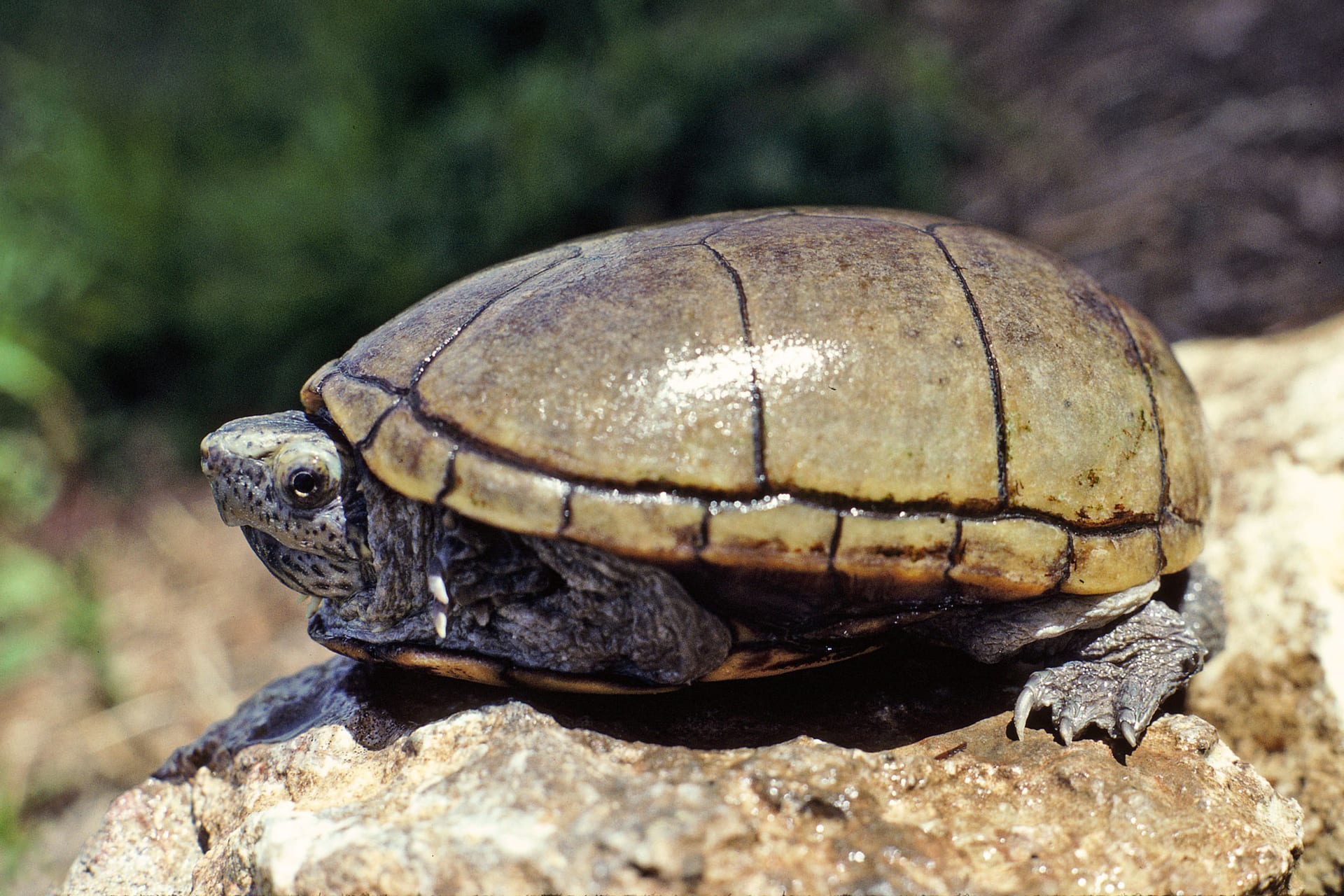
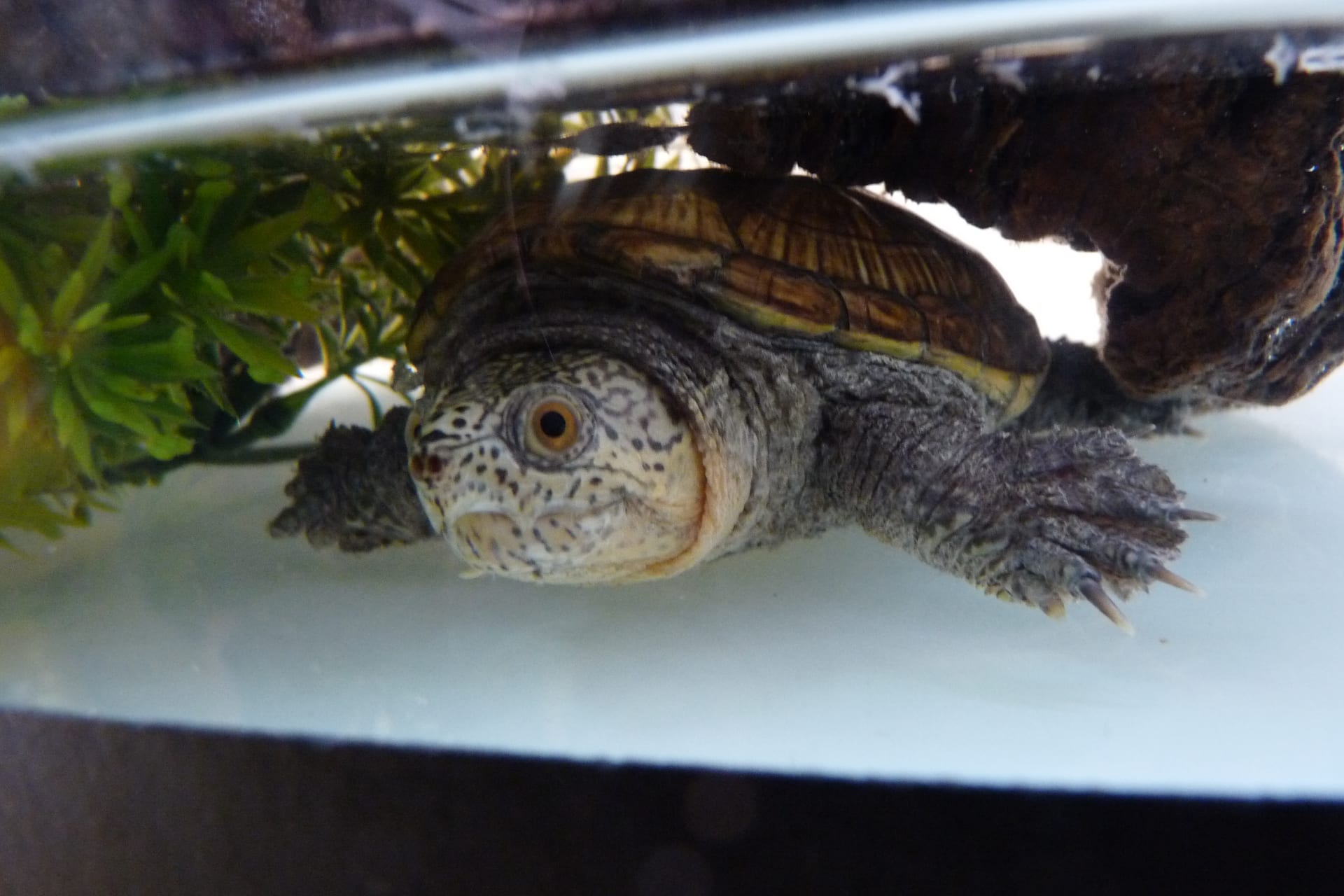
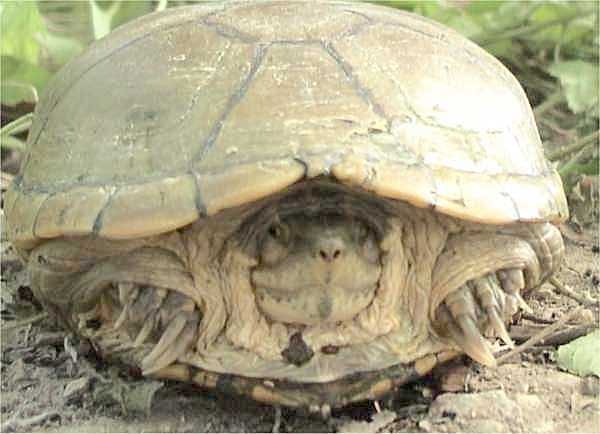
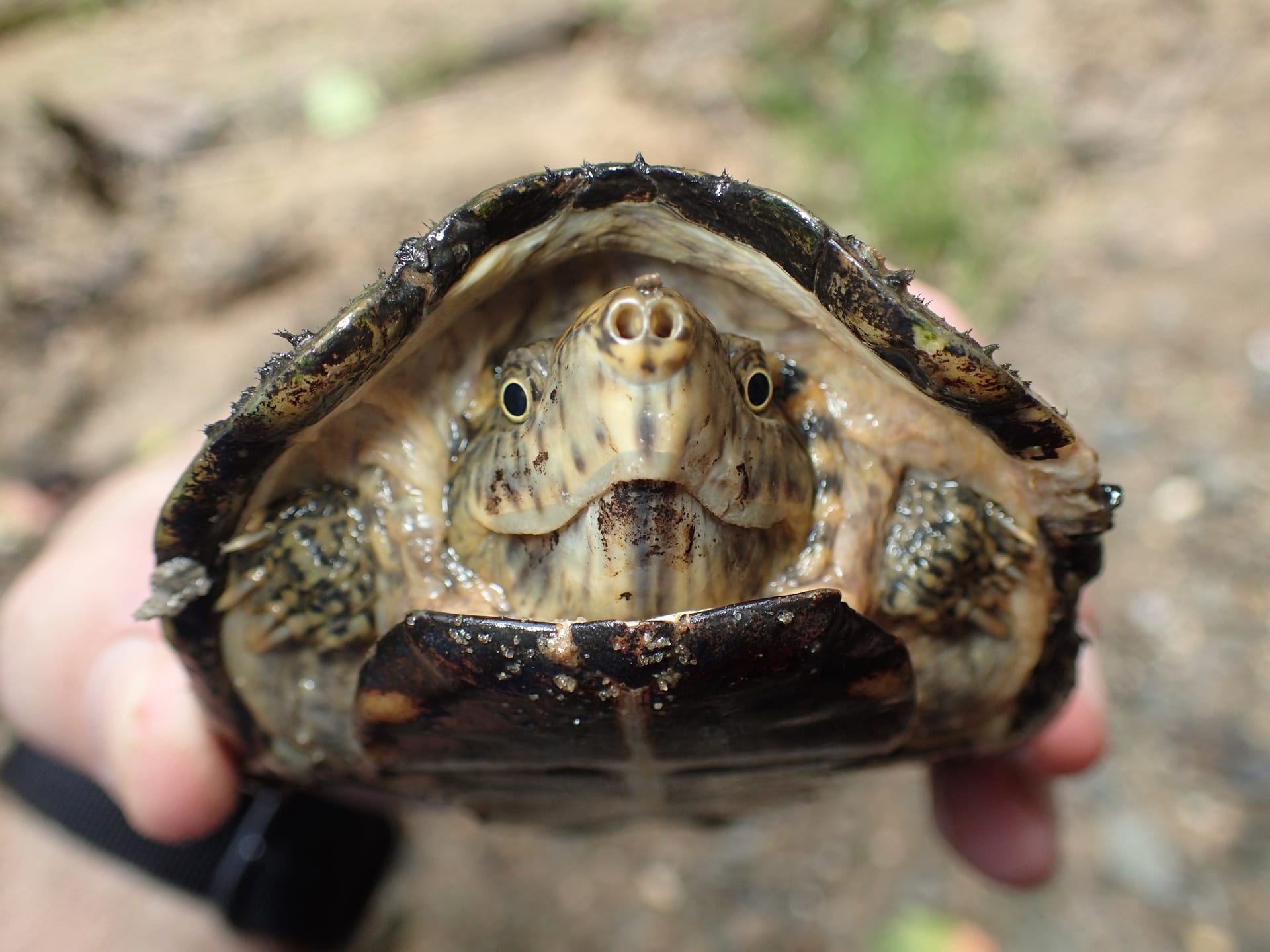
A small musk turtle of rivers in the south-eastern USA. Distinct stripes on the sides of the head and neck and a net-like crown pattern separate it from the spotted loggerhead musk turtle.
Difficulty
Beginner
Temperature
25〜32℃
Lifespan
Few data on lifespan in captivity
Size
Few species-specific size data (a small musk turtle)
Humidity
40〜70%
Diet
Mostly carnivorous omnivore (aquatic insects, snails, crustaceans)
About
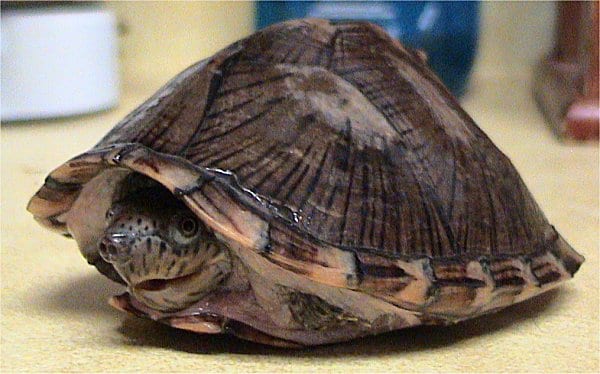
The stripe-necked musk turtle is a kinosternid of the south-eastern United States (Alabama, Georgia, Kentucky, Louisiana, Mississippi, Tennessee, Virginia and North Carolina). Long treated as S. minor peltifer, a subspecies of the loggerhead musk turtle, it is now recognized as a species following work including Scott et al. (2017), although CITES (Species+) still includes it under S. minor. According to the diagnosis cited by the Reptile Database, it has a round, low carapace with flared margins and, in young animals, a single low vertebral keel but no lateral keels. Distinct stripes on the sides of the head and neck, a reticulate pattern of lines rather than spots on top of the head, small paired gular scutes and a single pair of chin barbels distinguish it from other Sternotherus. It occurs in the greater Mobile River basin, the upper Tennessee River drainage and the Pearl and Pascagoula river systems, and the assignment of Tennessee River animals needs further study. It lives in swamps and slow rivers. Species-specific size data are limited. In Japan small numbers are sold by specialist shops.
Source: Wikipedia (CC BY-SA 4.0)
Basic Info
Origin
South-eastern United States (Mobile basin, upper Tennessee, Pearl and Pascagoula river systems)
Lifespan
Few data on lifespan in captivity
Size
Few species-specific size data (a small musk turtle)
Temperature
25〜32℃
Humidity
40〜70%
Diet
References & Sources
Edited & verified by: BreederDirect editorial team
The taxonomic, regulatory, and husbandry data on this page are compiled and verified against the authoritative primary sources below.
Taxonomy & Authority
Accepted name: Sternotherus peltifer (Smith & Glass, 1947)
Synonyms: Sternotherus minor peltifer Smith & Glass, 1947
Authority databases: GBIF · The Reptile Database: Sternotherus peltifer · GBIF: Sternotherus peltifer
Nomenclature follows global taxonomic authority databases.
Regulations & Conservation Status
CITES Appendix II
Listed in CITES Appendix II. International trade requires an export permit from the country of origin, but no registration is needed to keep or transfer the animal within Japan. The whole genus Sternotherus has been listed since 23 February 2023. Species+ includes this species under Sternotherus minor.
Sources: Species+ (CITES): Sternotherus minor
Regulations may change. Always verify the latest information with the relevant authorities.
Stripe-necked Musk Turtle Listings
Loading latest listingsFind listings for this species