Source: Wikimedia Commons
Yellow Mud Turtle
IntermediateKinosternon flavescens
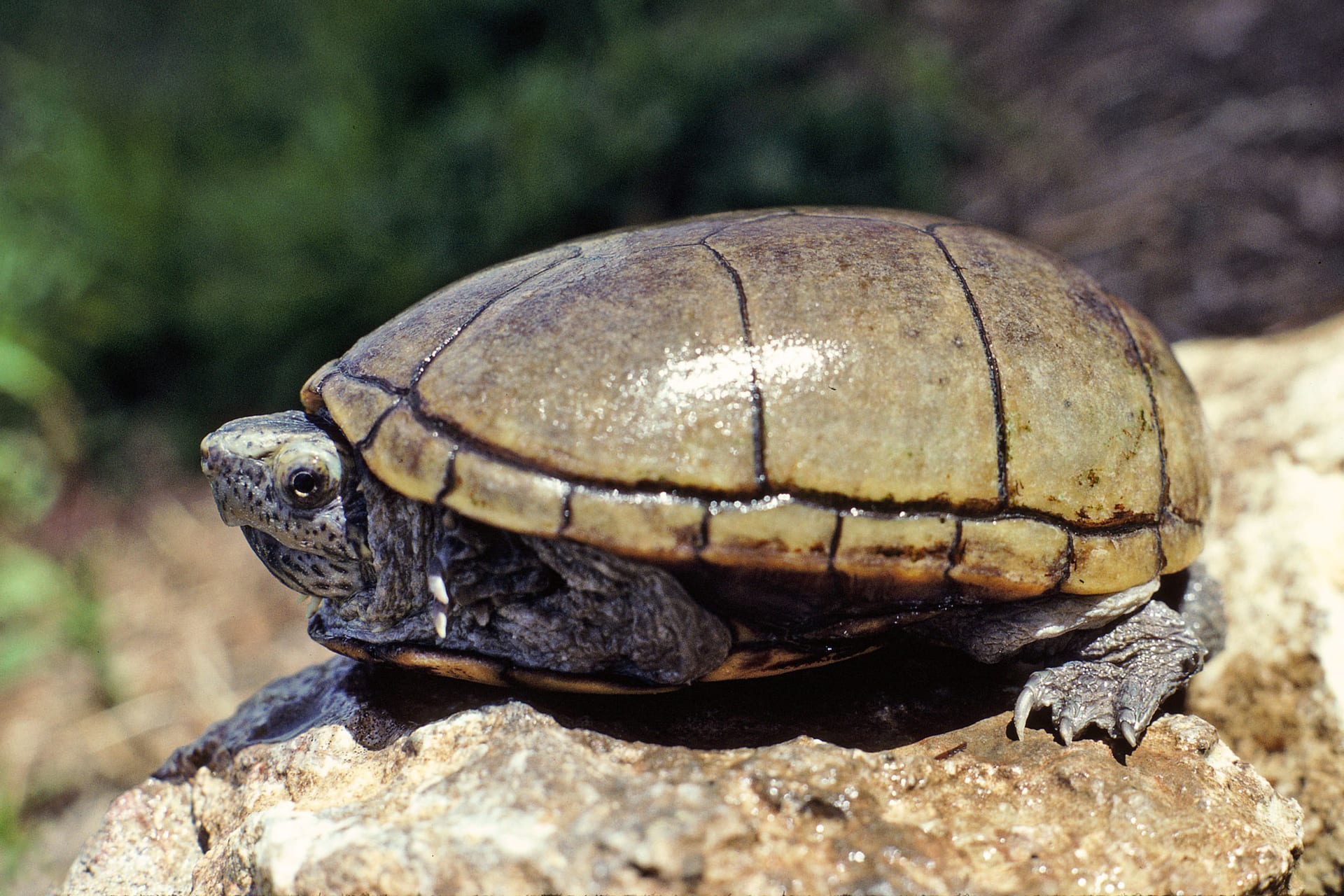
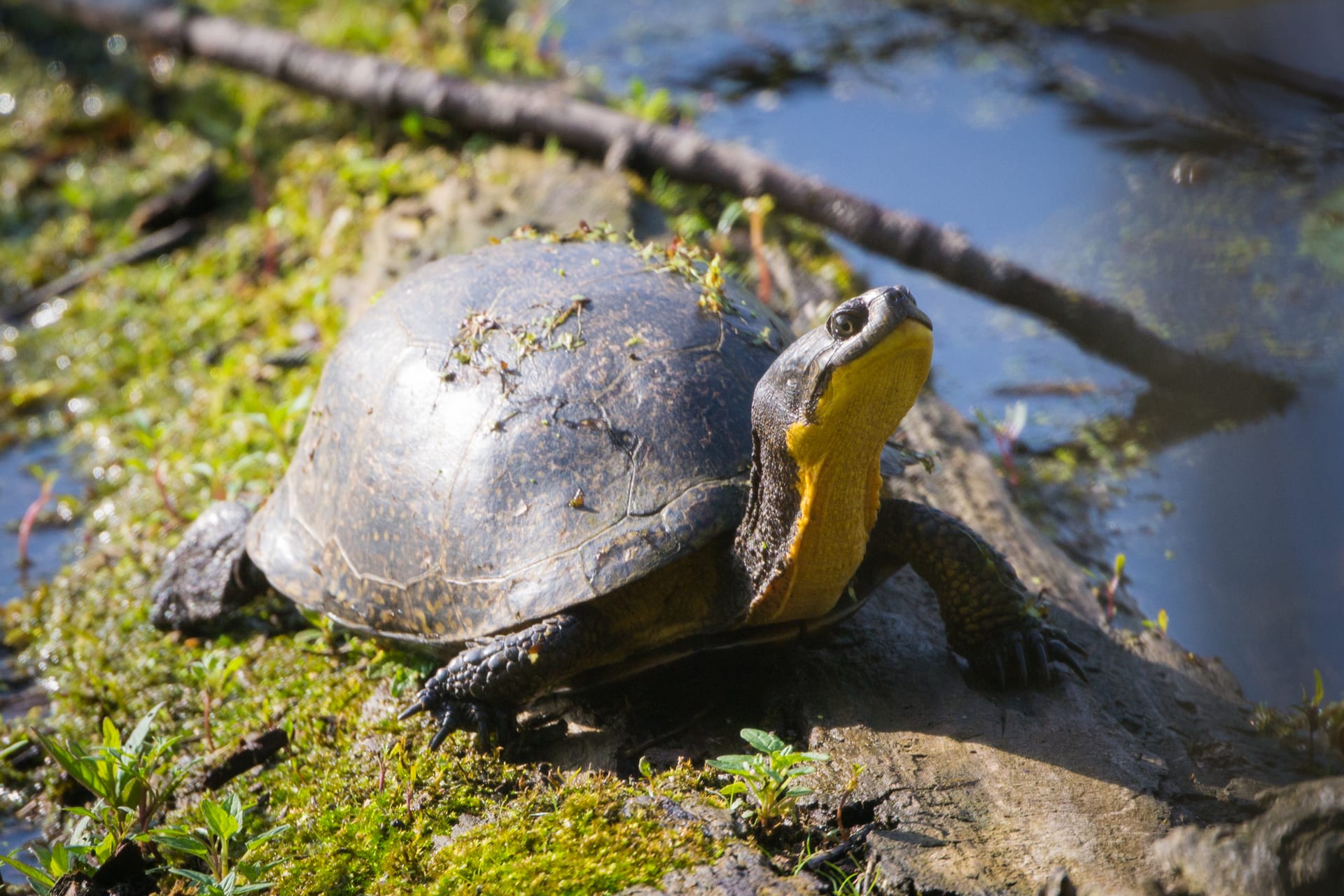
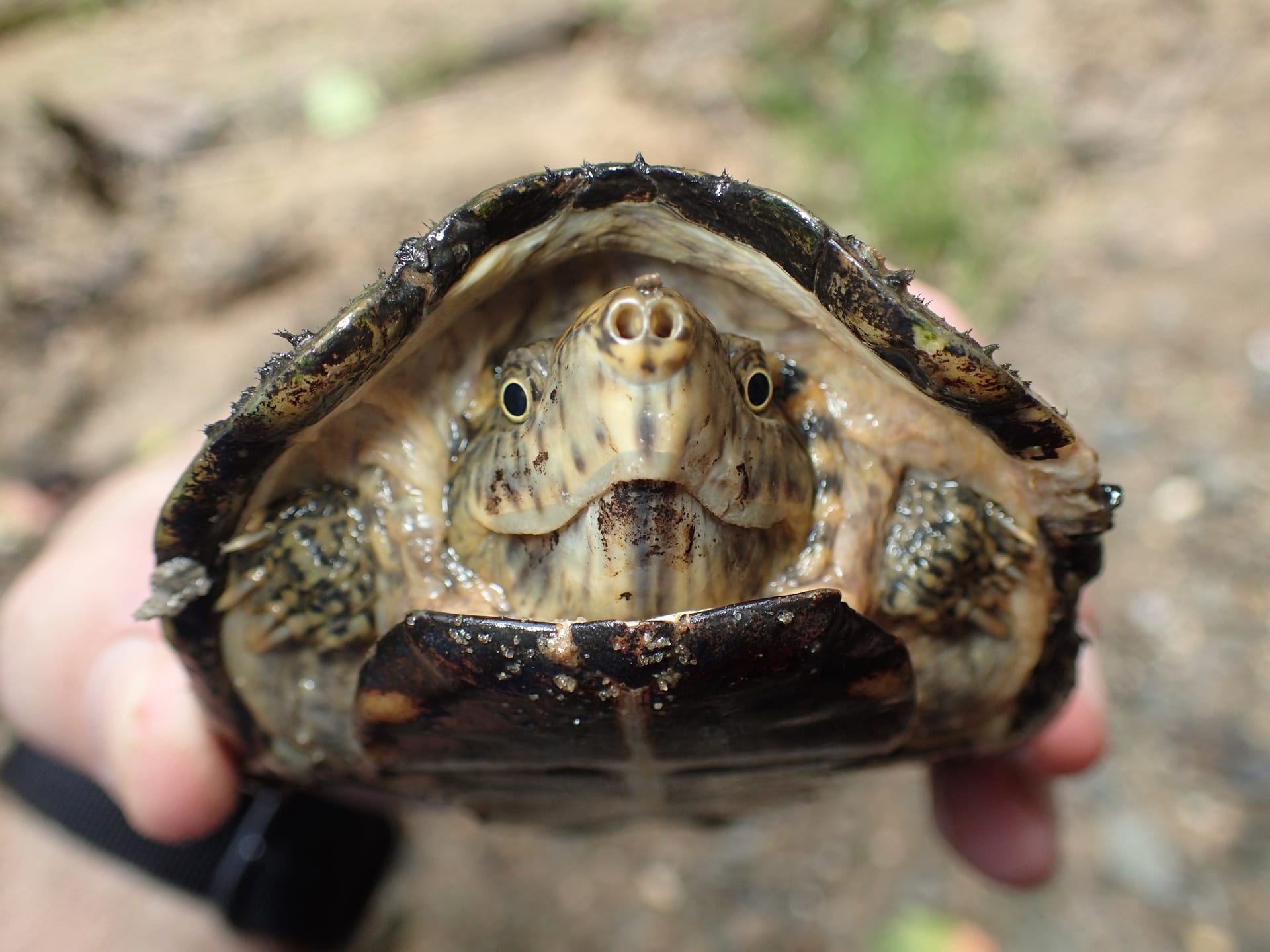
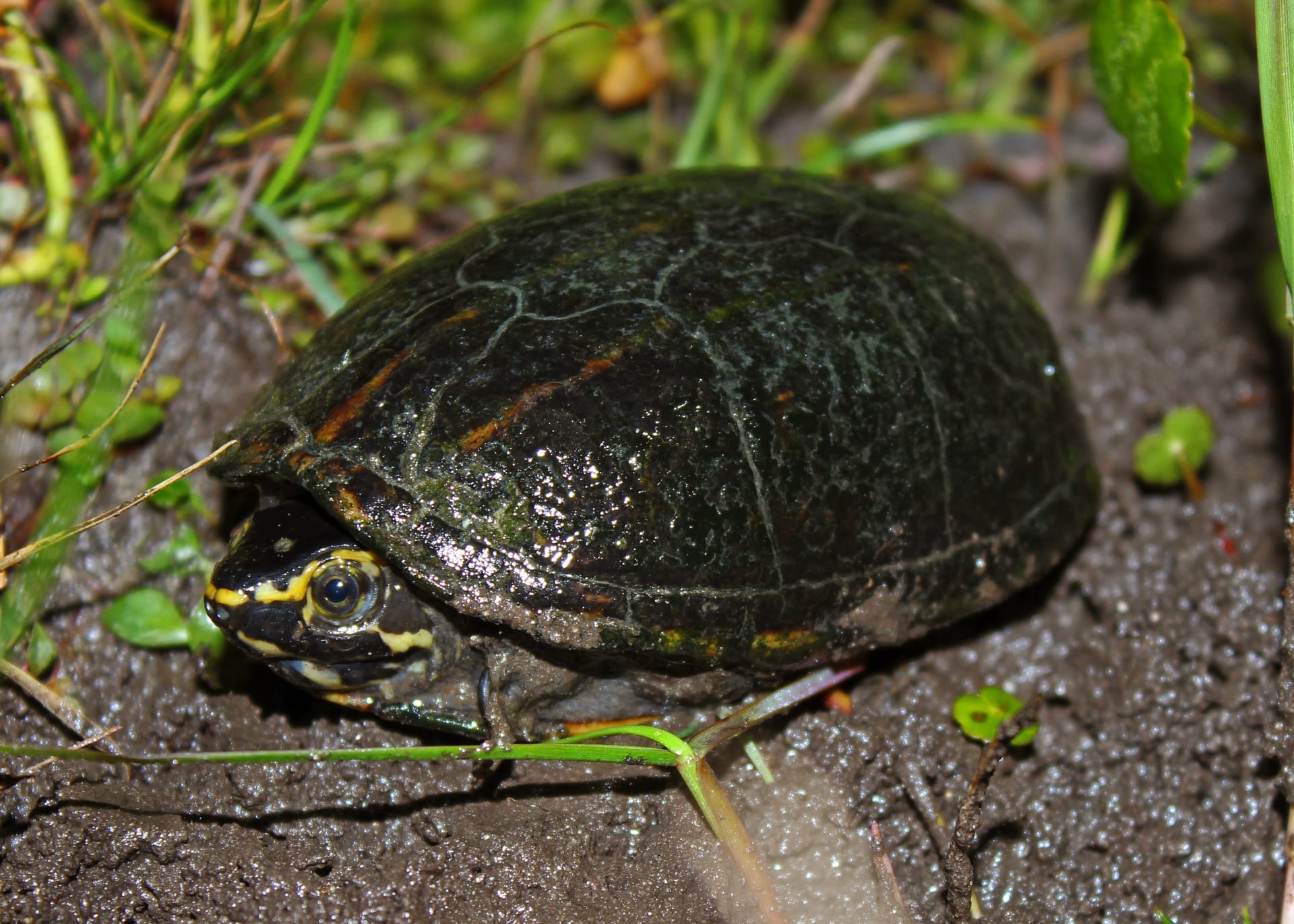
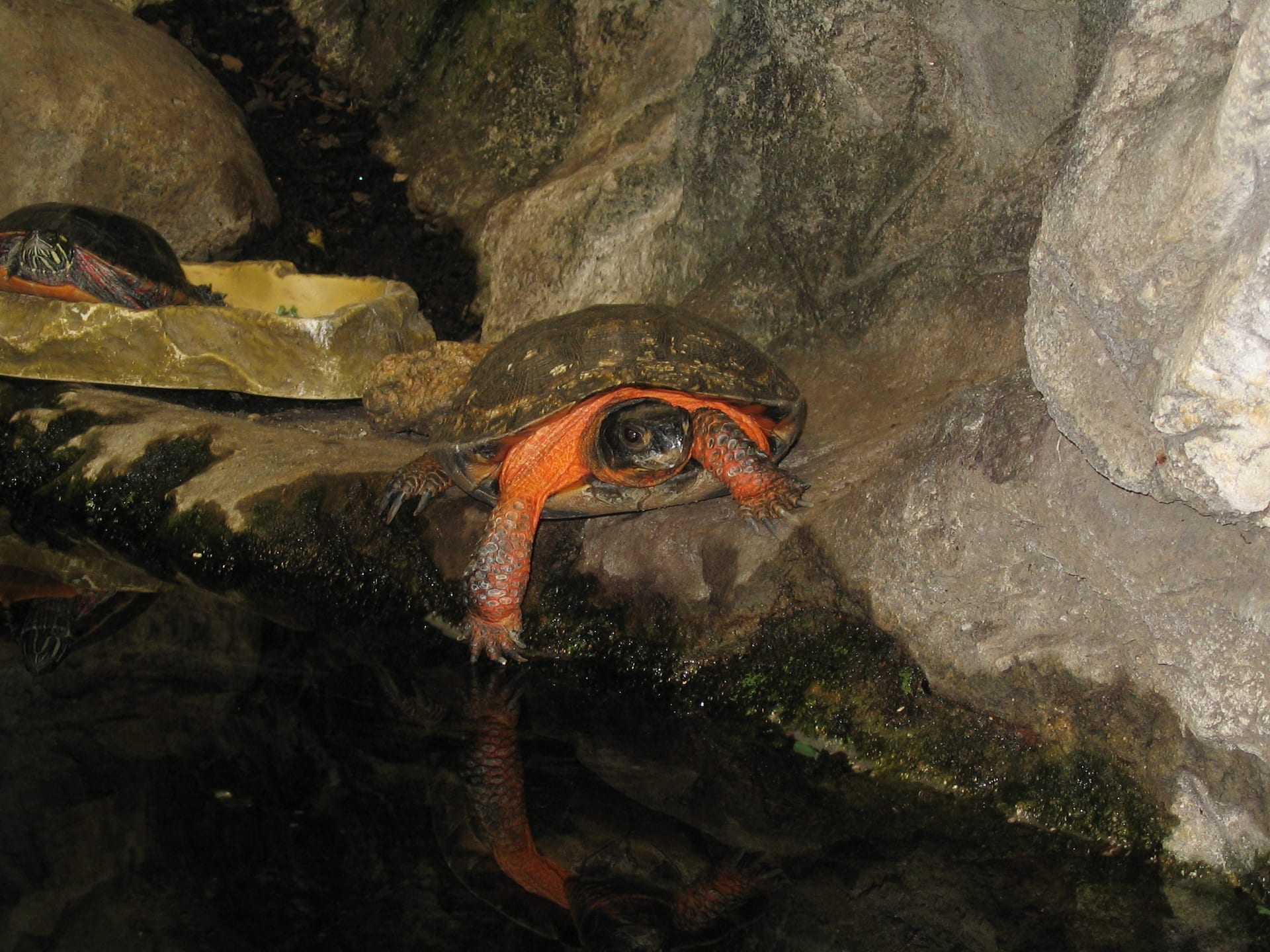
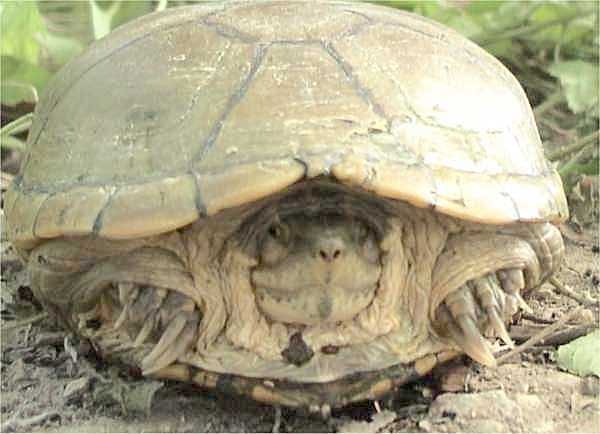
A small mud turtle named for the yellow on its throat, head and neck. It has a flat carapace and a double-hinged plastron, spends much of the year estivating underground and can live over 40 years.
Difficulty
Intermediate
Temperature
25〜32℃
Lifespan
More than 40 years
Size
Maximum carapace length 16.8 cm (males larger; females up to 12.8 cm)
Humidity
40〜70%
Diet
Omnivore (worms, crayfish, frogs, snails, fish, aquatic insects, plants)
About
The yellow mud turtle is a kinosternid of the central and south-western United States (Arizona, Colorado, Illinois, Iowa, Kansas, Missouri, Nebraska, New Mexico, Oklahoma and Texas) and north-eastern Mexico. Isolated populations in Iowa, Illinois and Missouri are thought to be relicts of a formerly more eastern range. Maximum carapace length is 16.8 cm; males are larger, and females reach 12.8 cm. The flat, keelless carapace is broadly oval from above and yellow to brown with darker seams. Yellow on the throat, head and sides of the neck gives rise to its common and scientific names. The plastron has two hinges so each end can close separately, and males have a blunt spine at the tail tip. Four subspecies were once recognized, but the Arizona and Durango forms are now widely treated as separate species and no subspecies are recognized. It spends most of the year estivating underground and becomes active when rain refills ponds; in dry years it may stay buried for up to 24 months. Unusually for a turtle, the female stays with her eggs for a period after laying. In Japan small numbers are sold by specialist shops.
Source: Wikipedia (CC BY-SA 4.0)
Lifespan of the Yellow Mud Turtle
The Yellow Mud Turtle lives More than 40 years.
Size of the Yellow Mud Turtle
The Yellow Mud Turtle grows to Maximum carapace length 16.8 cm (males larger; females up to 12.8 cm).
Basic Info
Origin
Central to south-western United States and north-eastern Mexico
Lifespan
More than 40 years
References & Sources
Edited & verified by: BreederDirect editorial team
The taxonomic, regulatory, and husbandry data on this page are compiled and verified against the authoritative primary sources below.
Taxonomy & Authority
Accepted name: Kinosternon flavescens (Agassiz, 1857)
Synonyms: Cinosternon flavescens Agassiz, 1857, Cinosternum flavescens Cope, 1875, Platythyra flavescens Agassiz, 1857
Authority databases: GBIF · The Reptile Database: Kinosternon flavescens · GBIF: Kinosternon flavescens
Nomenclature follows global taxonomic authority databases.
Regulations & Conservation Status
CITES Appendix II
Listed in CITES Appendix II. International trade requires an export permit from the country of origin, but no registration is needed to keep or transfer the animal within Japan. The whole genus Kinosternon has been listed since 23 February 2023.
Sources: Species+ (CITES): Kinosternon flavescens
Regulations may change. Always verify the latest information with the relevant authorities.
Yellow Mud Turtle Listings
Loading latest listingsFind listings for this species