Source: Wikimedia Commons
Blanding's Turtle
AdvancedEmydoidea blandingii
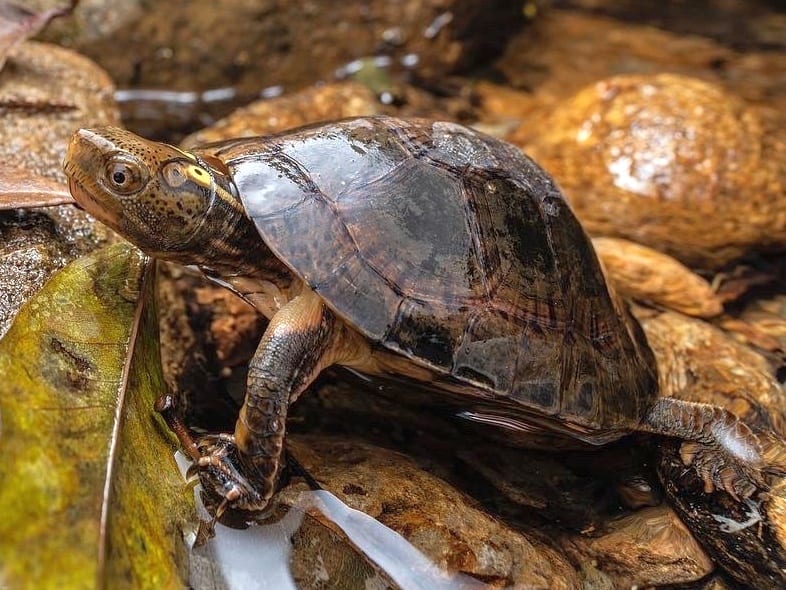
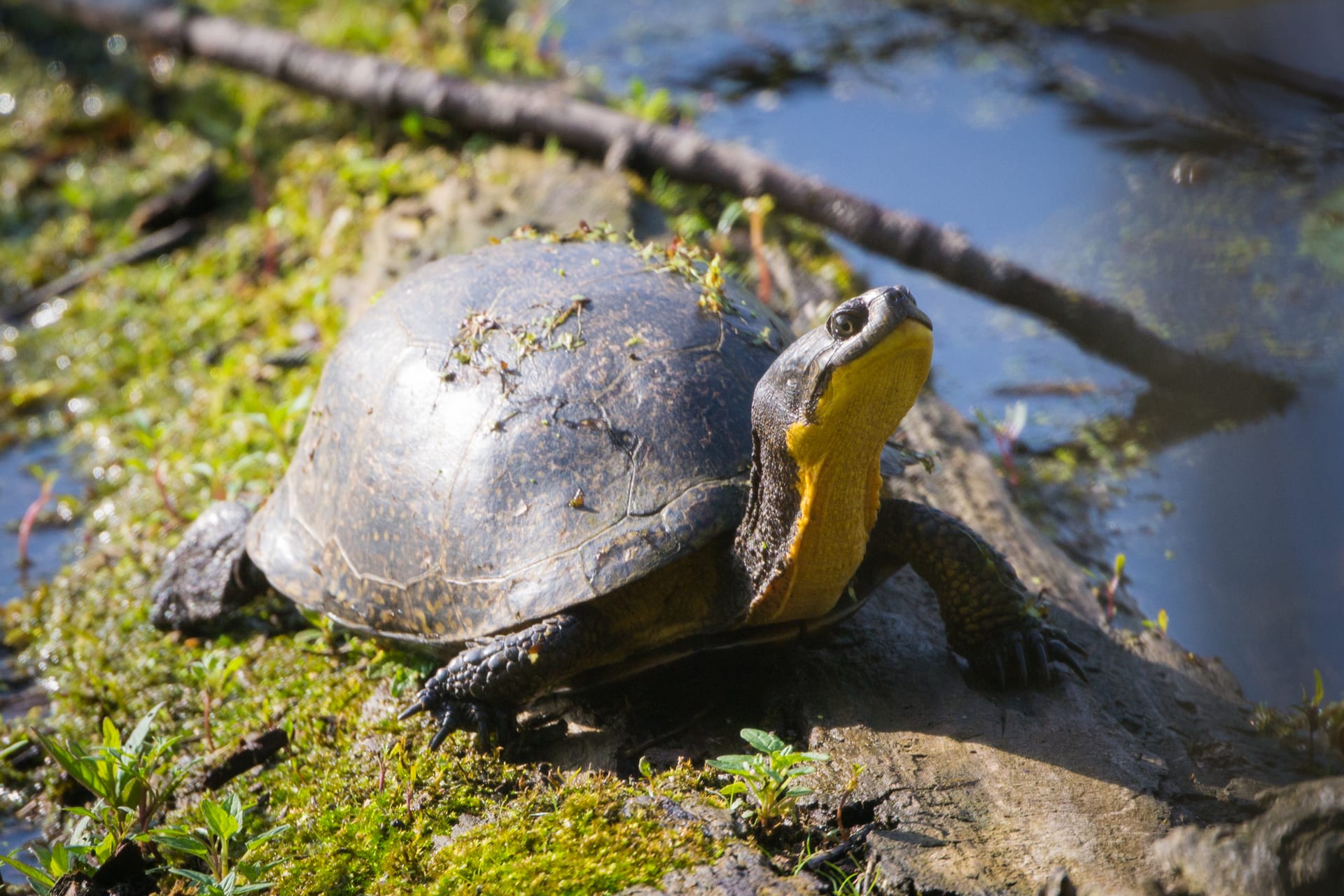
A semi-aquatic North American turtle with a bright yellow chin and throat. Its domed shell is speckled with yellow and its hinged plastron partly closes. It is known for showing almost no signs of aging.
Difficulty
Advanced
Temperature
25〜32℃
Lifespan
Extremely long-lived; active and reproducing into its eighties and nineties
Size
Carapace length averages 18-23 cm, max 25.5 cm
Humidity
40〜70%
Diet
Omnivore (crustaceans, insects, snails, fish, aquatic plants, berries)
About
Blanding's turtle is a semi-aquatic emydid centered on the Great Lakes, ranging from southern Canada (Ontario, south-western Quebec and parts of Nova Scotia) into the north-central and north-eastern United States (Minnesota, Wisconsin, Michigan, Illinois, Nebraska and elsewhere). Its genus is debated: the Reptile Database uses Emydoidea blandingii, while GBIF places it in Emys with the European pond turtle. Average straight carapace length is 18-23 cm, with a maximum of 25.5 cm. The key feature is the bright yellow chin and throat, and Indigenous tradition calls it the turtle with the sun under its chin. The domed carapace is slightly flattened along the midline and speckled with many yellow flecks on a dark background. The yellow plastron has symmetrical dark blotches and a hinge, but it does not close as tightly as a box turtle's. It takes 14 to 20 years to mature and stays active and fertile into its eighties and nineties, making it of interest to aging research. It is an omnivore that eats crustaceans, insects, snails, fish, frogs, carrion, berries and aquatic plants, and it is an agile swimmer. It is considered endangered across much of its range. It is rare in Japan, where captive-bred animals appear only occasionally.
Source: Wikipedia (CC BY-SA 4.0)
Size of the Blanding's Turtle
The Blanding's Turtle grows to Carapace length averages 18-23 cm, max 25.5 cm.
Basic Info
Origin
Southern Canada to the north-central and north-eastern USA (centered on the Great Lakes)
Lifespan
Extremely long-lived; active and reproducing into its eighties and nineties
Size
Carapace length averages 18-23 cm, max 25.5 cm
References & Sources
Edited & verified by: BreederDirect editorial team
The taxonomic, regulatory, and husbandry data on this page are compiled and verified against the authoritative primary sources below.
Taxonomy & Authority
Accepted name: Emydoidea blandingii (Holbrook, 1838)
Synonyms: Cistuda blandingii Holbrook, 1838, Cistudo blandingii Holbrook, 1838, Emydoidea blandingii (Holbrook, 1838), Emys twentei Taylor, 1943, Testudo flava Bonnaterre, 1789
Authority databases: GBIF · The Reptile Database: Emydoidea blandingii · GBIF: Emys blandingii
Nomenclature follows global taxonomic authority databases.
Regulations & Conservation Status
CITES Appendix II
Listed in CITES Appendix II. International trade requires an export permit from the country of origin, but no registration is needed to keep or transfer the animal within Japan. It has been listed since 12 June 2013.
Sources: Species+ (CITES): Emydoidea blandingii
Regulations may change. Always verify the latest information with the relevant authorities.
Blanding's Turtle Listings
Loading latest listingsFind listings for this species