Source: Wikimedia Commons
Beale's Eyed Turtle
AdvancedSacalia bealei
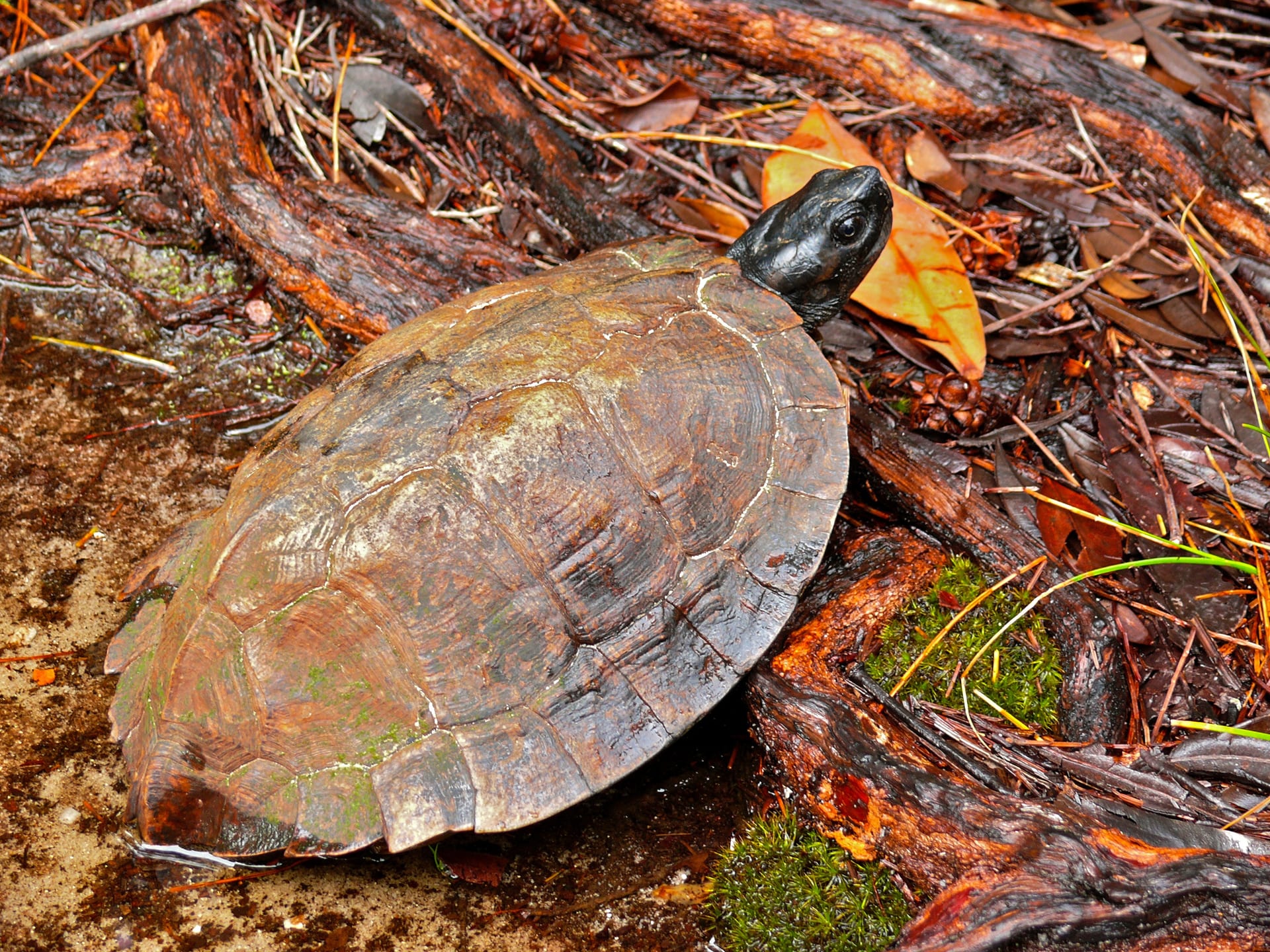
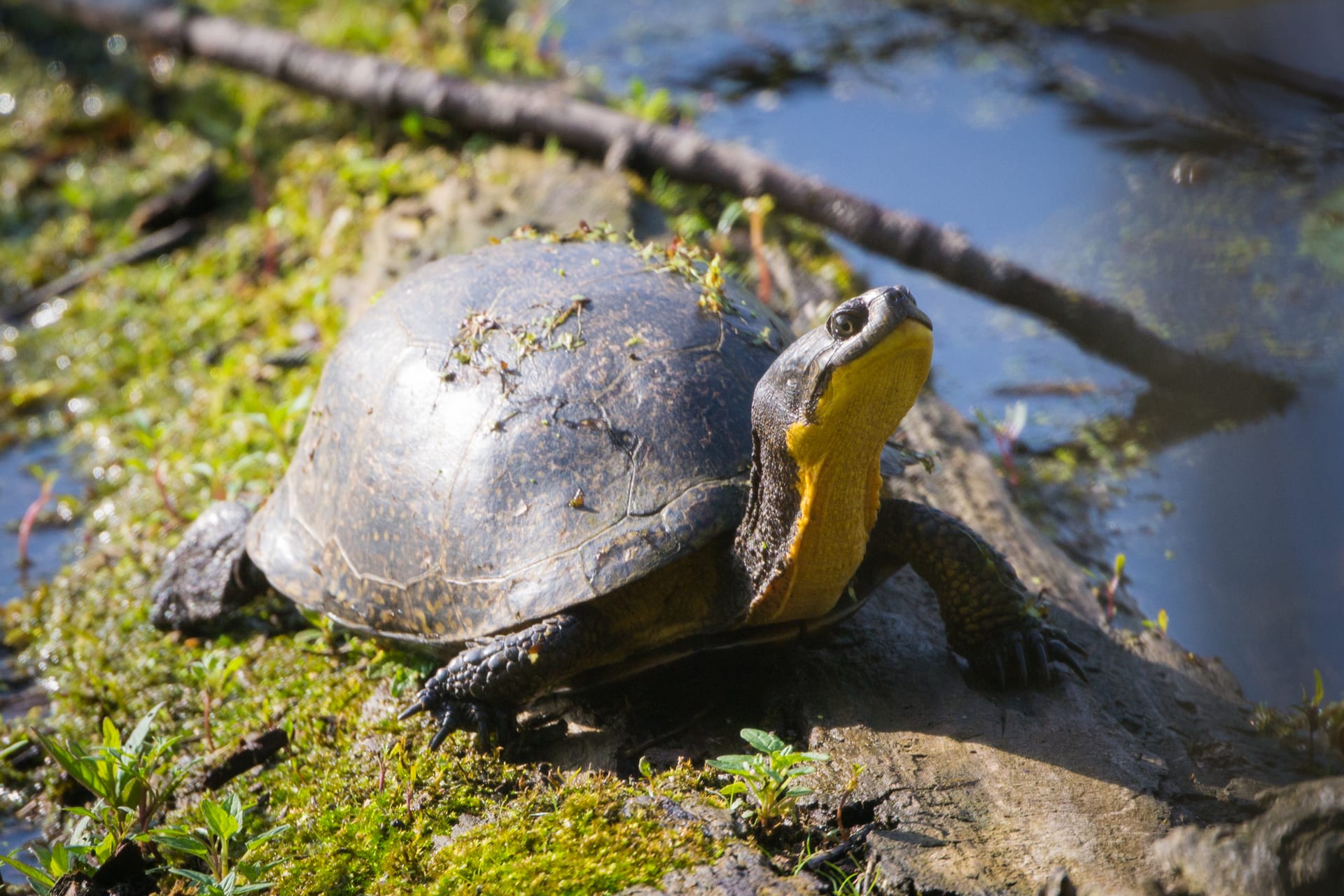
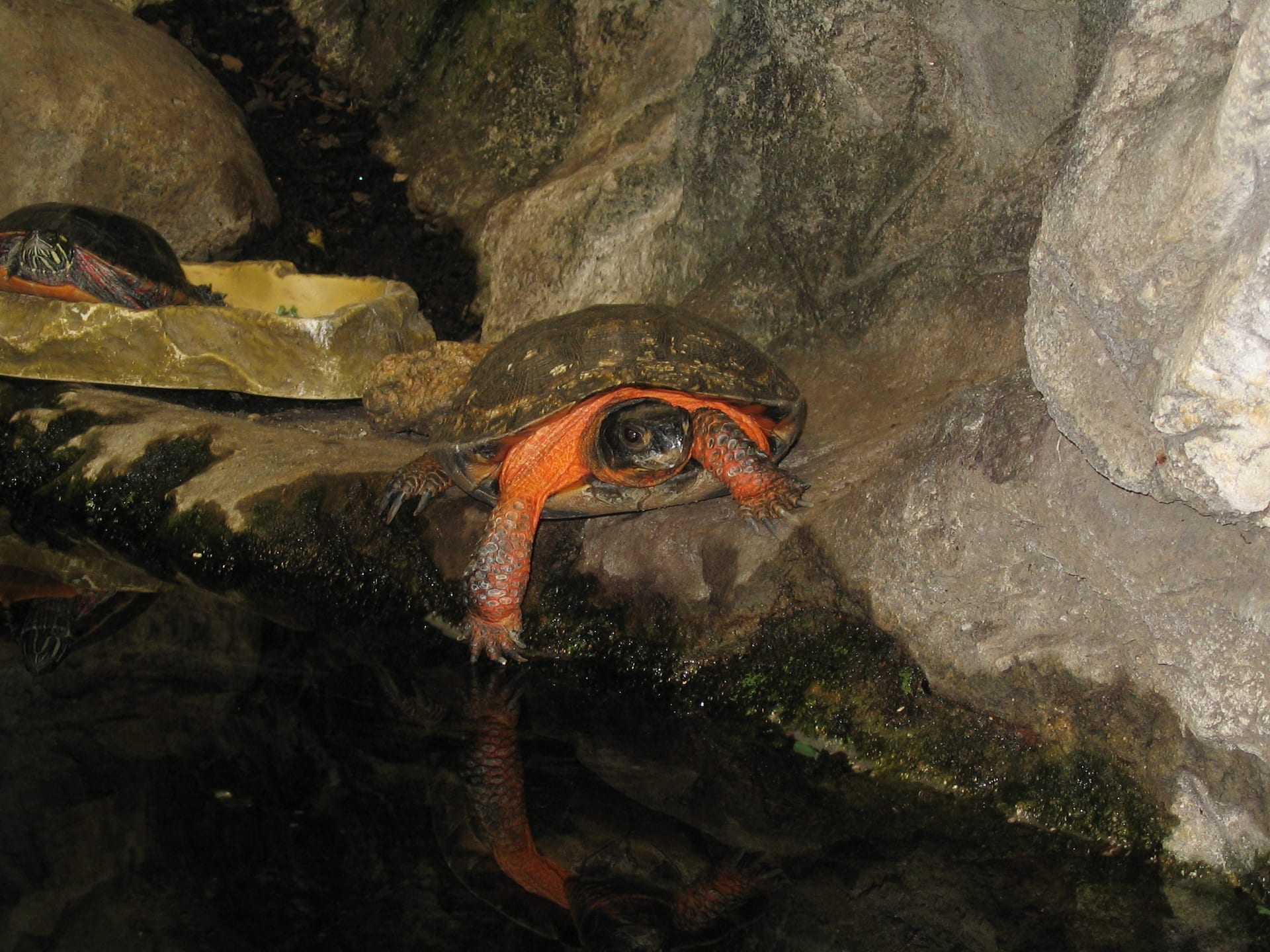
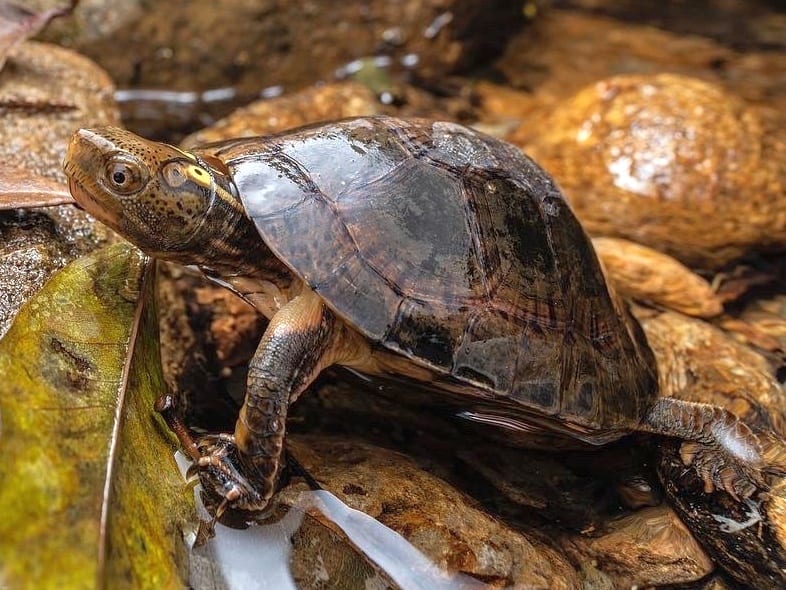
A turtle of southern Chinese mountain streams with two pairs of black-centered eyespots on the back of the head and black speckles on a flat, yellowish-brown shell. It is nocturnal, nervous and rare.
Difficulty
Advanced
Temperature
25〜32℃
Lifespan
Few data on lifespan in captivity
Size
Maximum carapace length about 16-18 cm
Humidity
40〜70%
Diet
Mainly carnivorous (crayfish, worms)
About
Beale's eyed turtle is a geoemydid of the genus Sacalia from southern China (Guangdong, Fujian, Jiangxi, Hunan, Guangxi and elsewhere), where it is very rare in Hong Kong; records from northern Vietnam and Hainan are considered erroneous. The somewhat flattened, smooth carapace is yellowish brown to brown with black spots or vermiculations, and the head is olive green. Two pairs of black-centered eyespots on the back of the head give it its Japanese name. Maximum carapace length is about 16-18 cm. The related four-eyed turtle (S. quadriocellata) also has eyespots, and the English name "four-eyed turtle" is confusingly applied to both, so the scientific name must be checked. It is nocturnal and prefers heavily forested mountain streams with many large stones, feeding on crayfish and worms, and it accepts meat in captivity. It is timid and nervous and flails wildly with its claws when picked up. Females lay one clutch of about six eggs a year. Hunting for folk medicine and habitat loss have reduced it to a species of international conservation concern. It is not common in the Japanese trade and is a different genus from Japan's native Japanese pond turtle.
Source: Wikipedia (CC BY-SA 4.0)
Size of the Beale's Eyed Turtle
The Beale's Eyed Turtle grows to Maximum carapace length about 16-18 cm.
Basic Info
Origin
Southern China (Guangdong, Fujian, Jiangxi, Hunan, Guangxi and elsewhere)
Lifespan
Few data on lifespan in captivity
Size
Maximum carapace length about 16-18 cm
Temperature
25〜32℃
References & Sources
Edited & verified by: BreederDirect editorial team
The taxonomic, regulatory, and husbandry data on this page are compiled and verified against the authoritative primary sources below.
Taxonomy & Authority
Accepted name: Sacalia bealei (Gray, 1831)
Synonyms: Cistuda bealei Gray, 1831
Authority databases: GBIF · The Reptile Database: Sacalia bealei · GBIF: Sacalia bealei
Nomenclature follows global taxonomic authority databases.
Regulations & Conservation Status
CITES Appendix II
Listed in CITES Appendix II. International trade requires an export permit from the country of origin, but no registration is needed to keep or transfer the animal within Japan. It has been listed since 12 June 2013. Despite "ishigame" in its Japanese name, it belongs to a different genus from Japan's native Japanese pond turtle (Mauremys japonica).
Sources: Species+ (CITES): Sacalia bealei
Regulations may change. Always verify the latest information with the relevant authorities.
Beale's Eyed Turtle Listings
Loading latest listingsFind listings for this species