Source: Wikimedia Commons
Mandarin Newt
IntermediateTylototriton shanjing
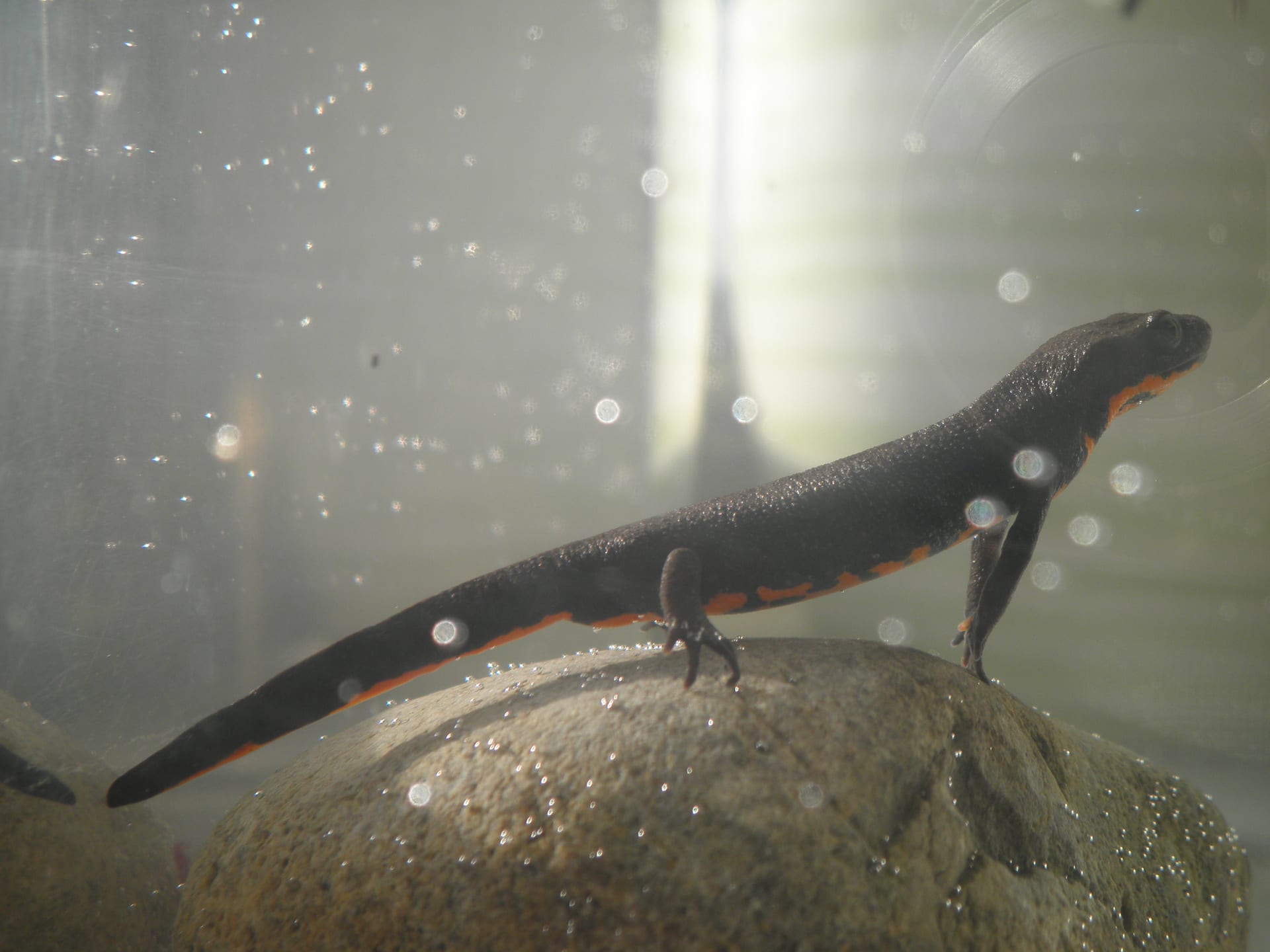
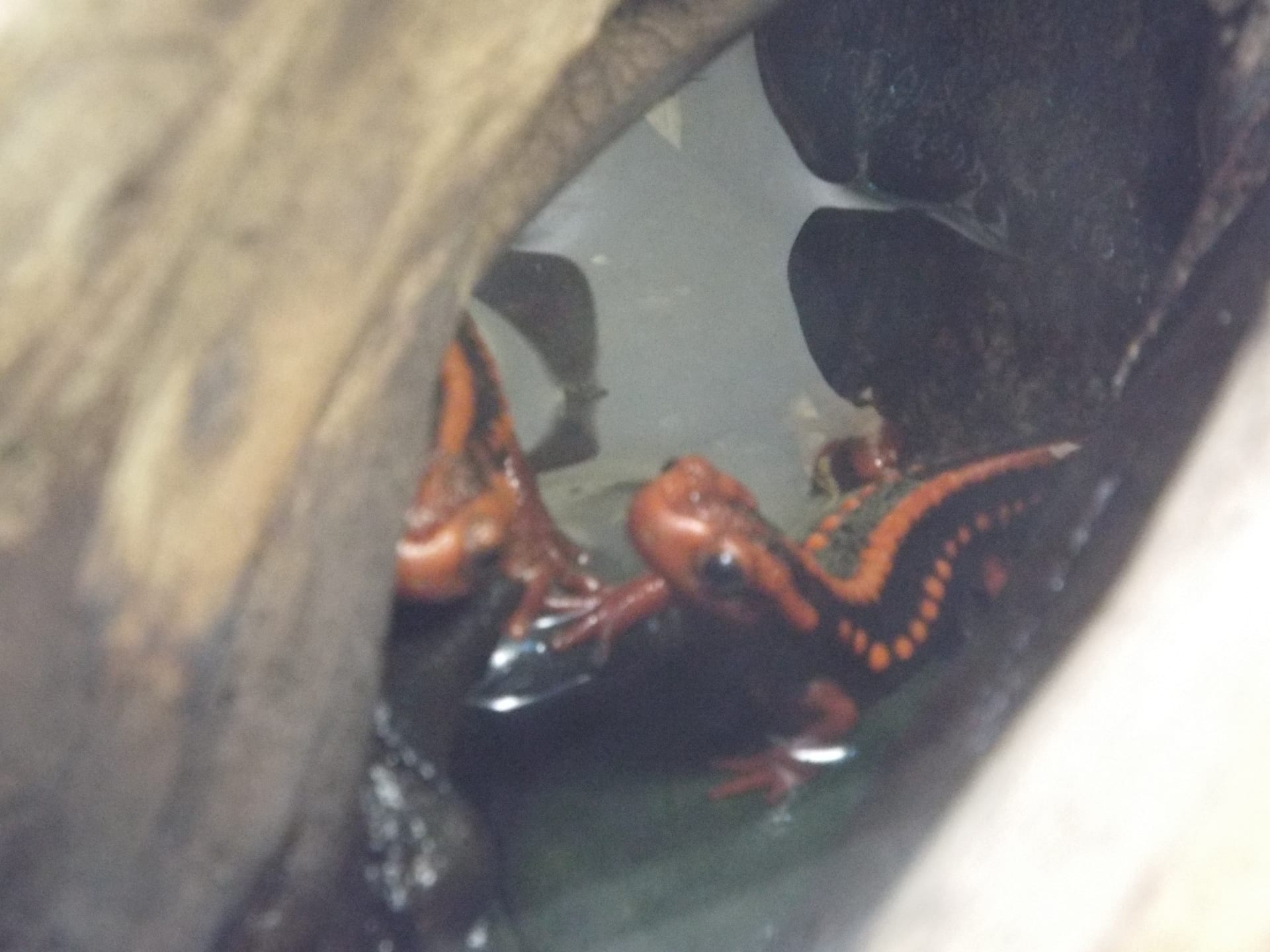
A large crocodile newt from Yunnan and parts of southern China. The black body carries an orange head, an orange dorsal ridge and rows of orange warty poison glands along the flanks. Largely terrestrial and hardy, it tolerates warmth better than most caudates.
Difficulty
Intermediate
Temperature
16〜26℃
Size
Up to 20cm
Humidity
40〜70%
Diet
Earthworms, waxworms, mealworms and crickets
About
Tylototriton shanjing is a large crocodile newt of Yunnan and neighbouring parts of southern China, reaching up to 20 cm. It has a black body with an orange head and an orange dorsal ridge, flanked on each side by a row of round orange bumps. Those bumps are poison glands, and when the newt is seized the tips of its ribs press against them to squeeze the toxin out. The bright orange is aposematic, and the roof of the skull and the vertebrae are unusually thick bone as a further defence. It is slow-moving and nocturnal. It is one of the easier caudates to keep: four adults suit an enclosure of about 76 x 30 x 30 cm. It is almost entirely terrestrial, so use coco fibre topped with moss and simply provide a water bowl for most of the year. It is not a tropical species, so vary the temperature seasonally, around 16 C in winter and 25-26 C in summer, and do not hold it above 27 C for long. Feed earthworms as the staple with waxworms and crickets. All Tylototriton are listed on CITES Appendix II.
Source: Wikipedia (CC BY-SA 4.0)
Size of the Mandarin Newt
The Mandarin Newt grows to Up to 20cm.
Temperature & humidity for the Mandarin Newt
The ideal temperature for the Mandarin Newt is 16〜26℃.
Basic Info
Origin
China (Yunnan and parts of the south)
Size
Up to 20cm
Temperature
16〜26℃
Care Specifications
PeacefulGroupBreeding: Hard
Sources: Caudata Culture: Tylototriton shanjing / Reptiles Magazine: Mandarin Newt Care and Breeding Information / Wikipedia (English)
References & Sources
Edited & verified by: BreederDirect editorial team
The taxonomic, regulatory, and husbandry data on this page are compiled and verified against the authoritative primary sources below.
Taxonomy & Authority
Accepted name: Tylototriton shanjing Nussbaum, Brodie & Yang, 1995
Synonyms: Tylototriton verrucosus shanjing Nussbaum, Brodie & Yang, 1995, Tylototriton pulcherrima Hou, Zhang, Li & Lu, 2012
Authority databases: GBIF
Nomenclature follows global taxonomic authority databases.
Regulations & Conservation Status
CITES Appendix IIIUCN VU · Vulnerable
At CoP18 in 2019, Tylototriton spp. was listed in CITES Appendix II, effective 26 November 2019 (Species+). As an Appendix II species, special international registration is not required.
Sources: CITES Appendices (イボイモリ属 Tylototriton spp. 附属書II、2019年11月26日発効) / IUCN Red List
Regulations may change. Always verify the latest information with the relevant authorities.
Mandarin Newt Listings
Loading latest listingsFind listings for this species