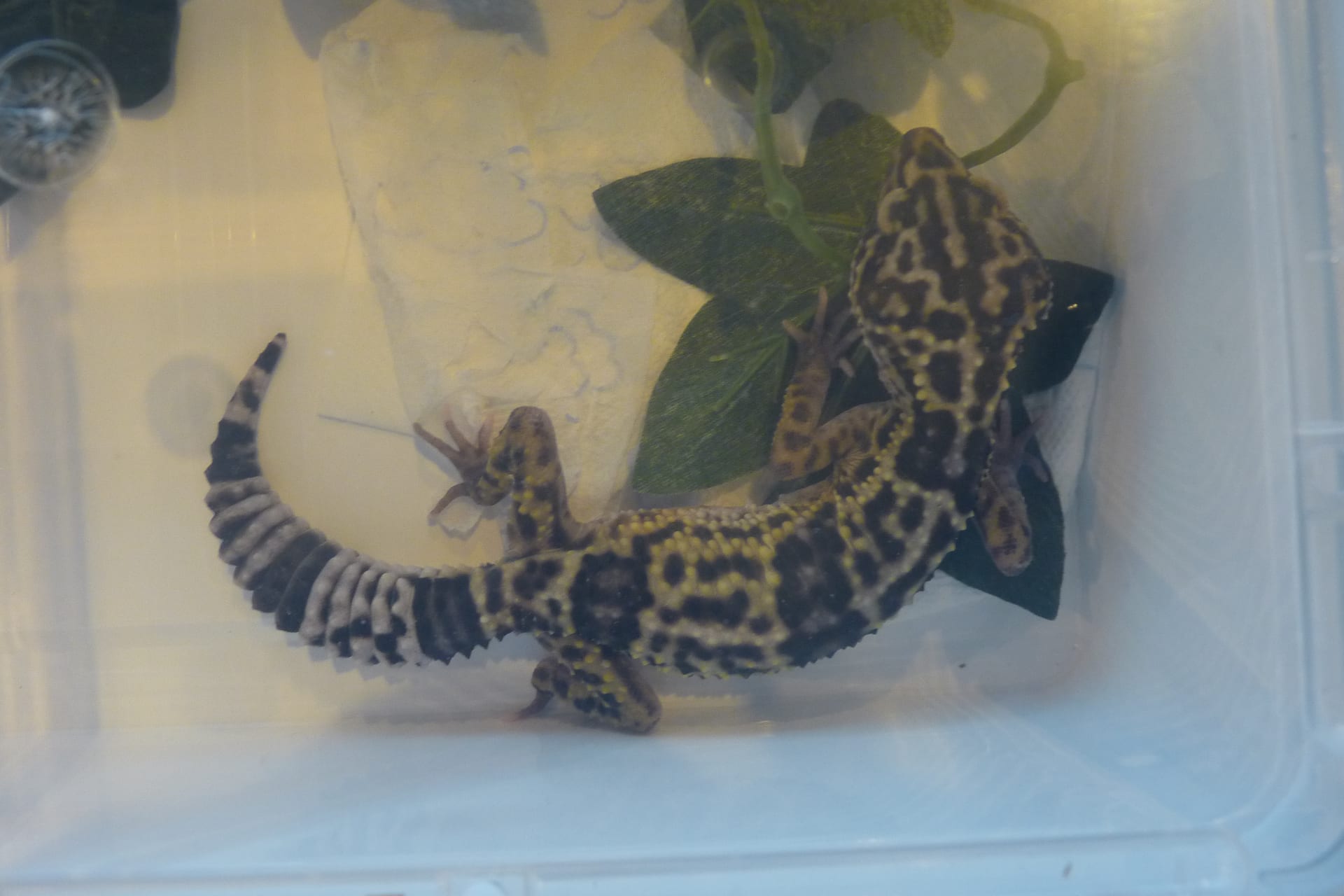
 © Goodshort / CC BY-SA 3.0
Iranian Fat-Tailed Gecko
The Iranian Fat-Tailed Gecko is a nocturnal, ground-dwelling species native to western Iran, Iraq, and eastern Syria. Its defining feature is a pale stripe running from the back of the head to the base of the tail, bordered on both sides by broken black markings—a pattern unlike any other gecko. With expressive, eyelid-blinking eyes and a habit of arching its tail when startled, it has plenty of personality for keepers willing to pay attention. Because it calls for more careful environmental management than beginner-friendly geckos, it's generally considered a good match for keepers with some prior reptile experience.
View Iranian Fat-Tailed Gecko encyclopedia →0% commission on your first sales!Register by September 30, 2026 and your first 2 sales are commission-free!
Breeder Wanted!
List on BreederDirect and sell directly to customers nationwide!
6 Transparency Promises from Br-Choku
Every Reptiles & Amphibians from verified Breeder breeders includes complete information: morph, genetics, feeding requirements, and temperament details.
- Morph Information
- Actual Photos
- Feeding Information
- Temperament Information
- Genetics Information
- Age (Months)
Browse all 319 breeds
Difficulty Level
Feeding Type
Temperament
No listings match your filters
Adjust your filters, or get notified when new listings arrive.
Getting alerts is free with a member account. When new listings match your saved search, we'll notify you by email and in-app.
Browse other categories
Verified breeders (preview)
Are you raising reptiles & amphibians?
Register as a breeder and connect with buyers directly.
Apply as a breederIranian Fat-Tailed Gecko key facts
- Care level
- Intermediate
- Lifespan
- 15-20 years
- Temperature
- Humidity
- 30〜40%
- Diet
- Crickets, dubia roaches and other insects; it may also take small vertebrates
- Temperature & Humidity
- Keep it as for its congener the leopard gecko: a basking surface of 34-36C, 32-33C inside the warm hide, a cool side of 21-25C and night-time temperatures never below 16C. Keep ambient humidity at 30-40 per cent and always provide a humid hide with moistened substrate at 70-80 per cent inside.
- Enclosure
- It is a nocturnal, ground-dwelling gecko, so use a horizontally oriented enclosure that prioritises floor area. Provide snug hides on both the warm and cool sides plus a humid hide with moistened substrate. Do not line the humid hide with sphagnum moss or paper towel, as these have been swallowed accidentally during shedding.
- Diet & Feeding
- It is insectivorous and is fed crickets, dubia roaches and waxworms. Gut-load the feeders and dust them with calcium. In the wild it is reported to take small vertebrates as well.
- Temperament
- It is nocturnal and terrestrial, spending the day in a hide. It sheds its tail, so never handle it by the tail. Males fight and must not be housed together.
- Notes
- The species is not listed in the CITES appendices, and it is neither a specified animal nor an invasive alien species under Japanese law. The IUCN assesses it as Data Deficient, so even its population status is unestablished. It is little traded and species-specific husbandry information is scarce, so refine temperature and humidity carefully from measured readings.
About Iranian Fat-Tailed Gecko
A nocturnal, ground-dwelling gecko from western Iran, Iraq, and eastern Syria, identified by its pale dorsal stripe and broken black markings; suited to intermediate-level keepers.
7 things to know before welcoming a Iranian Fat-Tailed Gecko
1Why It Suits Intermediate Keepers
The Iranian Fat-Tailed Gecko is generally rated as intermediate in care difficulty. It benefits from more attentive temperature and humidity management, so having prior experience with an easier gecko like the leopard gecko helps before bringing one home.
2Nocturnal and Ground-Dwelling
This is a nocturnal, terrestrial gecko that rests hidden away during the day and becomes active after dark. Provide several hides in the enclosure and keep its environment quiet so its day-night rhythm isn't disturbed.
3A Face With Eyelids
Unlike most geckos, eublepharid geckos have movable eyelids and can blink, giving them an endearing, expressive face. This trait is shared by the Iranian Fat-Tailed Gecko and makes it especially fun to watch.
4Can't Climb Glass
Because it lacks the adhesive toe pads seen in many gecko species, it cannot climb walls or glass. Focus enclosure decor on floor-level elements like substrate and hides rather than climbing branches.
5The Tail Stores Fat
True to its name, this species stores fat in its tail, and a thick, plump tail is generally taken as a sign of good condition. Under strong stress it may drop its tail, so handle it gently and avoid startling it.
6Temperature and Humidity Tips
Set up a temperature gradient in the enclosure with both a warm basking area and a cooler zone. Because dry conditions can lead to incomplete sheds, a humid hide or similar setup to maintain adequate humidity is also important.
7Preparing Before Bringing One Home
Set up the enclosure, hides, substrate, and heating equipment before the gecko arrives. After bringing it home, give it a quiet period to settle in and gradually observe its feeding response and daily rhythm.
Frequently asked questions about Iranian Fat-Tailed Gecko
- Q.Can beginners keep an Iranian Fat-Tailed Gecko?
- A.Its care difficulty is generally rated as intermediate. Since it calls for more careful temperature and humidity management, it's best approached after gaining experience with an easier gecko like the leopard gecko.
- Q.How does it differ from other eublepharid geckos?
- A.Its main distinguishing feature is a pale stripe running from the back of the head to the base of the tail, bordered on both sides by broken black markings. This particular pattern combination isn't seen in other eublepharid geckos.
- Q.Can it be handled?
- A.Individual temperament varies, but many geckos become calmer to handle once settled into a quiet environment. Since a startled gecko may drop its tail, it's best to go at the animal's own pace rather than forcing interaction.
- Q.What should I watch for with humidity?
- A.Overly dry conditions can lead to incomplete shedding, so a humid hide can help maintain localized moisture. At the same time, keeping the whole enclosure too damp can cause other issues, so aim for a humidity gradient rather than uniform dampness.
- Q.Can it drop its tail (autotomy)?
- A.Under strong stress or rough handling, it may drop its tail as a defense mechanism. Since the tail is also an important fat-storage organ, handling it calmly and avoiding startling the gecko helps prevent this.
Useful tools for Iranian Fat-Tailed Gecko care
Learn more about Iranian Fat-Tailed Gecko in the encyclopedia
View Iranian Fat-Tailed Gecko encyclopedia entry →
Care difficulty, lifespan, size and diet — all basics covered.
More in this category
Can't find the one you're looking for?
Post your wishes for free and breeders with matching animals will contact you with introductions.