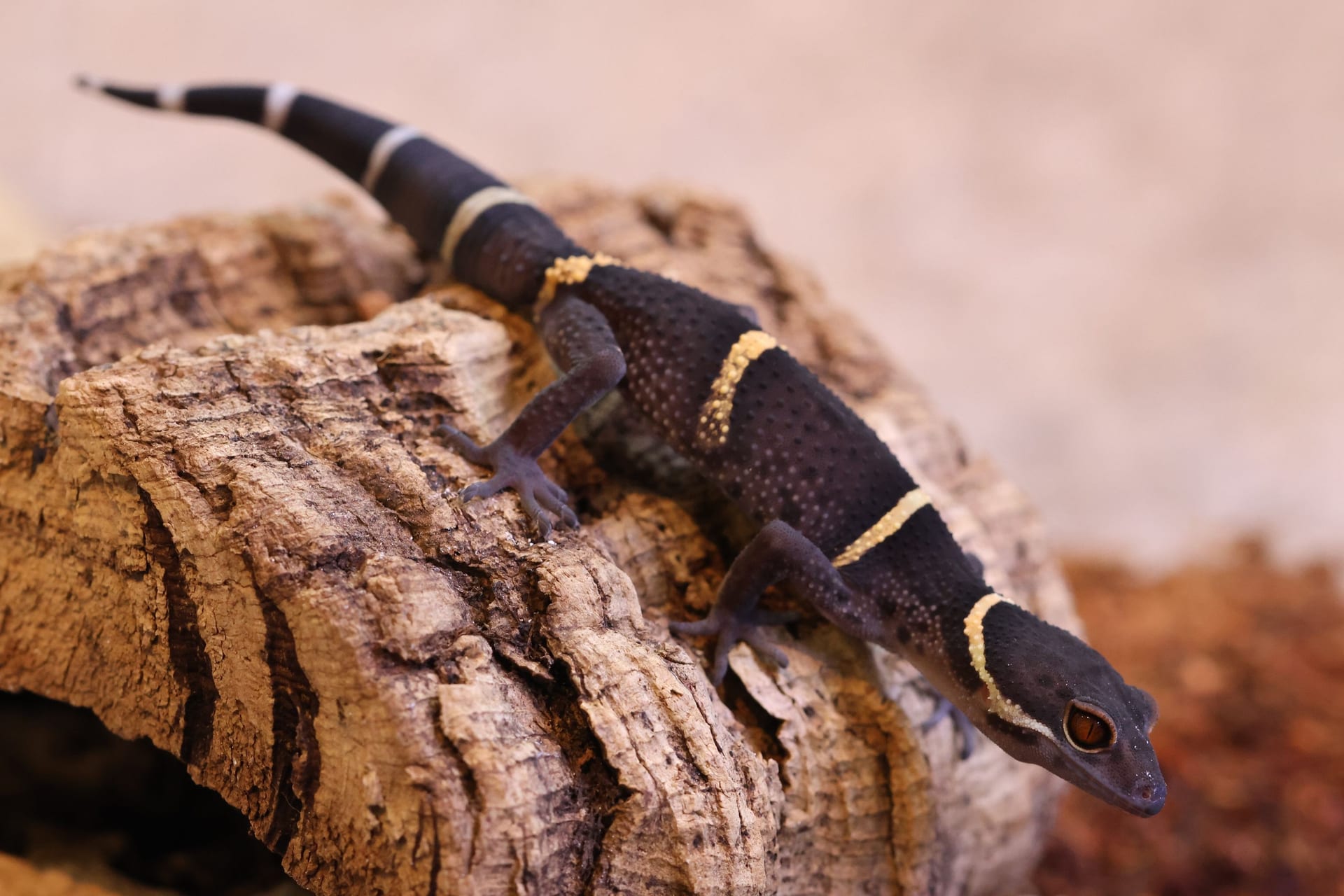
 © Melvin TOULLEC / CC BY-SA 4.0
Hainan Cave Gecko
The Hainan cave gecko is a species found only on Hainan Island in China, prized for its striking look: large red eyes, a grey body dotted with black spots, and bands of yellow to orange running across it. Unlike geckos with fixed, lidless eyes, it has movable eyelids and actually blinks, an endearing trait that adds to its expressive face. Its toes lack adhesive pads, so it can't climb glass, but its claws let it climb rocks, so keep the enclosure lid securely closed. It is more nervous than a leopard gecko and may jump quickly when startled, so keep handling to a minimum. It's considered a good choice for first-time reptile keepers, and as the only species in its genus with a steady supply of captive-bred animals, care information is relatively easy to find.
View Hainan Cave Gecko encyclopedia →0% commission on your first sales!Register by September 30, 2026 and your first 2 sales are commission-free!
Breeder Wanted!
List on BreederDirect and sell directly to customers nationwide!
6 Transparency Promises from Br-Choku
Every Reptiles & Amphibians from verified Breeder breeders includes complete information: morph, genetics, feeding requirements, and temperament details.
- Morph Information
- Actual Photos
- Feeding Information
- Temperament Information
- Genetics Information
- Age (Months)
Browse all 319 breeds
Difficulty Level
Feeding Type
Temperament
No listings match your filters
Adjust your filters, or get notified when new listings arrive.
Getting alerts is free with a member account. When new listings match your saved search, we'll notify you by email and in-app.
Browse other categories
Verified breeders (preview)
Are you raising reptiles & amphibians?
Register as a breeder and connect with buyers directly.
Apply as a breederHainan Cave Gecko key facts
- Care level
- Beginner-friendly
- Lifespan
- Few data on lifespan in captivity
- Size
- About 22 cm average total length (some exceed 23 cm)
- Humidity
- 55〜65%
- Diet
- Insectivore (crickets, roaches)
- Temperature & Humidity
- It prefers cool, moist conditions and is often kept at a room temperature of around 22°C; withhold food during cold snaps below about 21°C. Aim for 55-65% humidity.
- Housing
- Floor space matters more than height. Provide a humid hide with moist substrate plus rocks or wood for cover. It cannot climb glass, but use a secure lid.
- Diet & Feeding
- Feed crickets, roaches and mealworms dusted with calcium and vitamins. Adults eat two or three times a week; avoid overfeeding fatty insects.
- Temperament
- More flighty than a leopard gecko and may jump when startled; keep handling to a minimum. Do not house males together.
- Notes
- Japan's native Kuroiwa's ground geckos (five subspecies, including the Yanbaru form) and G. splendens are National Endangered Species under the Species Conservation Act; capture, transfer and sale are in principle prohibited. This species is a different, Chinese species, but do not confuse it with the Japanese ones. Never release a captive animal into the wild.
About Hainan Cave Gecko
Meet the Hainan cave gecko, a Hainan Island endemic known for its red eyes, black-spotted grey body, and orange bands. It's more nervous than a leopard gecko and may jump when startled — here's what to know about keeping one.
7 things to know before welcoming a Hainan Cave Gecko
1Can't Climb Glass, but Needs a Lid
Hainan cave geckos lack adhesive toe pads, so they cannot climb glass. They do have claws on all five toes and can climb rocks, so keep the lid firmly closed. An enclosure with more floor space than height works best.
2Eyes With Movable Eyelids
Unlike most geckos, which have a fixed transparent scale over the eye, Hainan cave geckos have movable eyelids and blink. Combined with their large red eyes, this gives them an unusually expressive look.
3Nocturnal and Shelter-Loving
Being nocturnal, Hainan cave geckos typically stay tucked away in shelters or crevices during the day. It's normal not to see them much in daylight, so make sure the enclosure has plenty of hiding spots.
4Nervous and Quick to Jump
It is more nervous than a leopard gecko and may jump quickly when startled. Keep handling to a minimum and enjoy it mainly through observation. Don't house males together.
5Adult Size to Expect
Adults average around 22 cm in total length, with some individuals exceeding 23 cm. Plan for an enclosure sized to comfortably fit this range.
6Beginner-Friendly Care Level
This species is generally considered suitable for first-time keepers among eyelid geckos. That said, basic temperature and humidity management is still essential, so set up the enclosure before bringing one home.
7The Genus's Most Available Species
It's said to be the most commonly kept species in its genus, meaning care information and keeper experience are relatively easy to find. Before bringing one home, check carefully with the seller about the animal's health and condition.
Frequently asked questions about Hainan Cave Gecko
- Q.Is the Hainan cave gecko suitable for beginners?
- A.It's generally considered beginner-friendly. However, it is more nervous than a leopard gecko and may jump when startled, so keep handling to a minimum and provide a cool, humid environment.
- Q.Can it climb the glass walls of its enclosure?
- A.No, it lacks the adhesive toe pads that let some geckos climb smooth surfaces like glass. It can still climb rocks with its claws, though, so keep the lid securely closed.
- Q.How big does it grow?
- A.Adults average around 22 cm in total length, though some individuals exceed 23 cm. It's a good idea to plan enclosure size with this range in mind.
- Q.How long does it live in captivity?
- A.There isn't yet much reliable data on captive lifespan for this species. It's best to plan for long-term care and provide a stable, appropriate environment regardless.
- Q.Are there any legal considerations for keeping or selling this species?
- A.The Hainan cave gecko is listed under CITES Appendix II. It's a good idea to check any information the seller provides before bringing one home.
Useful tools for Hainan Cave Gecko care
Learn more about Hainan Cave Gecko in the encyclopedia
View Hainan Cave Gecko encyclopedia entry →
Care difficulty, lifespan, size and diet — all basics covered.
More in this category
Can't find the one you're looking for?
Post your wishes for free and breeders with matching animals will contact you with introductions.