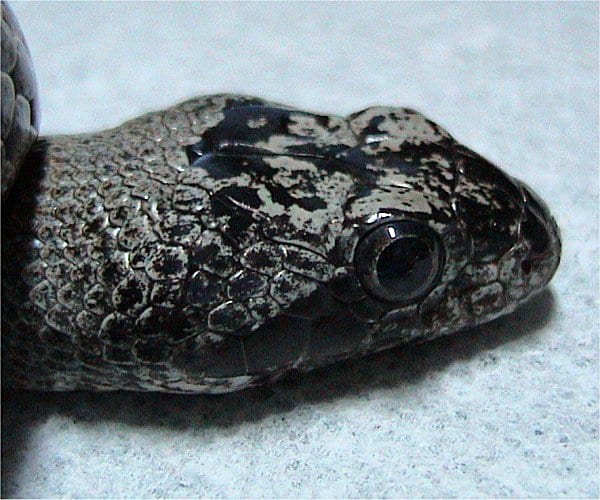
 © The original uploader was Dawson at English Wikipedia . / CC BY-SA 2.5
Gray-Banded Kingsnake
The Gray-Banded Kingsnake is a nonvenomous colubrid native to the arid rocky regions of the southwestern United States and northern Mexico, known for its gray body marked with reddish-orange bands. Its broad head and large eyes give it a distinctive look, and individual patterns vary widely in band width and color intensity. Generally calm and manageable, it appeals to keepers who already have some snake-keeping experience. With a lifespan that can exceed 20 years in captivity, it's a long-term companion rather than a short-term pet.
View Gray-Banded Kingsnake encyclopedia →Breeder Wanted!
List on BreederDirect and sell directly to customers nationwide!
BreederDirect's 6 Transparency Commitments
Every Reptiles & Amphibians from verified Breeder breeders includes complete information: morph, genetics, feeding requirements, and temperament details.
- Morph Information
- Actual Photos
- Feeding Information
- Temperament Information
- Genetics Information
- Age (Months)
Browse all 319 breeds
Difficulty Level
Feeding Type
Temperament
No listings match your filters
Adjust your filters, or get notified when new listings arrive.
Getting alerts is free with a member account. When new listings match your saved search, we'll notify you by email and in-app.
Browse other categories
Verified breeders (preview)

Are you raising reptiles & amphibians?
Register as a breeder and connect with buyers directly.
Apply as a breederGray-Banded Kingsnake key facts
- Care level
- Intermediate
- Lifespan
- Over 20 years in captivity
- Size
- 91-120cm, up to about 147cm
- Temperature
- Basking surface 29-32°C / cool side 21-26°C
- Humidity
- 40〜60%
- Diet
- Frozen-thawed mice; in the wild lizards and rodents
- Temperature & Humidity
- Create a gradient with a basking surface of 29-32C and a cool side of 21-26C. Aim for average humidity of 40-60 per cent, naturally a little higher on the cool side and at night. Raising humidity before a shed helps prevent retained skin. It is an arid-land species, but provide a humid hide when it is in shed.
- Enclosure
- A minimum enclosure of about 120 x 60 x 60 cm per adult is recommended, and larger is better. It is active and explores a great deal, so provide branches and hides on both the warm and cool sides. It is strong and an accomplished escaper, so use a front-opening enclosure that locks securely. It hides in rock crevices, so stack flat stones or cork to create tight retreats.
- Diet & Feeding
- It is carnivorous and in captivity is fed appropriately sized frozen-thawed mice. In the wild it takes rodents, lizards and other snakes. Always feed it alone in the enclosure. Wild hatchlings favour lizards, so captive-hatched young can be reluctant to take mice and may need prey to be scented.
- Temperament
- Kingsnakes are ophiophagous and will eat each other, so they must be kept alone. They are generally docile and easy to handle, but wash your hands after feeding so they do not mistake them for prey. It is nocturnal and hides by day, so observation and feeding are best done in the evening.
- Notes
- The species is not listed in the CITES appendices, and it is neither a specified animal nor an invasive alien species under Japanese law. It is non-venomous and harmless to people, but escaped snakes are hard to recover, so keep the enclosure securely locked. A winter cooling period of about a month at roughly 10-16C is regarded as a condition for breeding.
About Gray-Banded Kingsnake
The Gray-Banded Kingsnake is a nonvenomous snake with gray coloring and reddish-orange bands, native to the southwestern US, living 20+ years in captivity.
7 things to know before welcoming a Gray-Banded Kingsnake
1Requires an arid enclosure setup
Since this species comes from dry, rocky habitats, humidity should be kept on the low side with a dry substrate. Provide multiple hides and decorate with rocks or driftwood to help it feel secure.
2Needs a proper temperature gradient
Set up both a warm side and a cool side in the enclosure so the snake can thermoregulate on its own. Pay attention to nighttime temperature drops and seasonal fluctuations as well.
3Nocturnal and generally quiet
This species is mainly active at night and tends to stay hidden during the day. It's generally considered calm and manageable, though individual temperament varies, so give a new snake time to settle before handling.
4Plan enclosure size for adult growth
Adults typically reach 91–120 cm in length, with larger individuals approaching around 147 cm. Planning enclosure size with full adult growth in mind from the start can save you from having to upgrade later.
5Watch for incomplete sheds
While this species prefers dry conditions, humidity that's too low can lead to incomplete sheds. When you notice signs of an upcoming shed, adding a humid hide with damp sphagnum moss can help the process go smoothly.
6Diet centers on rodents
Feeding typically consists of frozen-thawed mice or similar rodents. Choose prey sized appropriately for the snake, and adjust feeding frequency and portion size based on its condition.
7Commit to a long-term relationship
This species can live 20 years or more in captivity. Before bringing one home, think carefully about whether you can commit to its care for many years to come.
Frequently asked questions about Gray-Banded Kingsnake
- Q.Is the Gray-Banded Kingsnake suitable for beginners?
- A.This species is generally considered suitable for intermediate keepers, requiring some knowledge of temperature and humidity management as well as individual variation. First-time reptile keepers may want to gain some basic experience before taking one on.
- Q.How large does it get as an adult?
- A.Adults typically reach 91–120 cm in length, with larger individuals approaching around 147 cm. Enclosure size should be reassessed as the snake grows.
- Q.How long does this species typically live?
- A.In captivity, it's not unusual for this species to live 20 years or more. Consider this long lifespan when deciding whether to bring one home.
- Q.Does coloring and pattern vary between individuals?
- A.Yes, band width and the intensity of the reddish-orange coloring vary considerably between individuals. Part of the appeal is that no two snakes look exactly alike, even within the same species.
- Q.Is this species subject to any international trade regulations?
- A.This species is not listed under CITES.
Useful tools for Gray-Banded Kingsnake care
Learn more about Gray-Banded Kingsnake in the encyclopedia
View Gray-Banded Kingsnake encyclopedia entry →
Care difficulty, lifespan, size and diet — all basics covered.
More in this category
Can't find the one you're looking for?
Post your wishes for free and breeders with matching animals will contact you with introductions.