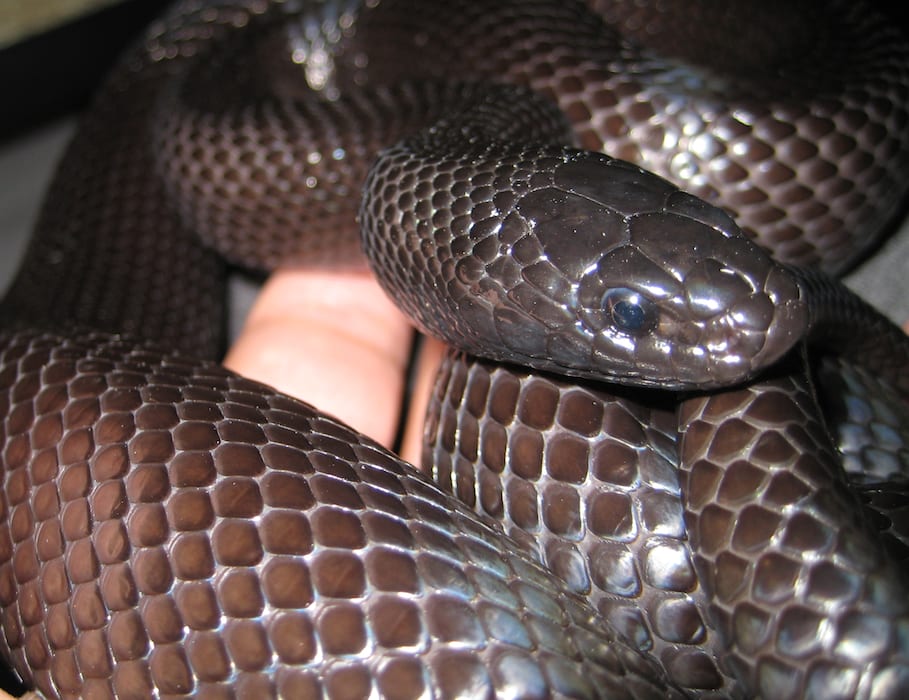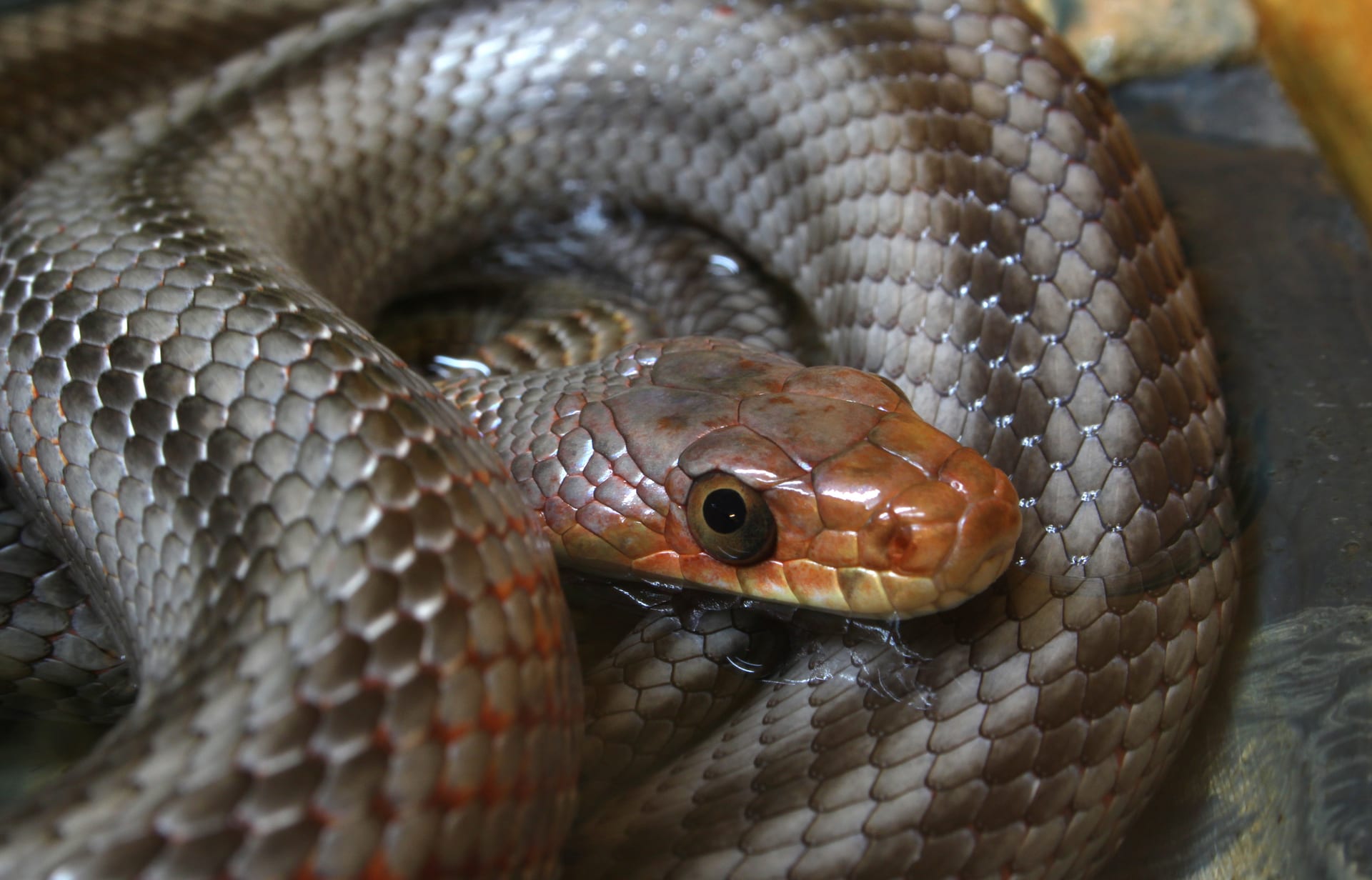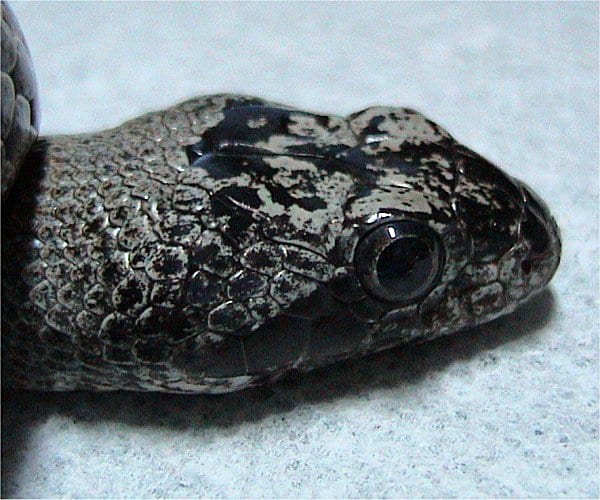
Source: Wikimedia Commons
Gray-Banded Kingsnake
IntermediateLampropeltis alterna
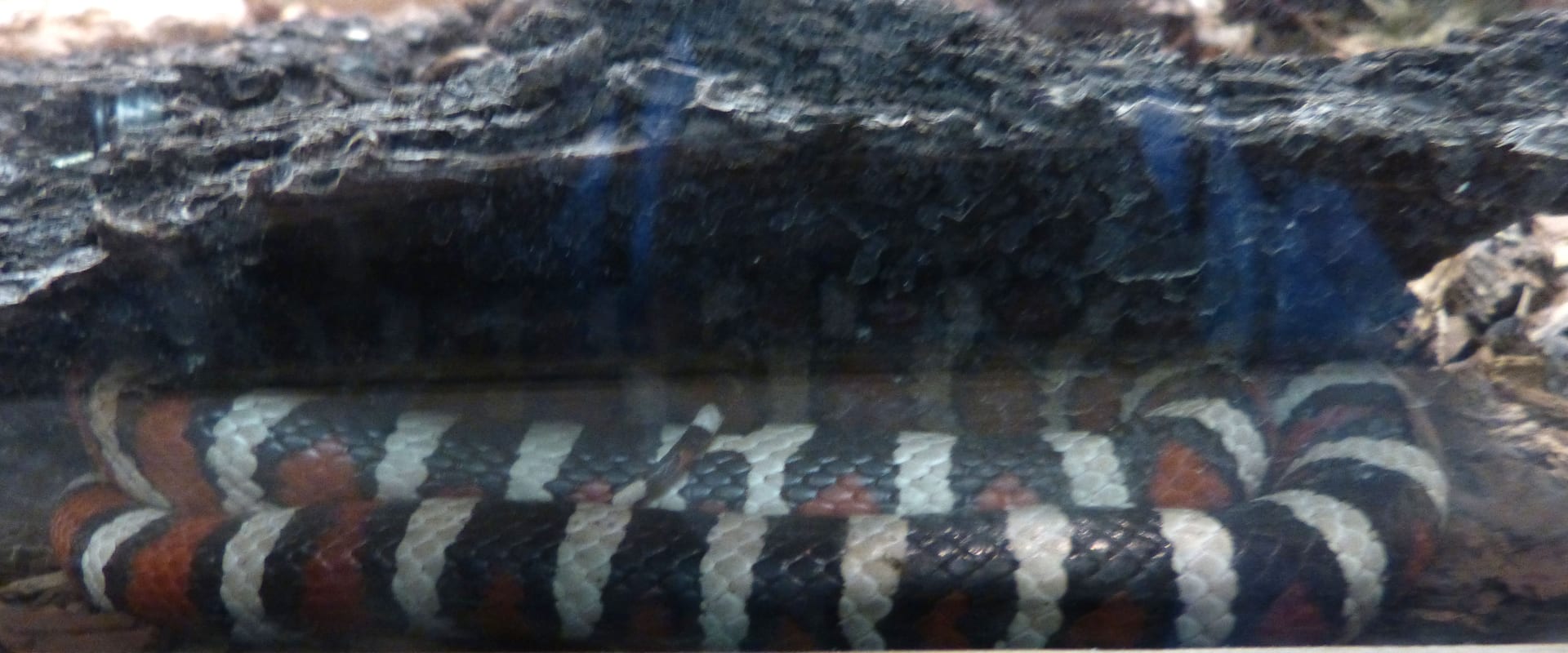
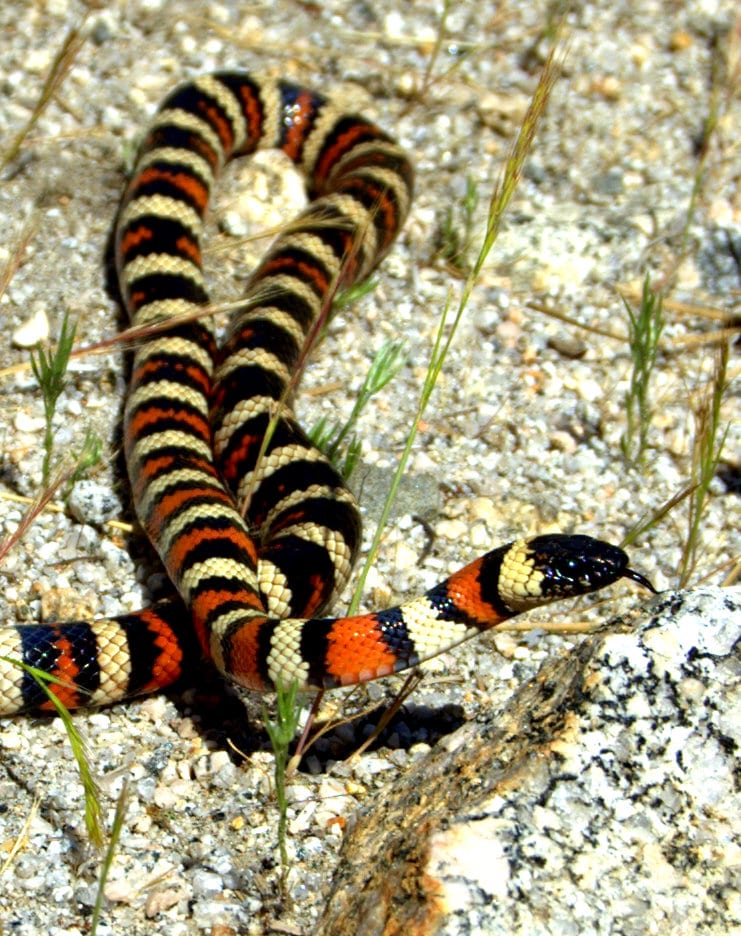
A non-venomous colubrid with red-orange banding on a grey ground, found on arid rocky ground in the south-western United States and northern Mexico. It has a relatively broad head and large eyes, and band width and the extent of red vary enormously.
Difficulty
Intermediate
Lifespan
Over 20 years in captivity
Size
91-120cm, up to about 147cm
Humidity
40〜60%
Diet
Frozen-thawed mice; in the wild lizards and rodents
About
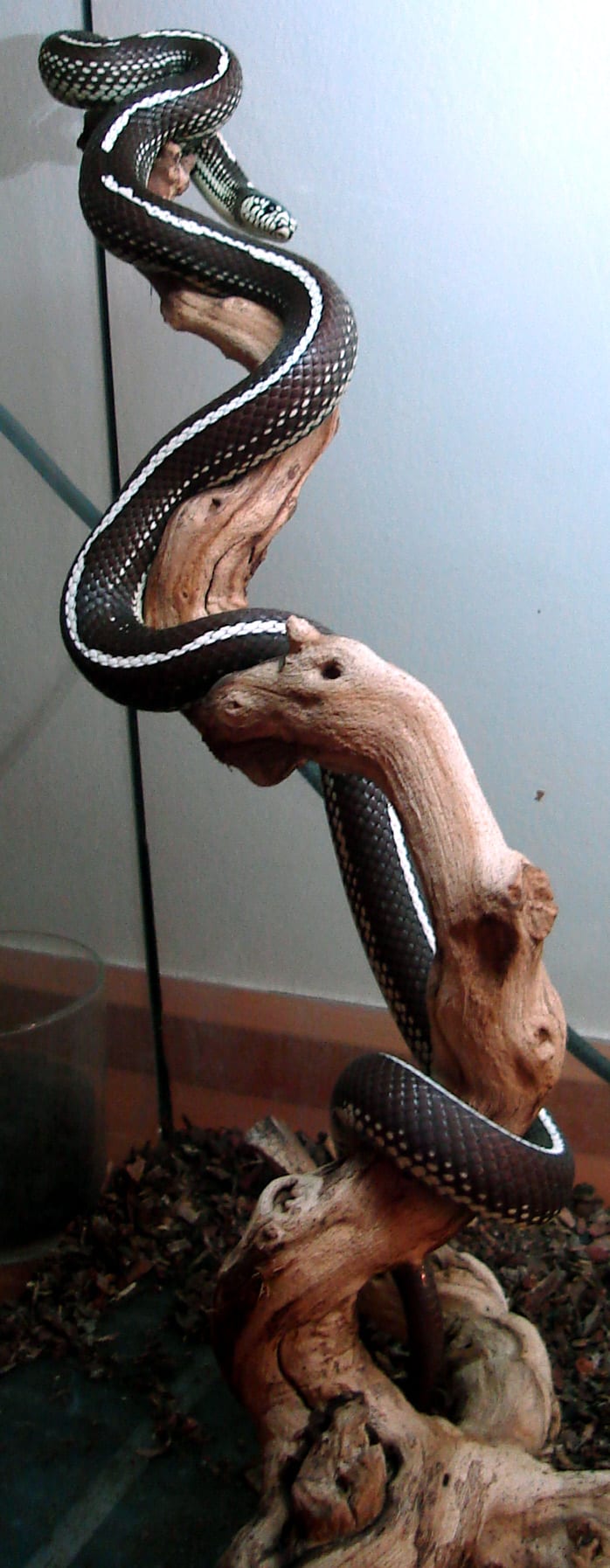
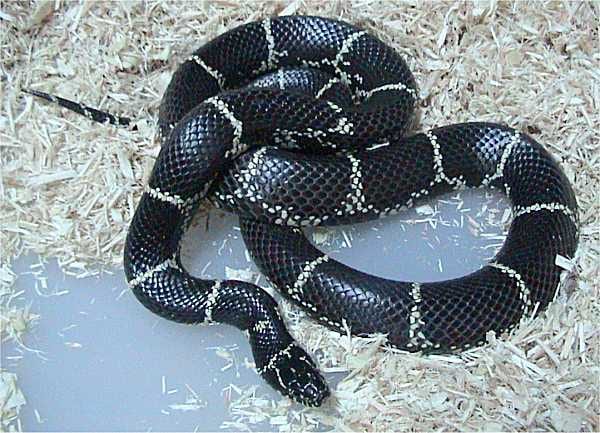
Lampropeltis alterna is a non-venomous colubrid endemic to the south-western United States and adjacent Mexico. It averages about 91 cm and reaches 120 cm, with the Reptile Database recording a maximum total length of 1,467 mm. Its head is relatively broad for the genus and its large eyes with round pupils are conspicuous; a silver-grey iris distinguishes it from the related L. greeri and L. leonis. Colour and pattern vary greatly, but two forms, once treated as subspecies, are the basis: the blairi form with wide red-orange bands and the alterna form with thinner bands, both on a grey ground with white and black accents. Animals almost entirely lacking red bands occur both in the wild and in captivity. It lives on arid rocky slopes and cliffs, is nocturnal and hides in rock crevices by day. Wild hatchlings prefer lizards, so getting captive young feeding can require some effort.
Source: Wikipedia (CC BY-SA 4.0)
Lifespan of the Gray-Banded Kingsnake
The Gray-Banded Kingsnake lives Over 20 years in captivity.
Size of the Gray-Banded Kingsnake
The Gray-Banded Kingsnake grows to 91-120cm, up to about 147cm.
Basic Info
Origin
The Trans-Pecos region of Texas in the United States and the Mexican states of Chihuahua, Coahuila, Durango and western Nuevo Leon
Lifespan
Over 20 years in captivity
Size
91-120cm, up to about 147cm
Care Specifications
PeacefulSolitaryBreeding: Moderate
Sources: Reptiles Magazine: Gray-Banded Kingsnake Care Sheet / Reptiles Magazine: Captive Breeding of Gray-Banded Kingsnakes / ReptiFiles: Kingsnake Care Sheet / Wikipedia (English) / Reptile Database
References & Sources
Edited & verified by: BreederDirect editorial team
The taxonomic, regulatory, and husbandry data on this page are compiled and verified against the authoritative primary sources below.
Taxonomy & Authority
Accepted name: Lampropeltis alterna (Brown, 1901)
Synonyms: Ophibolus alternus Brown, 1901, Lampropeltis blairi Flury, 1950
Authority databases: GBIF · Reptile Database
Nomenclature follows global taxonomic authority databases.
Regulations & Conservation Status
Not CITES-listedIUCN LC · Least Concern
Not listed in any appendix of the Convention on International Trade in Endangered Species (CITES) (not registered in Species+). Does not fall under either the specified animals listed in the appended table of the Ordinance for Enforcement of the Act on Welfare and Management of Animals, nor the specified invasive alien species under the Invasive Alien Species Act.
Sources: CITES Appendices (species not listed) / IUCN Red List
Regulations may change. Always verify the latest information with the relevant authorities.
Gray-Banded Kingsnake Listings
Loading latest listingsFind listings for this species