Source: Wikimedia Commons
California Mountain Kingsnake
AdvancedLampropeltis zonata
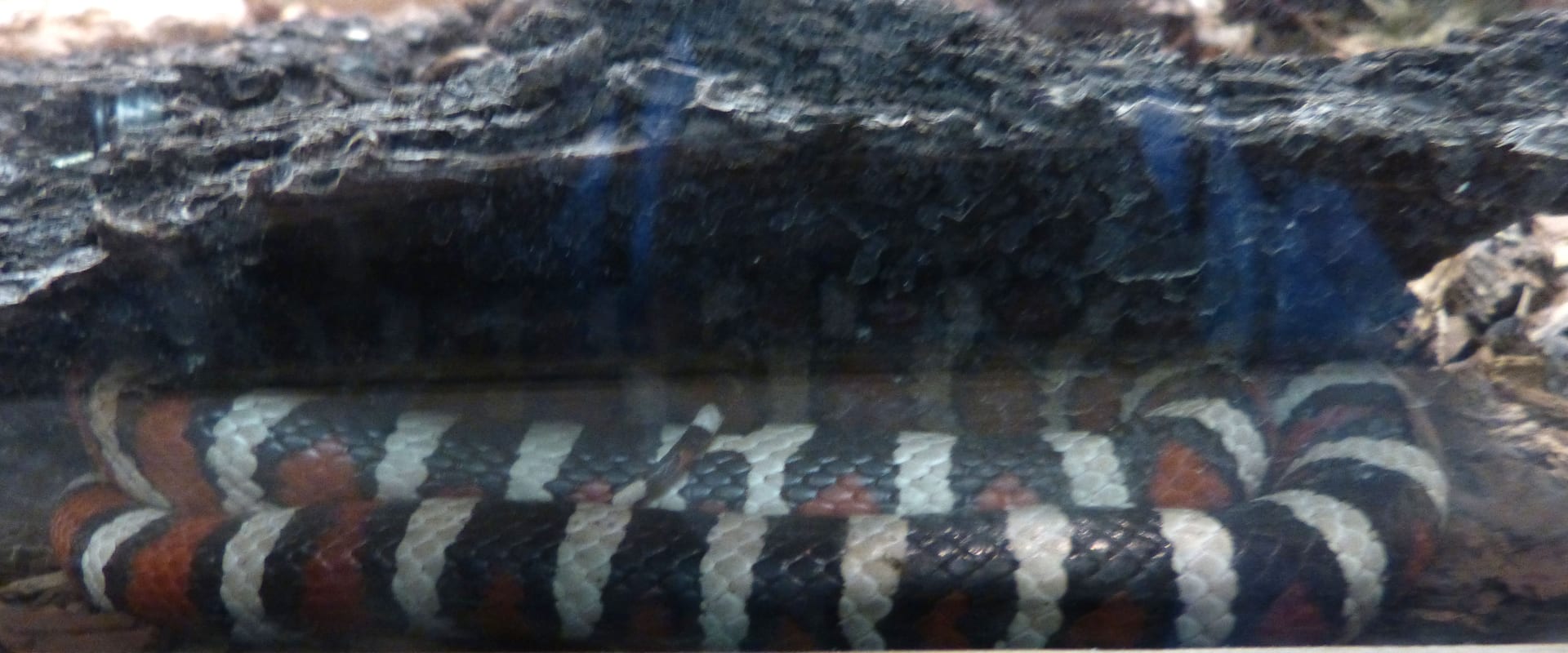
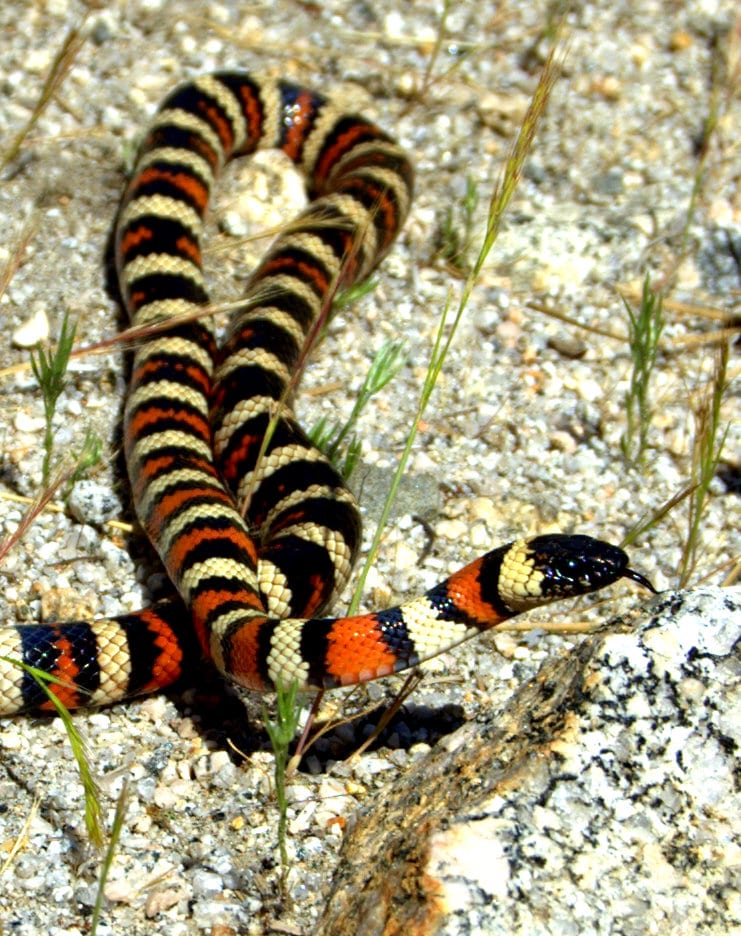
A non-venomous colubrid endemic to western North America. A coral snake mimic in which each red crossband is flanked by two black bands, forming a triad, with white bands between triads. A black snout separates it from the Arizona mountain kingsnake.
Difficulty
Advanced
Lifespan
Over 20 years in captivity
Size
76-91cm, 61-102cm depending on subspecies
Humidity
40〜60%
Diet
Frozen-thawed mice; in the wild lizards, rodents and nestling birds
About
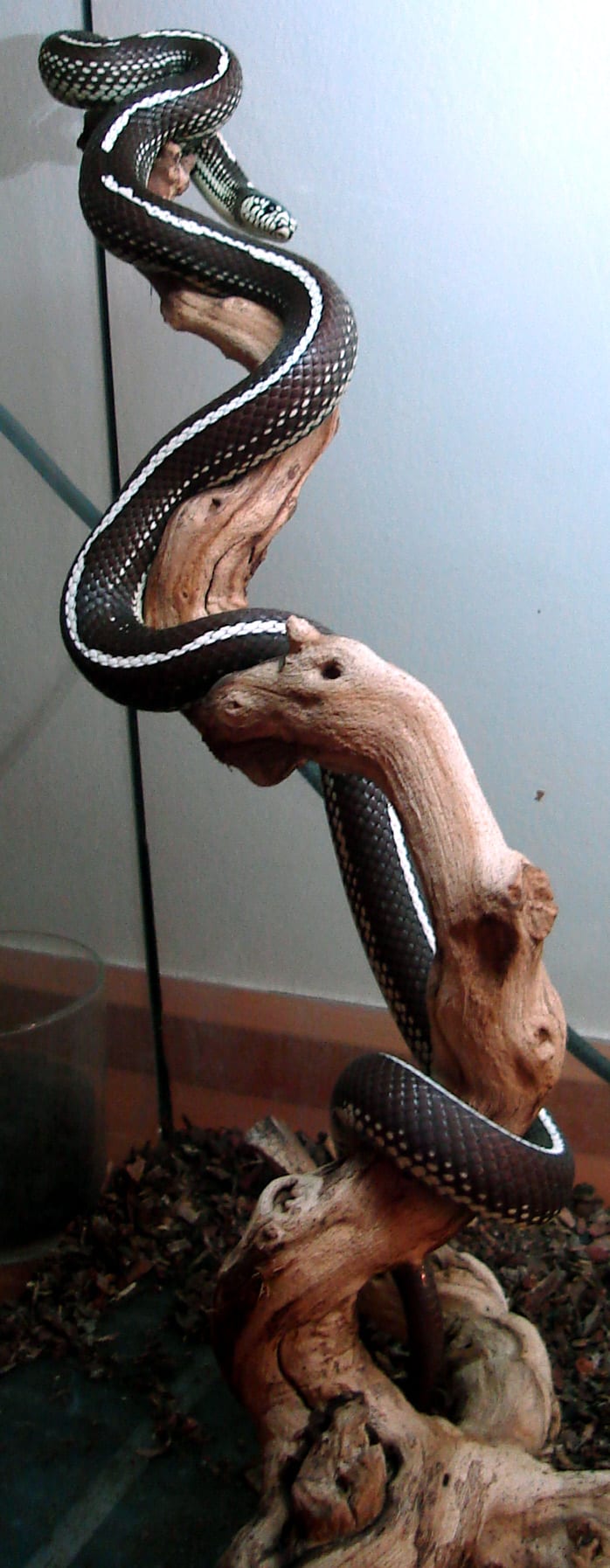
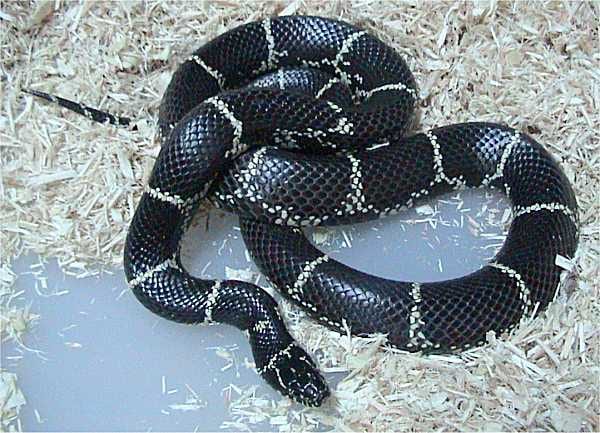
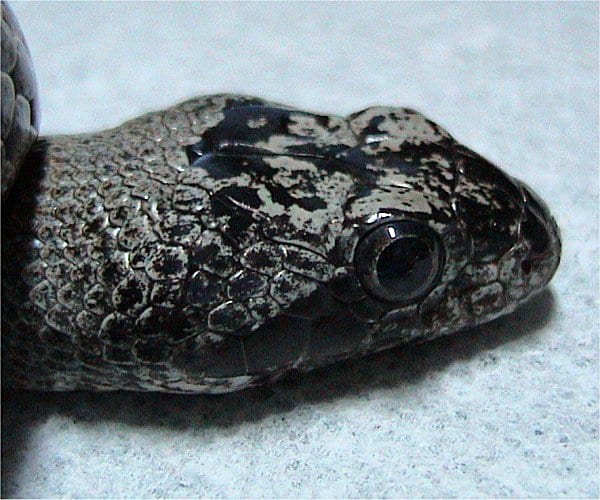
Lampropeltis zonata is a non-venomous colubrid endemic to western North America, measuring 76 to 91 cm in the nominate form and 61 to 102 cm across the subspecies. It is a coral snake mimic banded in red, black and white, but entirely harmless. The pattern follows a strict rule: each red crossband is flanked by two black bands to form a unit called a triad, and successive triads are separated by a white, sometimes cream or yellow, crossband. Some individuals carry little red pigment, and the population on Isla Todos Santos lacks red bands altogether. The snout is black, or black with red markings, which separates it from the white-snouted L. pyromelana. Its range runs from a disjunct population in southern Washington through Oregon and California to northern Baja California, and the fact that most of it lies within California gives the species its common name. Seven subspecies are recognised, five in the United States and two in Mexico.
Source: Wikipedia (CC BY-SA 4.0)
Lifespan of the California Mountain Kingsnake
The California Mountain Kingsnake lives Over 20 years in captivity.
Size of the California Mountain Kingsnake
The California Mountain Kingsnake grows to 76-91cm, 61-102cm depending on subspecies.
Basic Info
Origin
The western United States, with a disjunct population in southern Washington, through Oregon and California to northern Baja California in Mexico
Lifespan
Over 20 years in captivity
Size
Care Specifications
PeacefulSolitaryBreeding: Hard
Sources: ReptiFiles: Kingsnake Care Sheet / Reptiles Magazine: Kingsnake Care and Husbandry / Wikipedia (English) / Reptile Database
References & Sources
Edited & verified by: BreederDirect editorial team
The taxonomic, regulatory, and husbandry data on this page are compiled and verified against the authoritative primary sources below.
Taxonomy & Authority
Accepted name: Lampropeltis zonata (Lockington, 1835)
Synonyms: Coluber zonatus Lockington, 1835, Coronella multifasciata Bocourt, 1886, Lampropeltis herrerae Van Denburgh & Slevin, 1923
Authority databases: GBIF · Reptile Database
Nomenclature follows global taxonomic authority databases.
Regulations & Conservation Status
Not CITES-listedIUCN LC · Least Concern
Not listed in any appendix of the Convention on International Trade in Endangered Species (CITES) (not registered in Species+). Does not fall under either the specified animals listed in the appended table of the Ordinance for Enforcement of the Animal Welfare and Management Law, nor the specified invasive alien species under the Invasive Alien Species Act.
Sources: CITES Appendices (species not listed) / IUCN Red List
Regulations may change. Always verify the latest information with the relevant authorities.
California Mountain Kingsnake Listings
Loading latest listingsFind listings for this species