Source: Wikimedia Commons
Mexican Black Kingsnake
BeginnerLampropeltis nigrita
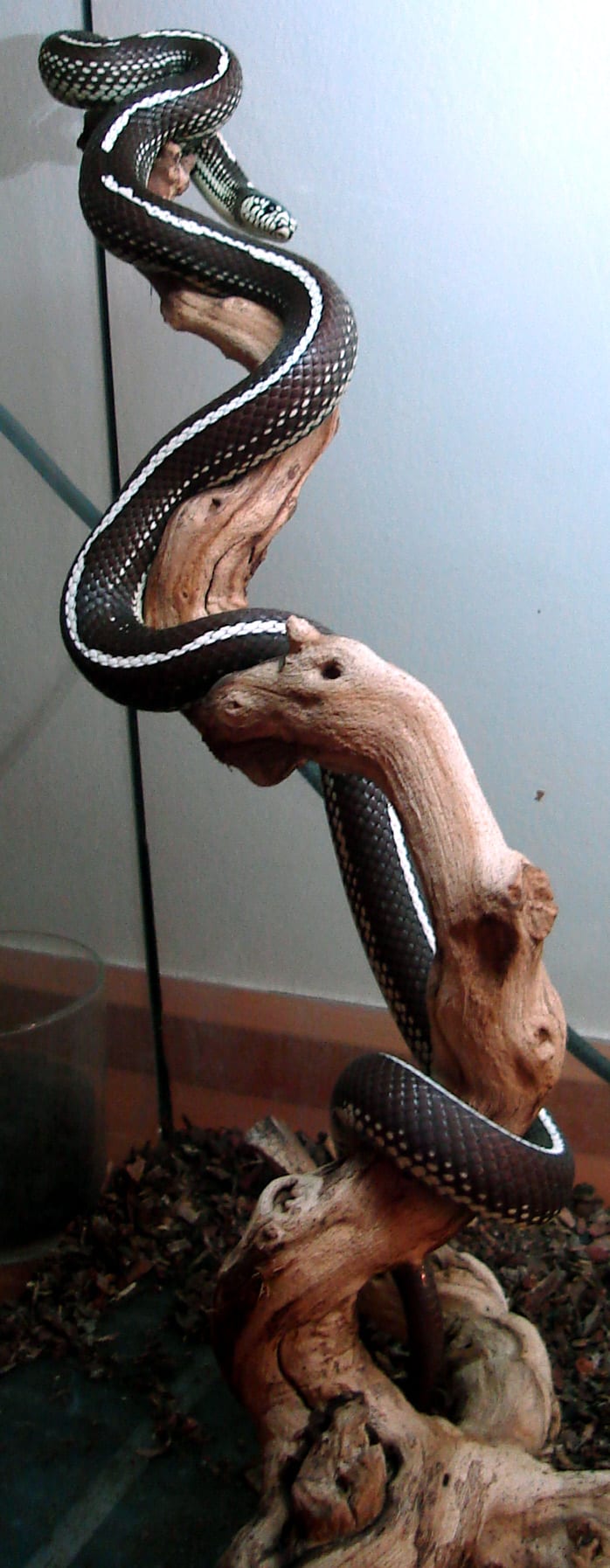
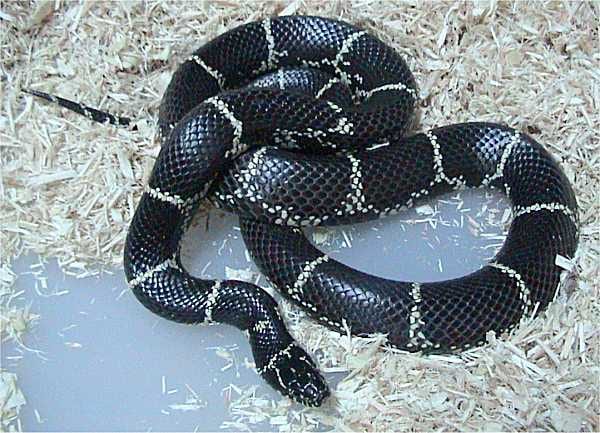
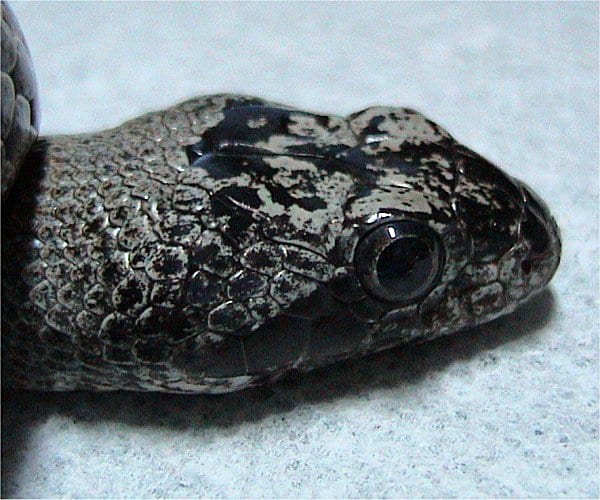
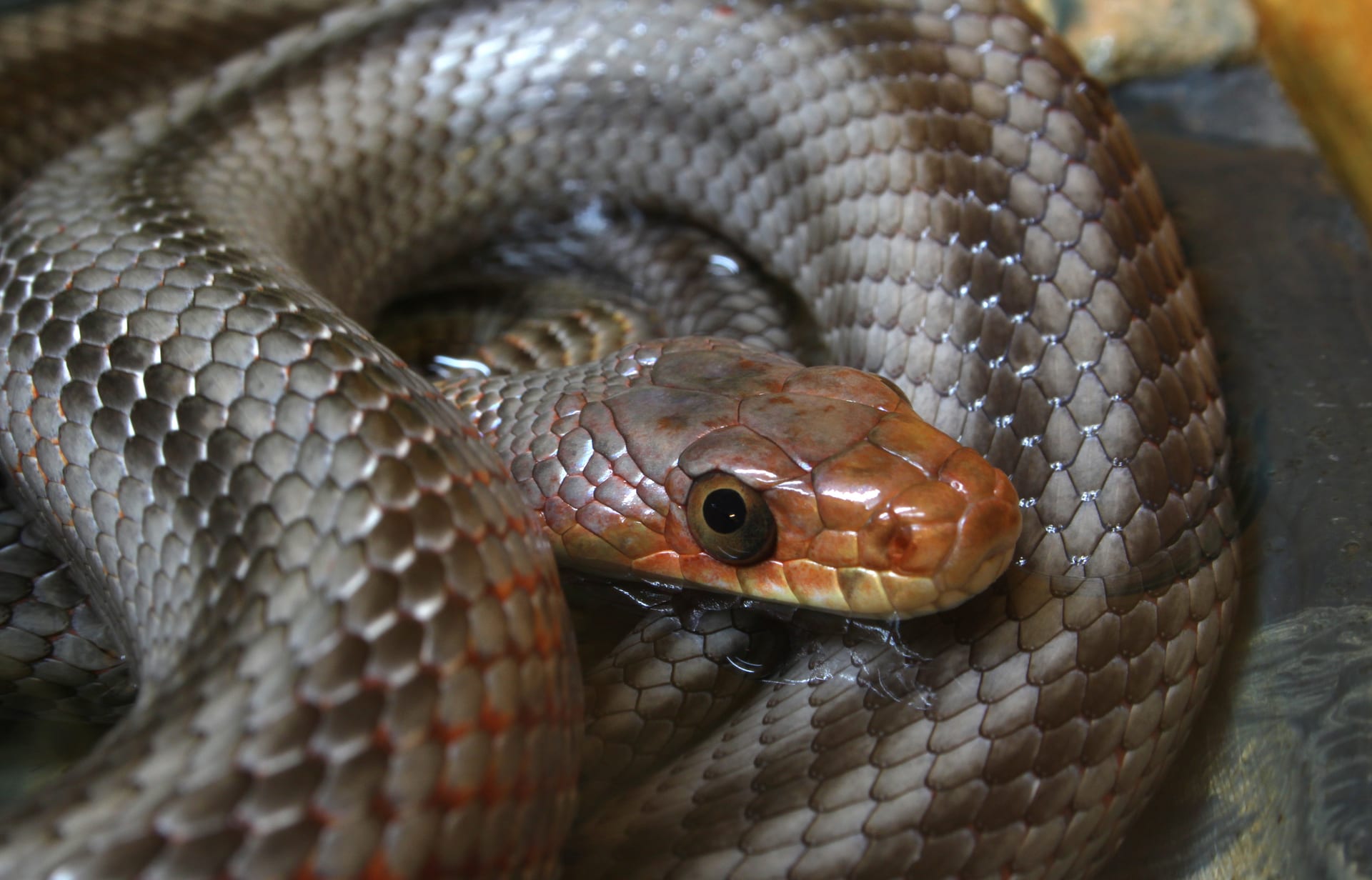
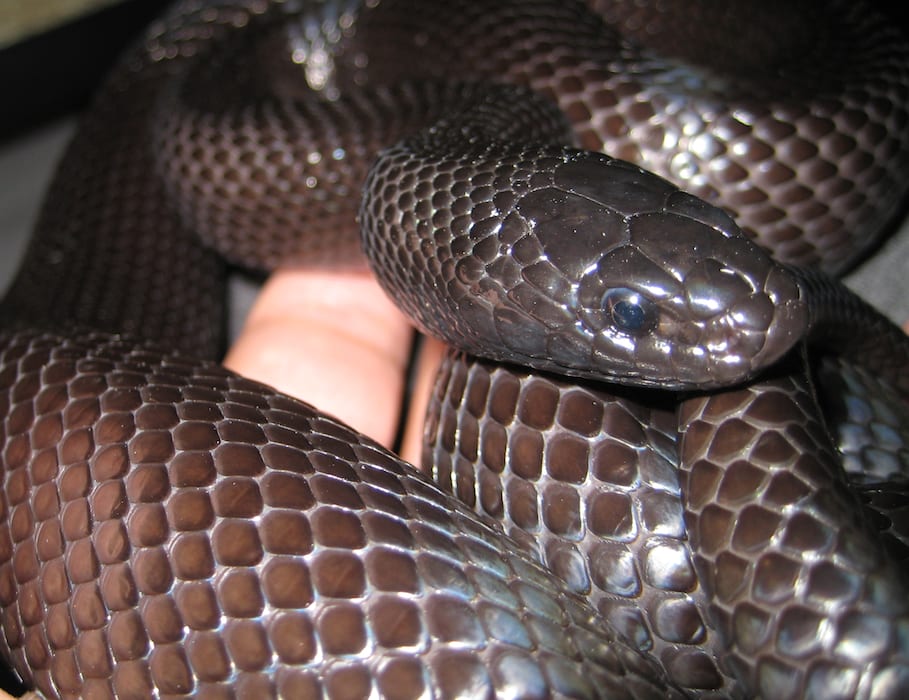
A non-venomous colubrid notable for a uniform dark colour with no markings. In direct light it reads as deep chocolate brown and the scales throw a blue sheen. Hardy, docile and long-lived at 20 to 30 years, it is a popular beginner snake.
Difficulty
Beginner
Lifespan
20-30 years
Size
90-120cm, sometimes over 1.5m in captivity, weighing up to about 1.3kg
Humidity
40〜60%
Diet
Frozen-thawed mice; in the wild rodents, lizards and other snakes
About
Lampropeltis nigrita is a non-venomous colubrid of north-western Mexico and south-eastern Arizona around the Sonoran Desert. Wild animals reach 90 to 120 cm with a plump, stocky build, while captives on a richer diet sometimes exceed 1.5 m. Its defining feature is a completely uniform dark coloration with no rings or stripes, which separates it from other common kingsnake lineages. Juveniles may show small white or yellow spots, particularly under the chin, but these fade or vanish with maturity. Despite the name it is not truly black but a deep chocolate colour, and the scales reflect a blue sheen in direct light. It occupies rocky ground and areas with lush vegetation. Its taxonomic position is unsettled, being treated either as a full species or as a synonym of the California kingsnake.
Source: Wikipedia (CC BY-SA 4.0)
Lifespan of the Mexican Black Kingsnake
The Mexican Black Kingsnake lives 20-30 years.
Size of the Mexican Black Kingsnake
The Mexican Black Kingsnake grows to 90-120cm, sometimes over 1.5m in captivity, weighing up to about 1.3kg.
Adults weigh up to about 1.3 kg and live 20 to 30 years.
Basic Info
Origin
The Sonoran Desert region of Mexico in Sonora and north-western Sinaloa, and south-eastern Arizona in the United States
Lifespan
20-30 years
Size
90-120cm, sometimes over 1.5m in captivity, weighing up to about 1.3kg
Care Specifications
PeacefulSolitaryBreeding: Easy
Sources: ReptiFiles: Kingsnake Care Sheet / The Bio Dude: Mexican Black Kingsnake Care Sheet / Wikipedia (English) / Reptile Database
References & Sources
Edited & verified by: BreederDirect editorial team
The taxonomic, regulatory, and husbandry data on this page are compiled and verified against the authoritative primary sources below.
Taxonomy & Authority
Accepted name: Lampropeltis nigrita Zweifel & Norris, 1955
Synonyms: Lampropeltis getula nigrita Zweifel & Norris, 1955
Authority databases: GBIF · Reptile Database
Nomenclature follows global taxonomic authority databases.
Regulations & Conservation Status
Not CITES-listed
It is not listed in CITES appendices (not registered in Species+). It does not fall under either the list of specified animals under the Enforcement Ordinance of the Act on Welfare and Management of Animals or designated invasive species under the Invasive Species Act. (As it is treated as a synonym of Lampropeltis californiae in GBIF, there is no individual IUCN Red List assessment.)
Sources: CITES Appendices (species not listed) / IUCN Red List
Regulations may change. Always verify the latest information with the relevant authorities.
Mexican Black Kingsnake Listings
Loading latest listingsFind listings for this species