Source: Wikimedia Commons
Eastern Kingsnake
BeginnerLampropeltis getula
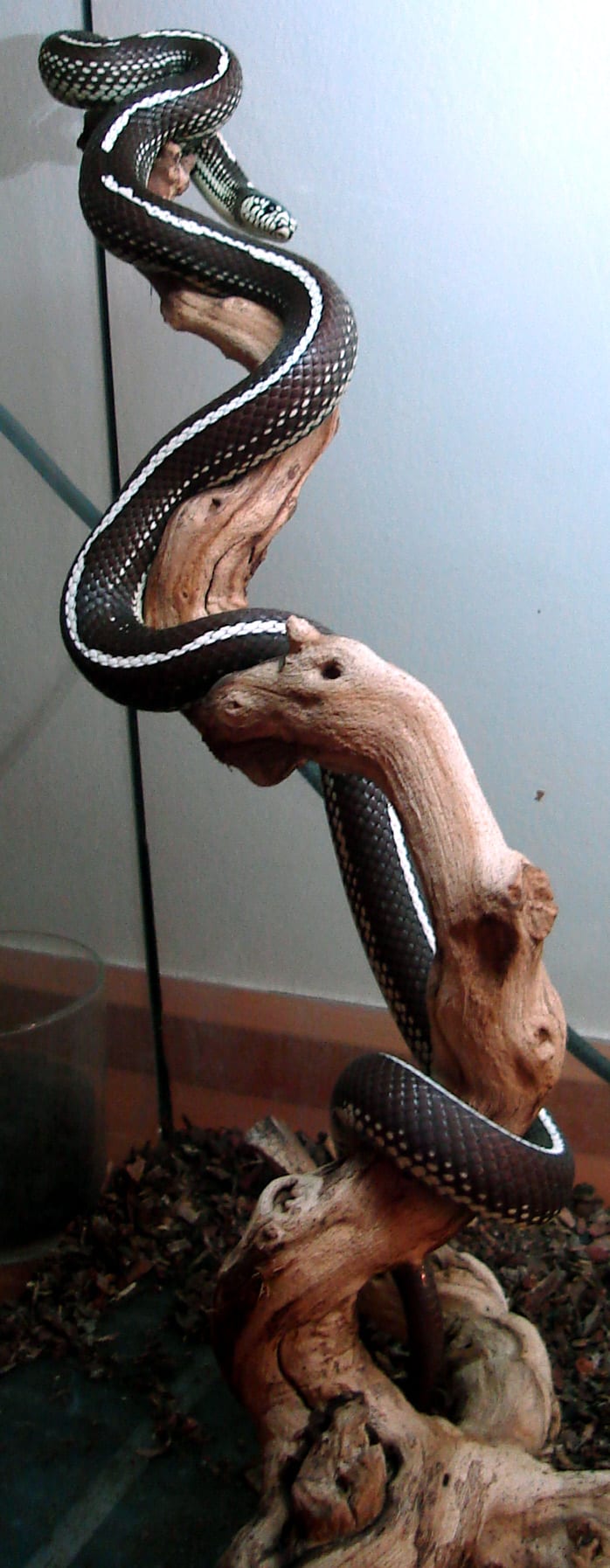
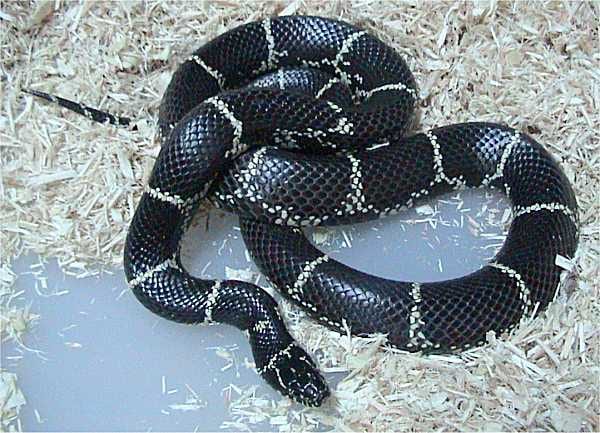
A non-venomous colubrid of the south-eastern United States. A glossy black ground colour carries 23 to 52 white chain-like rings, giving it the name chain kingsnake. It is among the largest of the genus and strongly ophiophagous, taking even venomous snakes.
Difficulty
Beginner
Lifespan
Over 20 years in captivity
Size
90-122cm, up to 208cm
Humidity
40〜60%
Diet
Frozen-thawed mice; in the wild rodents, lizards, nestling birds and other snakes
About
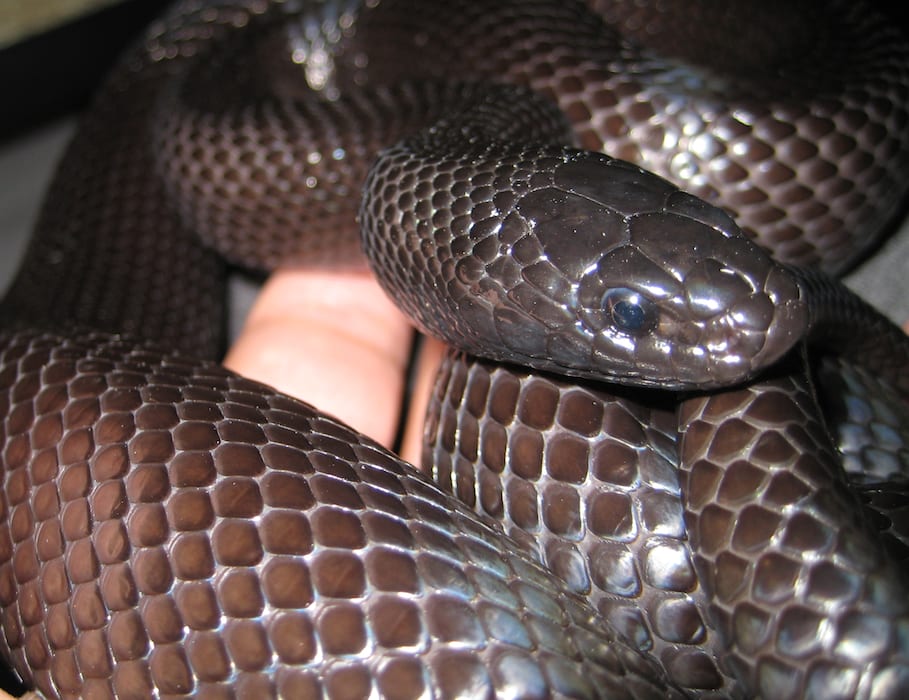
Lampropeltis getula is a non-venomous colubrid of the south-eastern United States and among the largest in its genus, adults averaging 90 to 122 cm with a record of 208.2 cm. The ground colour is glossy black, blue-black or dark brown, overlaid with 23 to 52 white chain-like rings; coastal plain animals have wider bands while mountain animals have thinner bands or may be entirely black. The scales are smooth, the anal plate single and there are 19 to 25 dorsal scale rows at midbody. Long a favourite among keepers, it lives over 20 years in captivity. It is strongly ophiophagous and is known to prey on other snakes, including venomous species. Many subspecies were formerly recognised, but several, including californiae, are now treated as full species.
Source: Wikipedia (CC BY-SA 4.0)
Lifespan of the Eastern Kingsnake
The Eastern Kingsnake lives Over 20 years in captivity.
Size of the Eastern Kingsnake
The Eastern Kingsnake grows to 90-122cm, up to 208cm.
Weight ranges from 285 g in a small 87 cm animal to 2,268 g in specimens over 153 cm.
Basic Info
Origin
The south-eastern United States, from southern New Jersey to northern Florida and west to the Appalachians, West Virginia and southern Alabama
Lifespan
Over 20 years in captivity
Size
90-122cm, up to 208cm
Care Specifications
PeacefulSolitaryBreeding: Easy
Sources: ReptiFiles: Kingsnake Care Sheet / Reptiles Magazine: Kingsnake Care and Husbandry / Wikipedia (English) / Reptile Database
References & Sources
Edited & verified by: BreederDirect editorial team
The taxonomic, regulatory, and husbandry data on this page are compiled and verified against the authoritative primary sources below.
Taxonomy & Authority
Accepted name: Lampropeltis getula (Linnaeus, 1766)
Synonyms: Coluber getulus Linnaeus, 1766, Lampropeltis getula floridana Blanchard, 1919, Lampropeltis getula meansi Krysko & Judd, 2006
Authority databases: GBIF · Reptile Database
Nomenclature follows global taxonomic authority databases.
Regulations & Conservation Status
Not CITES-listedIUCN LC · Least Concern
Not listed in any appendix of the Convention on International Trade in Endangered Species (CITES) (not registered in Species+). Does not fall under either the specified animals listed in the appended table of the Ordinance for Enforcement of the Animal Welfare and Management Law, nor the specified invasive alien species under the Invasive Alien Species Act.
Sources: CITES Appendices (species not listed) / IUCN Red List
Regulations may change. Always verify the latest information with the relevant authorities.
Eastern Kingsnake Listings
Loading latest listingsFind listings for this species