Complete Guide to Caring for Bernese Mountain Dogs | Temperament, Health Management, Heat Protection, and Grooming
A comprehensive guide to raising Bernese Mountain Dogs, a large breed native to Switzerland. We explain their calm, family-oriented temperament, sensitivity to heat, cancer risks such as histiocytic sarcoma, prevention of hip joint disease, and long-haired coat care in an easy-to-understand manner even for first-time large dog owners.
Key Takeaways
A comprehensive guide to raising Bernese Mountain Dogs, a large breed native to Switzerland. We explain their calm, family-oriented temperament, sensitivity to heat, cancer risks such as histiocytic sarcoma, prevention of hip joint disease, and long-haired coat care in an easy-to-understand manner even for first-time large dog owners.
Related Species
About the Bernese Mountain Dog
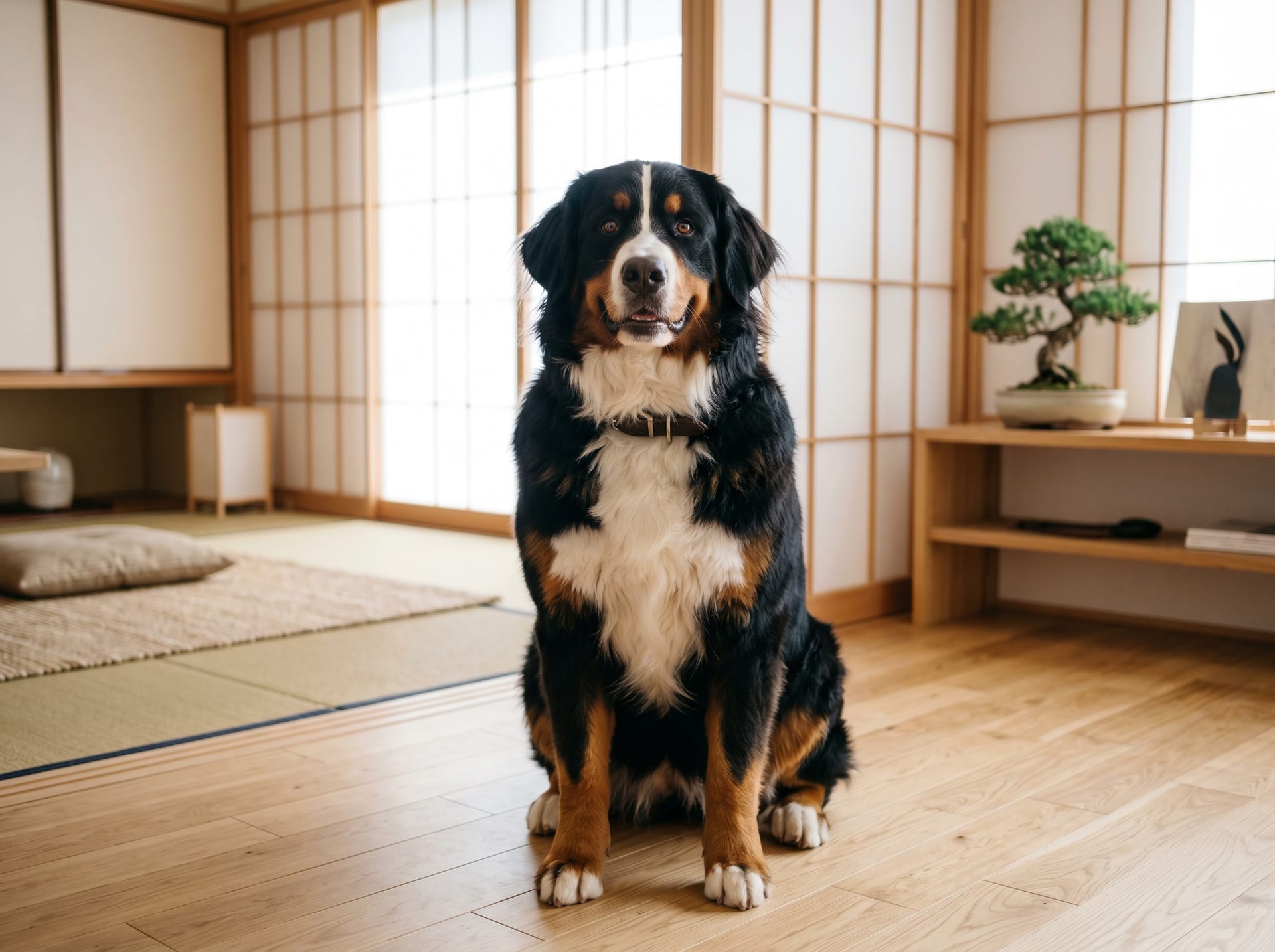
The Bernese Mountain Dog is a large herding and farm working dog originating from the Canton of Bern in Switzerland. Known affectionately as the "Bernese," they are characterized by their distinctive tricolor coat—black, white, and rust brown—and their large, powerful build. Originally, they were used as working dogs on farms, pulling carts and herding livestock.
Basic Data:
- Weight: 32–52 kg (males), 26–41 kg (females)
- Height: 64–70 cm (males), 58–66 cm (females)
- Lifespan: 7–10 years on average (unfortunately, they tend to have shorter lifespans among large breeds)
- Coat Type: Long-haired double coat (straight to slightly wavy)
- Country of Origin: Switzerland
Temperament and Characteristics
Bernese Mountain Dogs are known for their calm and friendly temperament among mountain dog breeds. They are composed and patient, making them suitable for families with children. However, without proper socialization training from puppyhood, they can become shy around unfamiliar people and other dogs.
Main Temperament Characteristics
- Calm and Gentle: Low aggression and very easy to handle as a family dog
- Loyal to Family: They tend to form strong bonds with their specific family
- Highly Intelligent: Quick to learn training, though they can be stubborn
- Gentle with Children and Other Pets: They are aware of their size and adjust their movements accordingly
- Cold-Hardy: Their double coat makes them excellent in winter, but they are sensitive to heat
Ideal Living Situations
- Single-family homes with yards or spacious suburban residences
- Homes where outdoor activities of at least one hour per day are possible
- Households willing to accept a dog with significant shedding
- Those who appreciate the easygoing temperament typical of Swiss and Northern European dogs
Setting Up the Living Environment
Home Environment
Bernese Mountain Dogs are difficult to raise in apartments due to their large size. While a single-family home with a yard is ideal, apartment living is possible if the dog receives adequate daily exercise.
- Flooring: Rugs and cork mats are recommended to protect the joints of large dogs
- Bed: Large size (120 cm or larger) where the entire body can stretch out
- Heat Protection: They are very sensitive to heat. Maintain indoor temperatures below 22–25°C during summer (air conditioning is essential)
Exercise and Walking
They require a minimum of 60–90 minutes of exercise daily, but avoid hot times of day. Walking during cool morning and evening hours is essential.
| Season | Recommended Activity |
|---|---|
| Spring/Autumn | 1–2 hours of walking or hiking |
| Summer | Early morning and evening only (on extremely hot days, switch to indoor play) |
| Winter | They can play actively even in the snow |
During the puppy phase (6 months to 1 year), growth plates are still developing, so avoid intense jumping, climbing stairs, and long-distance running.
Feeding Management
Food management is important for large dogs due to the risk of gastric dilatation-volvulus (GDV, or bloat).
- Daily Feeding: Divide into 2–3 meals per day (avoid feeding large amounts at once)
- Post-Meal Exercise: Avoid intense exercise for 1–2 hours after feeding
- Food Bowl Height: Use an elevated food stand at neck height rather than floor level (to prevent bloat)
- Calorie Management: Proper weight management is crucial as obesity worsens joint disease
Adult Feeding Guidelines (Dry Food):
- Around 35 kg body weight: 450–550 g/day
- Around 45 kg body weight: 550–650 g/day
Common Health Issues and Health Management
Unfortunately, Bernese Mountain Dogs have an average lifespan of only 7–10 years, which is shorter than many large breeds, and they are prone to specific hereditary diseases.
Malignant Tumors (Cancer)
Malignant tumors are the most common cause of death in Bernese Mountain Dogs. In particular, histiocytic sarcoma is a disease specific to Bernese Mountain Dogs and is a rare type of cancer in other breeds. Annual check-ups twice yearly are recommended for early detection.
Hip and Elbow Dysplasia
Due to their heavy weight, they are prone to hip dysplasia (HD) and elbow dysplasia (ED).
- At the time of purchase, verify the parents' OFA certification and JKC hip evaluation results
- Maintain appropriate body weight
- Avoid hard flooring
- Minimize excessive exercise during growth phases
Gastric Dilatation-Volvulus (GDV, Bloat)
This is an emergency condition common in large, deep-chested dog breeds. Consider careful feeding management (small, frequent meals with rest after feeding) and prophylactic gastropexy (preventive surgery).
Heart Disease
There is also a risk of dilated cardiomyopathy (DCM), so regular heart auscultation and ultrasound examinations are recommended.
Grooming
Brushing
The long double coat requires brushing 3–4 times per week. During shedding season (spring and autumn), brushing almost daily is necessary.
- Slicker Brush: For loosening the undercoat
- Comb Brush: For detangling and finishing
- Long-Haired Dematting Comb: For severe tangles
Pay special attention to areas with high friction, such as around the ears, underarms, and inner thighs, as these are prone to matting.
Bathing and Other Care
- Bathing Frequency: Once or twice per month (adjust based on skin condition)
- Nail Trimming: Once or twice per month
- Ear Cleaning: Once per week (they are prone to ear infections due to their floppy ears)
- Tooth Brushing: Ideally daily
What to Look for When Choosing a Breeder
When looking for a Bernese Mountain Dog puppy, it is crucial to choose a breeder who practices sound genetic management.
Items to Verify:
- Confirmation of parents' hip (OFA/JKC grades) and elbow evaluation certifications
- Family history of hereditary diseases (such as histiocytic sarcoma)
- Vaccination and deworming status
- Socialization status (exposure to people, sounds, and environments)
- Presence of pedigree papers (JKC registration)
While it is unfortunate that Bernese Mountain Dogs have shorter lifespans, the time you spend together will bring great joy and comfort. Commit to serious health management and give them fulfilled days together.