Complete Breeding Guide for Californian Rabbits | Raising Young Rabbits, Maintaining Breed Characteristics and Management
A comprehensive guide to Californian rabbit breeding methods. A practical resource for breeders covering breeding age, pregnancy management, nursing and weaning of young rabbits, and selection methods for maintaining color point characteristics.
Key Takeaways
A comprehensive guide to Californian rabbit breeding methods. A practical resource for breeders covering breeding age, pregnancy management, nursing and weaning of young rabbits, and selection methods for maintaining color point characteristics.
Before Starting Californian Rabbit Breeding
✍️
BreederDirect Editorial
The BreederDirect editorial team specializes in care information for animals, covering veterinary care and breeding to deliver beginner-friendly guides.
Find Small Animals on BreederDirect
Buy directly from verified breeders
Browse Related Listings
Find Small Animals listings related to this article on BreederDirect. Buy directly from verified breeders.
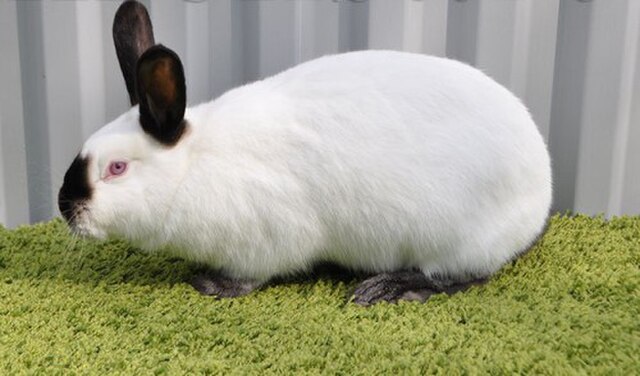
Californian rabbits are a medium to large-sized breed with well-developed physique and reproductive capacity. Beyond breeding for pets, there is a growing number of breeders undertaking selective breeding for breed preservation and show competitions.
There are key points to understand before starting breeding.
Approximately 6-10 young rabbits are born per litter
As young rabbits grow, their numbers increase rapidly, making securing homes for them essential
Appropriate living space to handle pregnancy, birth, and nursing is necessary
Genetic knowledge is essential for establishing color points
Breeding Age and Timing to Start Breeding
Sexual Maturity in Males
Male Californians reach sexual maturity at 5-6 months of age. However, for breeding purposes, it is recommended to use males from 8-10 months of age onwards, once their physique and health status have stabilized.
Sexual Maturity and Breeding Age in Females
Females reach sexual maturity at 4-6 months of age. First breeding is ideally done at 6-8 months of age or later. Breeding at a young age when physique is not fully developed increases the likelihood of offspring with developmental defects and raises health risks for the female herself.
Breeding Cycle and Estrus Detection
Rabbits can breed year-round. Signs of estrus in females are as follows.
Estrus Sign
Observation Point
Redness/swelling of vulva
Dark red color indicates peak estrus
Nesting behavior
Gathering straw and hair
Changes in appetite and behavior
Loss of calmness, mounting attempts
Breeding Method
Basic Breeding Procedure
Always move the female to the male's cage (doing the reverse risks the male being attacked)
Observe the breeding, confirm mounting plus flipping (ejaculation confirmation) 2-3 times, then return the female
After 10-14 days, attempt palpation to confirm pregnancy (check abdominal firmness and fetal presence)
If not pregnant, attempt breeding again
Points to Note During Breeding
Breeding has higher success rates during cool morning hours (especially important in summer)
Avoid inbreeding (avoid breeding relatives within 3-4 generations)
A ratio of 1 male to 3-5 females is easiest to manage
Pregnancy Management
Pregnancy Duration
The pregnancy duration in Californian rabbits is 28-31 days.
Nutrition Management During Pregnancy
Caloric needs increase in the latter half of pregnancy (from week 2 onwards).
Stage
Dietary Adjustment
Early pregnancy
Timothy hay available at all times, normal pellet amount
Late pregnancy
Increase pellets by 10-20%, add small amount of alfalfa hay
Nursing
High protein, high calorie diet. Significantly increase pellets (1.5-2x normal)
Nest Box Preparation (2 weeks before birth)
Install a nest box 2 weeks before birth to prepare an environment where the female can nest.
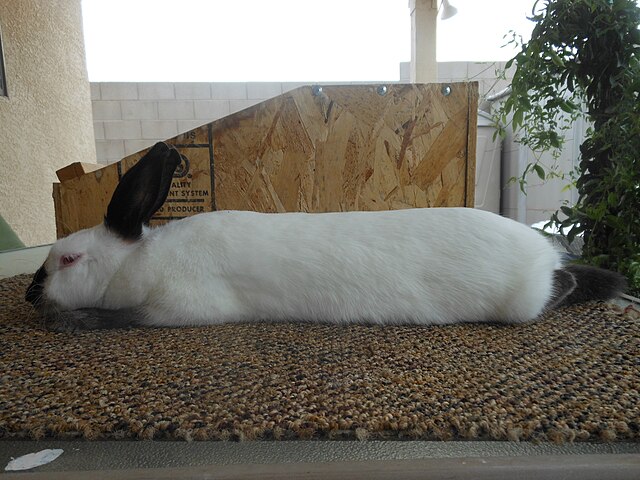
Nest box size: 1.5 times or larger than body length (Californians are approximately 40cm in length)
Nesting material: Clean hay or commercial nesting material
Placement: Corner of cage, dark and quiet location
1-2 days before birth, the female will pull fur from her chest and belly and line the nest with it (fur pulling). This is normal behavior.
Birth and Young Rabbit Care
Birth Process
Birth typically occurs from late evening to early morning. Assistance is not necessary as the mother rabbit handles delivery including afterbirth. Confirm the survival of all young within 24 hours of birth.
Post-Birth Confirmation
All young are in the nest box (chilled young rabbits have reduced body temperature and high mortality risk)
Abdomens of young rabbits are rounded (sign of successful nursing)
Mother rabbit is entering the nest box and nursing
Nursing Period (Birth to 4 weeks)
Rabbit nursing is completed 1-2 times daily in just a few minutes. It is normal for the mother not to remain in the nest box for extended periods.
Artificial Rearing
If the mother refuses to nurse or dies, artificial rearing is necessary. Feed young rabbits milk formula (goat milk, etc.) with a syringe. This is difficult, so seek veterinary guidance if possible.
Weaning Timing (4-6 weeks of age)
Young begin eating hay and pellets from 4 weeks of age. 6-8 weeks of age allows for complete weaning and transition to individual housing.
Californian Color Point Genetics and Selection
Genetic Mechanism of Color Points
The black points of Californians (darkening of nose, ears, limbs, and tail) are determined by the Himalayan gene (c^h). This is a temperature-dependent genetic trait where pigment is expressed only in extremities with lower body temperature.
Point Color
Gene Combination
Black
cc^h (most common)
Chocolate
cc^h + b/b
Blue
cc^h + dd
Lilac
cc^h + b/b + dd
Key Points for Selective Breeding
To maintain breed standards, selection (culling) evaluates the following:
Clarity of points: Are the boundaries between point color and body color distinct?
Body type: Medium to large size with round, compact build
Coat quality: Density, luster, and softness
Weight: Adult weight within 3.5-4.7kg range
Breeding Record Management
Records are essential for line management. Record the following information.
Record Item
Example
Individual ID/Sex
Male-A01 / Female-B03
Date of birth
2025-12-05
Parent information
Sire ID / Dam ID
Breeding date/Birth date
2026-03-10 / 2026-04-08
Litter size/Survival count
8 / 7
Weight at weaning
650g
We recommend managing records using digital spreadsheets or dedicated apps.
Summary
The three core principles for successful Californian rabbit breeding are as follows.
Starting breeding at the appropriate age (females 6-8 months or older) and securing homes for offspring
Nutrition management during pregnancy and nursing (increasing pellets and preparing nest boxes)
Maintaining breed characteristics through selection based on understanding color point genetics
To continue operating as a trusted breeder, maintaining individual records and building a network of homes for offspring will support long-term breeding activities.
If you need pet-friendly rental housing to accommodate medium-sized rabbits like Californians, searching on sumuie.jp with filters like "pet-friendly" and "large cage installation permitted" makes it easy to find suitable properties.