Source: Wikimedia Commons
Himalayan Rabbit
BeginnerOryctolagus cuniculus
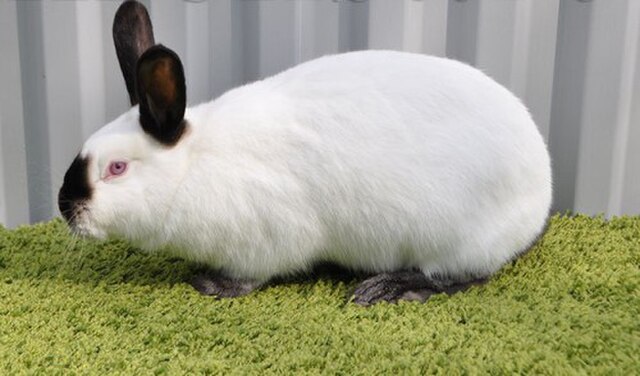
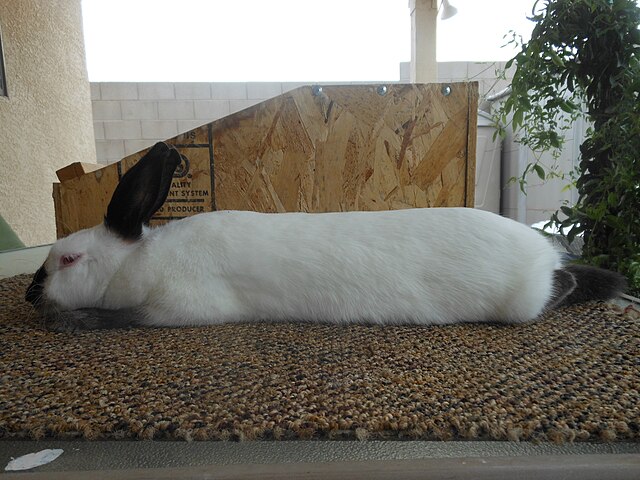
White body with dark points on nose, ears, feet, and tail. Color changes with temperature. Calm and gentle breed.
Difficulty
Beginner
Temperature
18〜26℃
Lifespan
7-10 years
Size
30-40cm / 1.5-2.5kg
Humidity
40〜60%
Diet
Timothy hay, rabbit pellets, vegetables
About
The Himalayan rabbit is one of the oldest domestic rabbit breeds, known since at least the 19th century, with proposed origins in China, Russia, or the Himalayan mountain regions. Their body is slender and cylindrical, distinctly different from the rounded breeds. Their coat pattern is similar to that of Siamese cats: the body is pure white while the 'points'—nose, ears, feet, and tail—are colored (black, blue, chocolate, or lilac). This coloration is temperature-dependent, produced by a heat-sensitive tyrosinase enzyme; cooler extremities develop more pigmentation. The Himalayan is renowned for its exceptionally calm, docile temperament, making it one of the most manageable rabbit breeds. Diet consists of unlimited timothy hay, pellets, and fresh vegetables. Common health concerns include dental malocclusion, GI stasis, and digestive disorders.
Source: Wikipedia (CC BY-SA 4.0)
Lifespan of the Himalayan Rabbit
The Himalayan Rabbit lives 7-10 years.
Lifespan is 7–10 years.
Size of the Himalayan Rabbit
The Himalayan Rabbit grows to 30-40cm / 1.5-2.5kg.
Adults measure 35–45 cm and weigh 1.1–2.0 kg.
Basic Info
Origin
China, Russia, or Himalayan region (origin disputed)
Lifespan
7-10 years
Size
30-40cm / 1.5-2.5kg
Care Specifications
Pair
Sources: RWAF Rabbit companionship
Morphs (Varieties)
ARBA-recognized Himalayan color variety. Pointed color (Himalayan gene) is recessive.
Other
BlackBlueChocolateLilac
Sources: ARBA Recognized Breeds and Varieties
A curated selection of notable morphs. Inheritance modes are a breeding-planning guide; actual appearance varies with combos.
References & Sources
Edited & verified by: BreederDirect editorial team
The taxonomic, regulatory, and husbandry data on this page are compiled and verified against the authoritative primary sources below.
Taxonomy & Authority
Accepted name: Oryctolagus cuniculus (Linnaeus, 1758)
Authority databases: GBIF
Nomenclature follows global taxonomic authority databases.
Regulations & Conservation Status
Not CITES-listed
Sources: CITES Appendices / Ministry of the Environment Specified Alien Species List
Regulations may change. Always verify the latest information with the relevant authorities.
Himalayan Rabbit Listings
Loading latest listingsFind listings for this species