Indoor Rabbit Setup Guide — Complete Explanation from Cage Selection to Free-Roaming Space
Complete indoor rabbit housing guide: selecting the right cage, flooring, bedding, temperature management, creating safe free-roaming spaces, and essential equipment for beginners.
Key Takeaways
Complete indoor rabbit housing guide: selecting the right cage, flooring, bedding, temperature management, creating safe free-roaming spaces, and essential equipment for beginners.
Related Species


What to Prepare Before Keeping Rabbits Indoors
Rabbits are popular small animal pets alongside dogs and cats, but many people also find that they require more care than expected. In particular, setting up a suitable indoor living environment is key to successful rabbit care. Cage size, bedding, temperature, and indoor play space—by preparing these carefully before bringing your rabbit home, you can create an environment where your rabbit can live healthily and stress-free.
While rabbits don't bark like dogs or scratch furniture with their claws like cats, they have a strong chewing instinct, making protection measures for cords and furniture essential. Additionally, rabbits are sensitive to temperature changes and require special attention during hot summers and cold winters.
Choosing a Cage | Size and Material Considerations
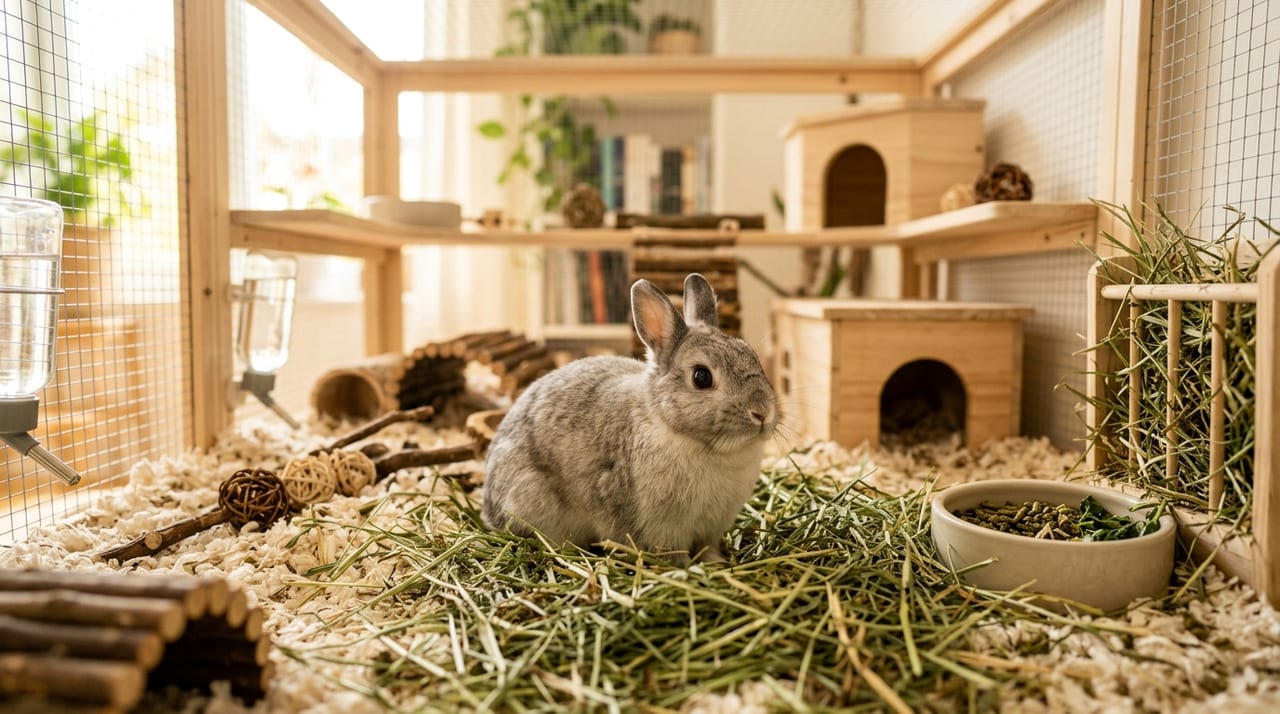
The most important factor in choosing a rabbit cage is size. The general guideline is a floor area of at least 3 to 4 times the rabbit's body length. Even small breeds (such as Netherland Dwarfs) need at least 60×90cm, and medium breeds (such as Mini Rex) ideally require 90×120cm or larger.
Commercially available rabbit cages are primarily metal mesh types, which are easy to keep clean and provide good ventilation. However, be aware that cages with only mesh bottoms can cause sore hocks (pododermatitis), so combine them with hay mats or wooden ramps to provide cushioning.
Essential items for the cage:
- Hay rack (Timothy hay is the main food)
- Water bottle or water bowl
- Pellet dish
- Litter box (fixed type recommended)
- Hiding shelter (house)
- Chew wood
Setting Up Bedding and Environment
Bedding directly affects cage hygiene and foot health. Here are the main options:
Hay mats: Natural mats made from Timothy hay and similar materials. They provide insulation and are safe even if eaten. Replace weekly to twice weekly.
Wooden ramps: Provide good ventilation and allow waste to fall through easily. However, many rabbits chew on them, so watch for damage.
Pet sheets (cage tray liners): Lining the cage tray with pet sheets makes cleaning easier. Odor-absorbing types are convenient.
Keeping bedding clean is important for preventing sore hocks and snuffles (rhinitis) in rabbits. Clean the entire cage once or twice per week.
Temperature and Humidity Control | Summer and Winter Care Are Essential
Rabbits are comfortable at temperatures between 18-24°C (64-75°F) with humidity levels of 40-60%. The biggest concern is summer heat. When temperatures exceed 28°C (82°F), rabbits are prone to heatstroke, which can be fatal in severe cases.
Summer care: Keep room temperature at 25°C (77°F) or below with air conditioning. Placing an aluminum cooling mat helps your rabbit regulate body temperature.
Winter care: Rapidly heating with a heater can cause excessive drying, so use a humidifier alongside heating. Placing insulating mats under and alongside the cage is also effective.
Creating and Securing Free-Roaming Space
Rabbits suffer from lack of exercise if confined only to a cage. Daily "free-roaming time" of 1-2 hours is important for maintaining health. Key points for safely creating free-roaming space:
- Protect electrical cords from chewing (use cord covers)
- Keep houseplants out of reach (many are toxic to rabbits)
- Block escape routes (behind TVs, furniture gaps)
- Use anti-slip mats if flooring is slippery (especially important for hardwood floors)
The key is to never take your eyes off your rabbit during free-roaming time. Constantly check that your rabbit isn't chewing on anything dangerous.
Bring Home a Healthy Rabbit Through BreederDirect
Once your care setup is ready, the next important step is acquiring your rabbit from a trustworthy source. Through BreederDirect, you can purchase directly from rabbit specialist breeders, and confirm health status, vaccination history, and personality in advance. Especially for first-time rabbit owners, it's easy to ask breeders questions about care, and you'll have excellent post-purchase support. Find your perfect rabbit through BreederDirect.