Complete Guide to Small Animal Cage Layouts | Recommended Setups by Species
A comprehensive guide covering cage size recommendations, bedding selection, wheel/toilet/nesting box placement, and cleaning frequency and tips for hamsters, rabbits, chinchillas, hedgehogs, and guinea pigs.
Key Takeaways
A comprehensive guide covering cage size recommendations, bedding selection, wheel/toilet/nesting box placement, and cleaning frequency and tips for hamsters, rabbits, chinchillas, hedgehogs, and guinea pigs.
Related Species

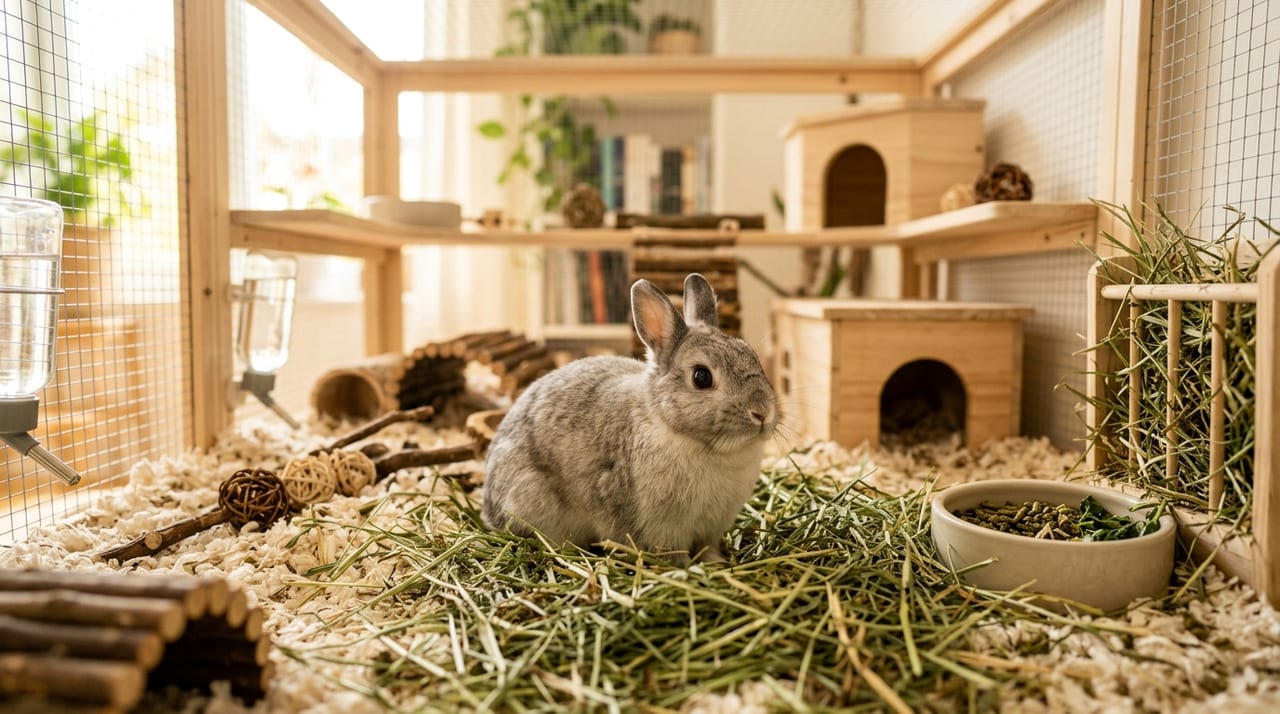
For small animals, a cage is "their entire living space" where they spend most of their day. It's like having a bedroom, dining room, toilet, and exercise space all compressed into a single room. That's why the quality of the cage layout directly impacts their health and stress levels. Since each species has different habits and physical characteristics, rather than "just cramming in supplies," designing a layout that matches the animal's behavioral patterns is essential. In this article, we'll break down cage layouts for hamsters, rabbits, chinchillas, and hedgehogs, covering must-have items and placement tips in detail. For broader husbandry basics, be sure to check out Complete Guide to Caring for Small Animals.
Hamster Cage Layout
Must-Have Items and Selection
Hamsters are nocturnal and highly active. In the wild, they travel several kilometers in a single night, making a running wheel the top priority item. For dwarf species (Djungarian, Campbell's, etc.), choose a wheel with a diameter of 17cm or larger; for golden hamsters, 21cm or more. Smaller wheels force the hamster's spine to curve while running, placing excessive strain on the back, so caution is needed. For breed-specific characteristics, see Hamster Breed Comparison.
Nesting boxes made from wood are popular since they fit the hamster's body snugly, but ceramic is also a good option if prioritizing ventilation and cleanliness. Bedding basics involve laying paper chips at least 5cm deep, which satisfies their digging instinct while providing insulation.
Placement Tips
- Position the running wheel at the edge of the cage to keep the central activity space open
- Place the nesting box in a quiet corner away from the wheel (away from vibration and noise)
- Put the toilet in the corner farthest from the nesting box (hamsters instinctively designate toilet areas)
- Lay extra-thick bedding around the nesting box so hamsters can use it as nesting material
Important Note: If you completely replace the bedding in the nesting box, you'll often find hidden food, which can confuse and stress the hamster. During cleaning, leave some bedding behind and return it to the cage.
Rabbit Cage Layout
Must-Have Items and Selection
For rabbits, the main food is hay (timothy), with pellets serving only as a supplement. Therefore, choose a large-capacity hay feeder that's easy to refill, ensuring fresh hay is always available. Provide either a triangular or rectangular toilet; since rabbits naturally use corners for the toilet, it's important to fix the toilet in a cage corner.
Choose a heavy ceramic food dish to prevent it from being flipped over. Since rabbit teeth grow continuously throughout their life, chewing wood is an essential item. For general rabbit care, also refer to Rabbit Care Basics.
Placement Tips
- Fix the toilet firmly in one corner, prioritizing where the rabbit naturally starts using it
- Place the hay feeder next to the toilet (taking advantage of rabbits' habit of eating while toileting)
- Create a rest area in the opposite corner, laying down a mat or fleece to make a relaxing space
- Adjust the water bottle height so the rabbit can drink without difficulty
If rabbits are confined to a small cage for extended periods, stress can cause "fur chewing." Providing 30 minutes to an hour daily of "room running" (free roaming indoors) is part of proper health management.
Chinchilla Cage Layout
Must-Have Items and Selection
Of all small animals, chinchillas especially love "vertical movement." Choose a tall cage and install at least 3 shelves (ledges). Wood is the standard material, but considering the risk of them chewing and swallowing, use safe materials like hardwoods (birch, poplar, etc.).
Sand baths are needed daily, but leaving sand in the cage constantly scatters it everywhere, so practically, it's better to add it only during use. A metal running wheel with a diameter of 30cm or larger is recommended.
Placement Tips
- Arrange shelves in a zigzag pattern rather than evenly spaced, reducing impact damage from falls
- Installing a hammock creates a favorite resting spot (chinchillas love hammocks)
- Fix the running wheel securely on the lowest level, choosing a position where there's no collision risk if the chinchilla falls from above
- Place a thermometer at the height where the chinchilla mainly stays (around the middle shelf), since there's a temperature gradient from top to bottom
Chinchillas are extremely sensitive to heat and humidity—the risk of heat stroke increases above 28°C. Air conditioning is essential in summer, and maintaining 20-25°C should be your top priority. For detailed summer care, see Small Animal Summer and Winter Care.
Hedgehog Cage Layout
Must-Have Items and Selection
Hedgehogs are also nocturnal runners, sometimes walking 2-3km in a single night. Choose a running wheel 25cm or larger in diameter with a silent design (quiet operation). Since hedgehogs defecate while running, laying a specialized pet sheet under the wheel makes cleanup easier.
Temperature management is critical—if temperatures drop, hedgehogs can fall into torpor (hypothermia), which can be life-threatening. The key is to install a heating panel on only half the cage bottom, creating a "temperature gradient" so the hedgehog can escape to a cooler area when needed. For general temperature management for hedgehogs, see Hedgehog Care Guide.
Placement Tips
- Install the heater on only half the cage bottom, leaving the other half as unheated floor space
- Place a hiding shelter (shelter box) on the warm side where the heater is
- Set the running wheel in a spacious location that doesn't restrict movement
- Always install a thermometer in the cage, maintaining 25-28°C; if it exceeds 30°C, cool immediately with air conditioning
Cage Cleaning Frequency and Precautions
Regular cleaning is essential for maintaining a comfortable living environment. Use the following as a guide and establish a routine.
| Task | Recommended Frequency |
|---|---|
| Food/water refill and change | Daily |
| Toilet cleaning | Daily to every other day |
| Partial bedding change (soiled areas) | Every 2-3 days |
| Complete bedding replacement | About once weekly |
| Cage body wash | Once monthly |
If you replace everything at once or wash the entire cage thoroughly, the animal loses their scent and experiences significant stress. Hamsters especially live by a "scent map," so after a thorough cage wash, return a small amount of used bedding to help them settle down. For daily health checks, Small Animal Health Checklist is also helpful.
Summary | Welcome a Healthy Small Animal from BreederDirect
Cage layout isn't a one-time setup—it requires ongoing adjustments as the animal grows and seasons change. Changes like an outgrown wheel or a toilet that's no longer being used might be signals from your animal. Daily observation and flexible responses are the key to keeping your pet healthy and comfortable long-term.
With BreederDirect, you can purchase small animals directly from breeders. Breeders have detailed knowledge of the animal's care environment and health status, and can provide practical advice on cage layouts and daily management—a major advantage. The peace of mind from being able to consult on care methods before purchase is something pet shops simply cannot offer. If you're getting a small animal for the first time, be sure to connect with a trusted breeder through BreederDirect and make the best possible start.