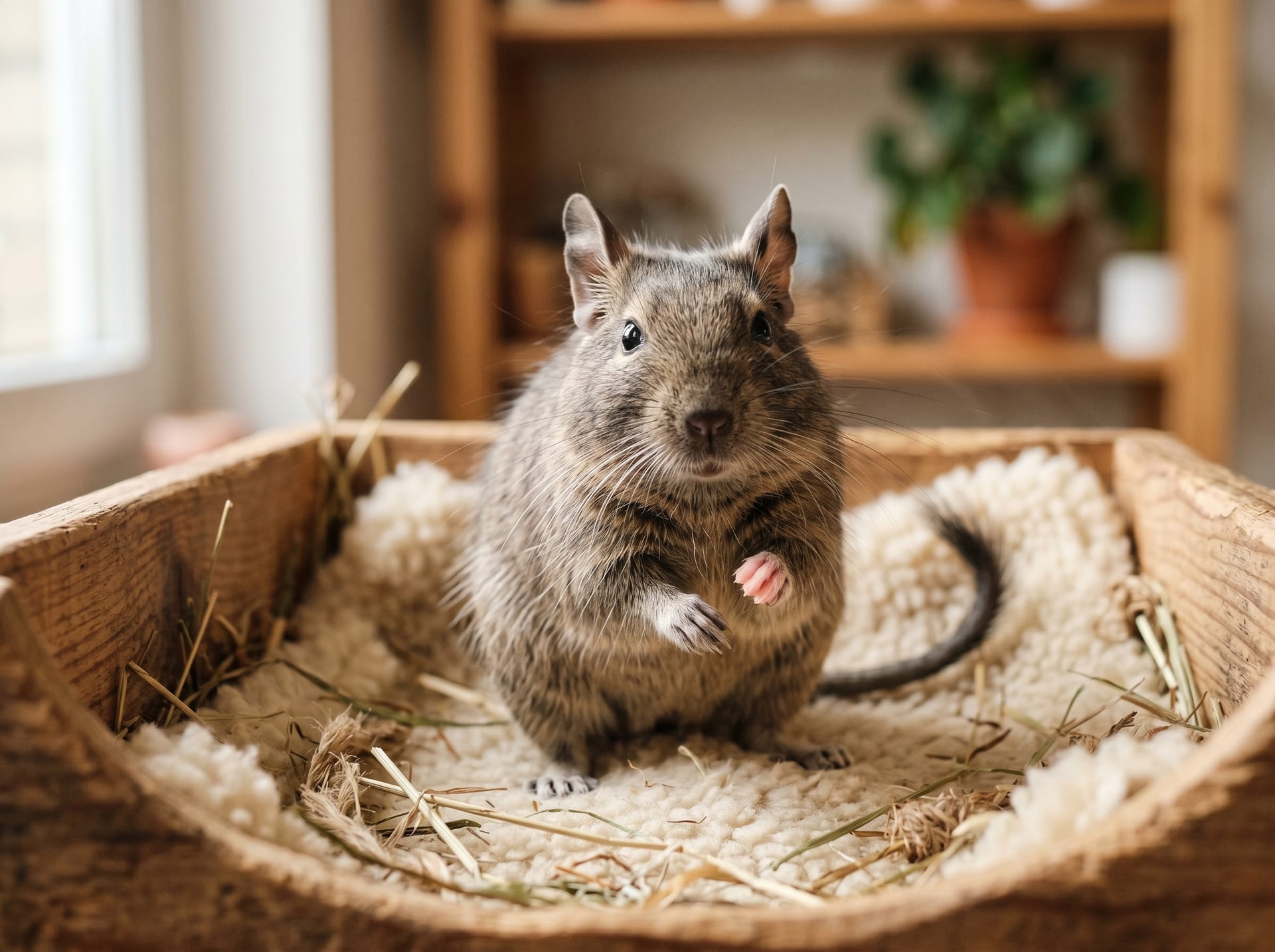
AI-generated image
Chinchilla
IntermediateChinchilla lanigera
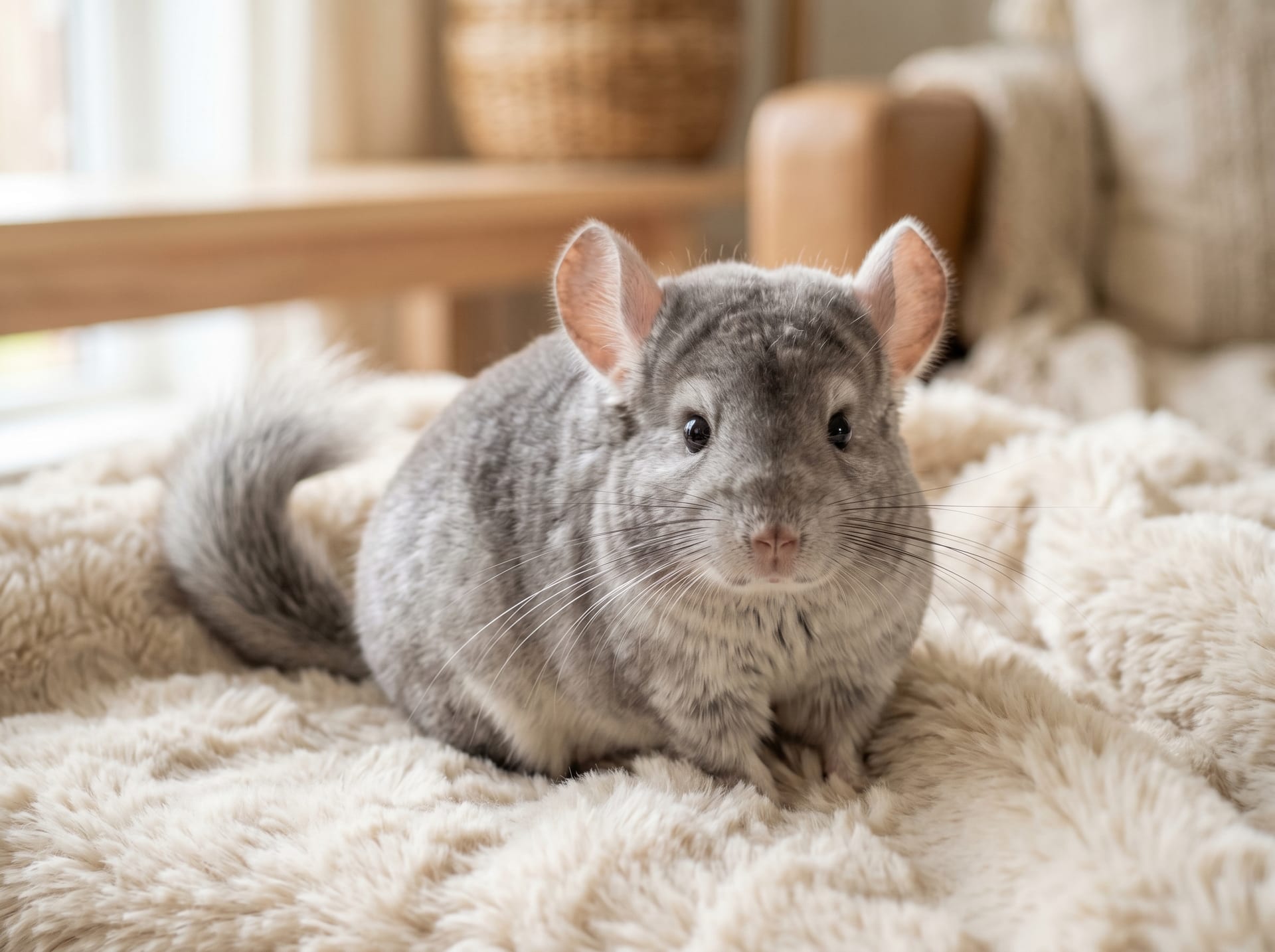
Famous for the softest fur in the animal kingdom. Nocturnal and active. Daily dust baths keep them clean.
Difficulty
Intermediate
Temperature
15〜22℃
Lifespan
15-20 years
Size
25-35cm / 400-600g
Humidity
30〜50%
Diet
Timothy hay (staple), chinchilla pellets
About
The chinchilla is a crepuscular rodent native to the high Andes mountains of South America, living at elevations of 3,000–5,000 m. Two species exist—the long-tailed chinchilla (Chinchilla lanigera) and the short-tailed chinchilla (C. chinchilla)—with the former being the species kept as pets. Their extraordinarily dense fur, with 60–80 hairs growing from each follicle, gives them their famously silky texture. Daily dust baths using fine volcanic sand are essential for coat maintenance; water bathing must be strictly avoided. Common health issues include heat stroke, dental malocclusion, and fur-ring problems in males.
Source: Wikipedia (CC BY-SA 4.0)
Lifespan of the Chinchilla
The Chinchilla lives 15-20 years.
They are long-lived for small mammals, with lifespans of 15–20 years.
Size of the Chinchilla
The Chinchilla grows to 25-35cm / 400-600g.
Adults weigh 400–800 g and measure 25–35 cm.
Temperature & humidity for the Chinchilla
The ideal temperature for the Chinchilla is 15〜22℃. Ideal humidity is 30〜50%.
Chinchillas are highly sensitive to heat and humidity; temperatures must be kept below 22 °C to prevent fatal heatstroke.
Basic Info
Origin
Andes Mountains of South America
Care Specifications
Pair
Sources: RSPCA Chinchilla company
Morphs (Varieties)
Color mutations in Chinchilla lanigera. Beige/White show incomplete dominance (homozygous is lethal/lighter coloration), Violet/Sapphire are recessive.
RecessiveVisual only with two copies; one copy = het (carrier).
VioletSapphire
Incomplete dominant1 copy visual; 2 copies (super form) more pronounced.
Beige (Tower)Ebony
DominantVisual with a single copy; no distinct super form.
Standard Grey (wild type)White (Wilson)
Sources: Mutation Chinchilla Breeders Association genetics
A curated selection of notable morphs. Inheritance modes are a breeding-planning guide; actual appearance varies with combos.
References & Sources
Edited & verified by: BreederDirect editorial team
The taxonomic, regulatory, and husbandry data on this page are compiled and verified against the authoritative primary sources below.
Taxonomy & Authority
Accepted name: Chinchilla lanigera Bennett, 1829
Authority databases: GBIF
Nomenclature follows global taxonomic authority databases.
Regulations & Conservation Status
CITES Appendix IIUCN EN · Endangered
Chinchilla genus is CITES Appendix I (1977–). Captive-bred individuals are exempt from treaty application, but the species listing is Appendix I. IUCN EN.
Sources: Chinchilla lanigera (CITES App I / IUCN EN) / CITES Appendices
Regulations may change. Always verify the latest information with the relevant authorities.
Chinchilla Listings
Loading latest listingsFind listings for this species