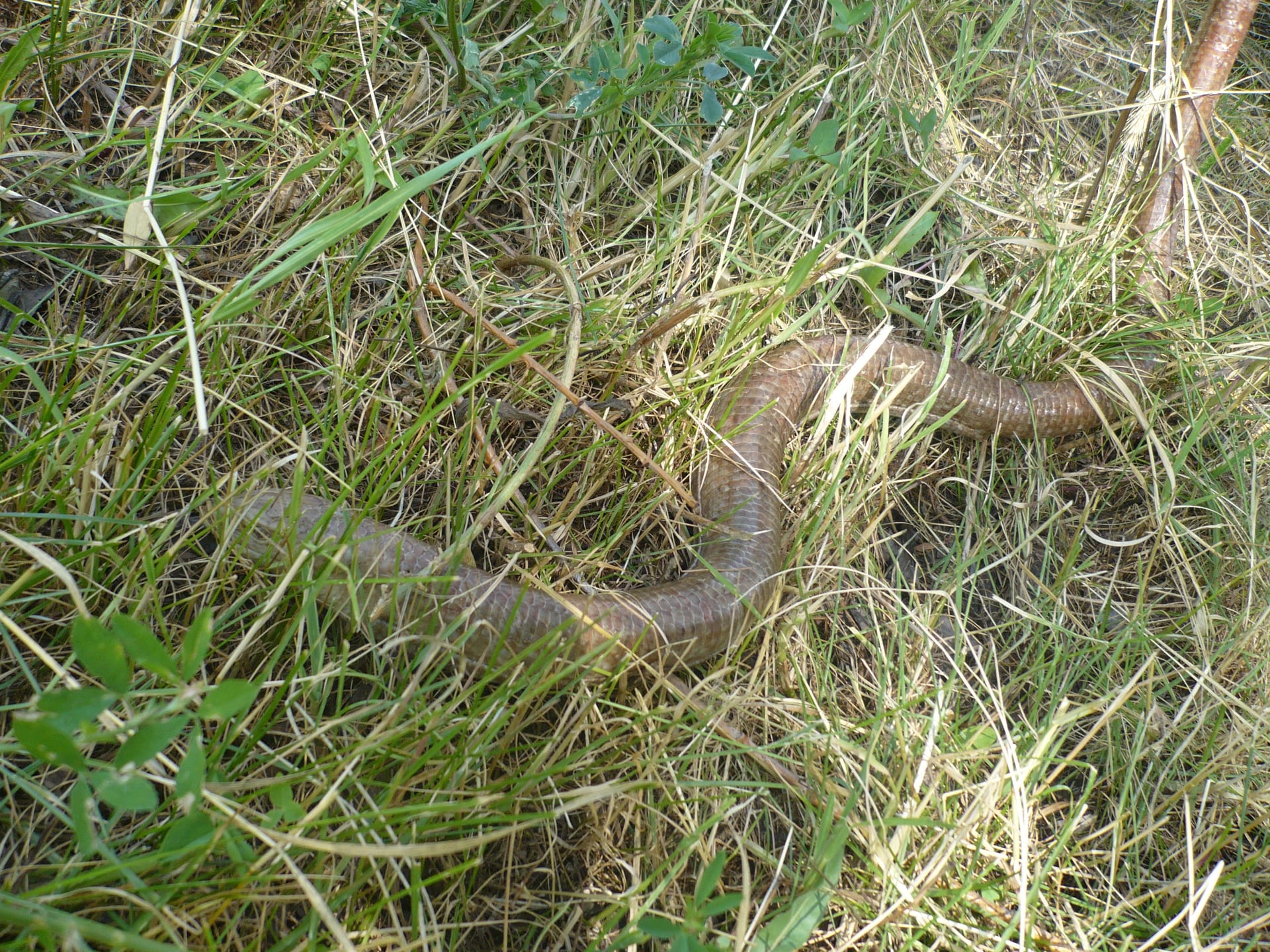
 © Amirekul / CC BY-SA 4.0
European Legless Lizard
The European legless lizard is the largest member of the glass lizard family, with limbs reduced to barely a trace — just a 2 to 3 mm vestige near the cloaca. At a glance it looks like a snake, but movable eyelids, external ear openings, and a distinctive fold of skin running along its sides set it apart once you know what to look for. Calm and slow-moving, it's a rewarding animal to simply observe. Adults can reach 120 to 140 cm in length, and captive individuals have been recorded living up to 50 years, making this a long-term commitment best suited to experienced reptile keepers.
View European Legless Lizard encyclopedia →0% commission on your first sales!Register by September 30, 2026 and your first 2 sales are commission-free!
Breeder Wanted!
List on BreederDirect and sell directly to customers nationwide!
BreederDirect's 6 Transparency Commitments
Every Reptiles & Amphibians from verified Breeder breeders includes complete information: morph, genetics, feeding requirements, and temperament details.
- Morph Information
- Actual Photos
- Feeding Information
- Temperament Information
- Genetics Information
- Age (Months)
Browse all 319 breeds
Difficulty Level
Feeding Type
Temperament
No listings match your filters
Adjust your filters, or get notified when new listings arrive.
Getting alerts is free with a member account. When new listings match your saved search, we'll notify you by email and in-app.
Browse other categories
Verified breeders (preview)
Are you raising reptiles & amphibians?
Register as a breeder and connect with buyers directly.
Apply as a breederEuropean Legless Lizard key facts
- Care level
- Advanced
- Lifespan
- Recorded living up to 50 years in captivity
- Size
- Up to 120-140cm total length
- Temperature
- Basking area 32-35°C, enclosure 24-28°C, 16-22°C at night
- Humidity
- 40-60% by day, 60-80% at night
- Diet
- Carnivorous: insects, other arthropods, land snails, earthworms, frogs, birds' eggs and nestlings, and small mammals
- Temperature & Humidity
- Keep the basking area at 32-35 C, the enclosure at 24-28 C and nights at 16-22 C, with humidity averaging 40-60 percent by day and 60-80 percent at night. For the animal's health ReptiFiles recommends hibernating it in complete darkness at 8-10 C from October to March, with a month of transition at each end.
- Enclosure
- A large lizard over a metre long, and because its body is stiff compared with a snake's it needs a wide floor area. Despite its sluggish look it will prop itself on its tail, rear up vertically and use its length to climb, so a strong, secure lid is essential. Use a semi-arid substrate such as 60 percent clean topsoil with 40 percent play sand.
- Diet & Feeding
- It has a broad diet, taking insects and other arthropods, land snails, earthworms, frogs, birds' eggs and nestlings and small mammals. In captivity aim for roughly 60 percent invertebrates and 40 percent vertebrates and eggs. It is hardy and feeds readily.
- Temperament
- Comparatively placid, hardy and considered easy to keep. Attacked, it will shed its tail to escape, but its powers of autotomy are limited and a regrown tail is shorter and darker, so take care never to grasp it by the tail.
- Notes
- Not listed on any CITES appendix. The IUCN assesses it as Least Concern. It appears neither on the schedule of designated dangerous animals under the Order for Enforcement of the Act on Welfare and Management of Animals nor on Japan's list of invasive alien species. It can live up to 50 years, so plan for lifetime care before acquiring one. It is easily mistaken for a snake, but eyelids and ear openings make the distinction certain.
About European Legless Lizard
The European legless lizard, the largest glass lizard species, resembles a snake but is identified by its movable eyelids and lateral skin fold. Reaching up to 120–140 cm, it can live 50 years in captivity, making it a long-term commitment for experienced keepers.
7 things to know before welcoming a European Legless Lizard
1Snake-like, but not a snake
Though its limbs are almost entirely gone, it has movable eyelids, ear openings, and a lateral skin fold that snakes lack. These features make it easy to tell apart once you know what to check.
2A lifelong commitment
Captive individuals have been recorded living up to 50 years. Before bringing one home, think through how your own life circumstances might change over such a long span of care.
3Plan for a large adult size
Adults can reach 120 to 140 cm in total length. Prepare a long, spacious enclosure well before they reach full size so they can fully stretch out.
4Best suited to experienced keepers
This species is considered suitable for advanced keepers. Prior reptile-keeping experience helps in reading subtle cues like handling response and changes in condition.
5Give it places to burrow and hide
This lizard likes to tuck into ground-level gaps and leaf litter, so multiple hiding spots and substrate deep enough to burrow into will help it settle in.
6Maintain a proper temperature gradient
A gradient within the enclosure lets it regulate its own body temperature, which is fundamental to its health. Avoid sudden temperature swings and watch daily for any changes in behavior or condition.
7Keep handling calm and quiet
Some individuals are sensitive to noise and sudden movement. Placing the enclosure in a quiet spot and handling it calmly and slowly can help reduce stress.
Frequently asked questions about European Legless Lizard
- Q.It looks like a snake — is it really a lizard?
- A.Yes, it's a true lizard belonging to the glass lizard family. It differs from snakes by having movable eyelids, ear openings, and a lateral skin fold. Its limbs are almost entirely gone, but a 2 to 3 mm hind-limb vestige remains near the cloaca.
- Q.How large does it grow?
- A.Adults can reach 120 to 140 cm in total length. Since it's one of the largest species in its family, it's important to prepare a suitably long enclosure well in advance.
- Q.How long does it live?
- A.Captive individuals have been recorded living up to 50 years, making it a very long-lived animal. Before bringing one home, it's worth considering whether you can provide care over such a long span.
- Q.Can a beginner keep this species?
- A.This species is considered suitable for advanced keepers. It's best suited to those with prior reptile-keeping experience who can recognize signs of condition changes.
- Q.Is it listed under CITES?
- A.No, the European legless lizard is not listed under CITES. There is nothing else to note regarding CITES for this species.
Useful tools for European Legless Lizard care
Learn more about European Legless Lizard in the encyclopedia
View European Legless Lizard encyclopedia entry →
Care difficulty, lifespan, size and diet — all basics covered.
More in this category
Can't find the one you're looking for?
Post your wishes for free and breeders with matching animals will contact you with introductions.