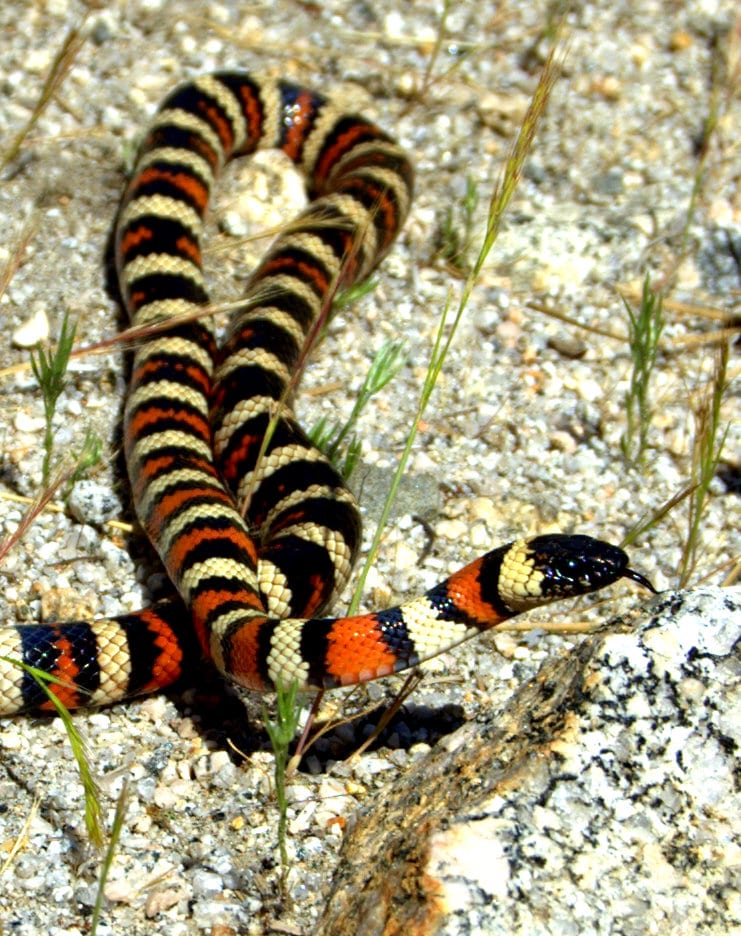
 © Dawn Ellner from Saratoga, California, USA / CC BY 2.0
California Mountain Kingsnake
The California mountain kingsnake is a non-venomous colubrid native to the mountainous regions of western North America. Its most striking feature is the "triad" pattern — a red band flanked by two black bands, alternating with white bands along the body — believed to mimic the venomous coral snake as a defense strategy. It can be distinguished from the closely related Arizona mountain kingsnake by a black spot on its snout tip. While generally calm in temperament, this species requires careful attention to temperature, humidity, and individual health, making it best suited to keepers with prior snake-keeping experience. Its striking coloration and composed demeanor have made it a long-time favorite among reptile enthusiasts.
View California Mountain Kingsnake encyclopedia →Breeder Wanted!
List on BreederDirect and sell directly to customers nationwide!
BreederDirect's 6 Transparency Commitments
Every Reptiles & Amphibians from verified Breeder breeders includes complete information: morph, genetics, feeding requirements, and temperament details.
- Morph Information
- Actual Photos
- Feeding Information
- Temperament Information
- Genetics Information
- Age (Months)
Browse all 319 breeds
Difficulty Level
Feeding Type
Temperament
No listings match your filters
Adjust your filters, or get notified when new listings arrive.
Getting alerts is free with a member account. When new listings match your saved search, we'll notify you by email and in-app.
Browse other categories
Verified breeders (preview)
Are you raising reptiles & amphibians?
Register as a breeder and connect with buyers directly.
Apply as a breederCalifornia Mountain Kingsnake key facts
- Care level
- Advanced
- Lifespan
- Over 20 years in captivity
- Size
- 76-91cm, 61-102cm depending on subspecies
- Temperature
- Basking surface 29-32°C / cool side 21-26°C
- Humidity
- 40〜60%
- Diet
- Frozen-thawed mice; in the wild lizards, rodents and nestling birds
- Temperature & Humidity
- Create a gradient with a basking surface of 29-32C and a cool side of 21-26C. Aim for average humidity of 40-60 per cent, naturally a little higher on the cool side and at night. Raising humidity before a shed helps prevent retained skin. It is a montane species with cold winters in the wild, so apply a winter cooling period if you intend to breed it. It tolerates heat poorly, so watch the upper end of the range in summer.
- Enclosure
- A minimum enclosure of about 120 x 60 x 60 cm per adult is recommended, and larger is better. It is active and explores a great deal, so provide branches and hides on both the warm and cool sides. It is strong and an accomplished escaper, so use a front-opening enclosure that locks securely. It hides under rocks and logs by day, so place several tight ground-level hides.
- Diet & Feeding
- It is carnivorous and in captivity is fed appropriately sized frozen-thawed mice. Always feed it alone in the enclosure. Lizards form a large part of the wild diet, so captive-hatched young can be reluctant to take mice and may need prey to be scented.
- Temperament
- Kingsnakes are ophiophagous and will eat each other, so they must be kept alone. They are generally docile and easy to handle, but wash your hands after feeding so they do not mistake them for prey. Many individuals are nervous, so provide plenty of hides to let the snake settle.
- Notes
- The species is not listed in the CITES appendices, and it is neither a specified animal nor an invasive alien species under Japanese law. It is non-venomous and harmless to people, but escaped snakes are hard to recover, so keep the enclosure securely locked. Its red, black and white banding mimics venomous coral snakes, but the species itself is harmless. Collection is regulated in California and elsewhere, so choose captive-bred animals.
About California Mountain Kingsnake
A non-venomous colubrid from western North America, known for its striking red-black-white "triad" banding that mimics coral snakes. Best suited to experienced keepers, it can live 20+ years in captivity.
7 things to know before welcoming a California Mountain Kingsnake
1Why It's for Experienced Keepers
This species is sensitive to fluctuations in temperature and humidity and can go off food when stressed. It tends to suit keepers with prior snake-keeping experience rather than complete beginners.
2Prefers Cooler Conditions
Reflecting its native habitat, this snake generally prefers cooler, drier conditions rather than high heat and humidity. Pay close attention to temperature in summer and provide a temperature gradient within the enclosure.
3Needs Hides and Substrate
In the wild it hides under cover and burrows, so providing hides and appropriate substrate helps it feel secure. Stress can lead to appetite loss, so a calm, well-furnished enclosure matters.
4Calm but Individual Temperaments
This snake is generally calm-natured, though individuals vary in how quickly they acclimate to handling. Let it adjust gradually rather than handling it too soon or too often.
5Beauty of the Triad Pattern
Its signature feature is the "triad" pattern of alternating red, black, and white bands. Coloration and band width vary by locality, giving keepers plenty of visual variety to choose from.
6Cage Size for Adult Growth
Adults typically reach 76-91 cm in total length (61-102 cm depending on subspecies), so plan for an enclosure sized for full growth. A cage that's too small can lead to stress and lack of exercise.
7A Long-Term Commitment
In captivity, this species can live 20 years or more. Before bringing one home, make sure you can provide consistent care for the long term.
Frequently asked questions about California Mountain Kingsnake
- Q.Is this snake suitable for beginners?
- A.The California mountain kingsnake is generally considered a species for experienced keepers, as it's sensitive to temperature and humidity changes. Beginners are better off starting with an easier species and building experience first.
- Q.Is its temperament docile?
- A.It's generally calm-natured, though individual snakes vary. Introduce handling gradually rather than trying to handle it right away.
- Q.How big does it get?
- A.Adults typically reach 76-91 cm in total length, though this ranges from 61-102 cm depending on the subspecies. Check the specifics of the individual you're considering.
- Q.How long does it live?
- A.In captivity, this species can live 20 years or more. Make sure you can commit to long-term care before bringing one home.
- Q.Is it venomous?
- A.No, it's a non-venomous colubrid. However, its red-black-white banding mimics the venomous coral snake, so appearance alone isn't a reliable way to judge whether a snake is venomous (this species itself is not).
Useful tools for California Mountain Kingsnake care
Learn more about California Mountain Kingsnake in the encyclopedia
View California Mountain Kingsnake encyclopedia entry →
Care difficulty, lifespan, size and diet — all basics covered.
More in this category
Can't find the one you're looking for?
Post your wishes for free and breeders with matching animals will contact you with introductions.