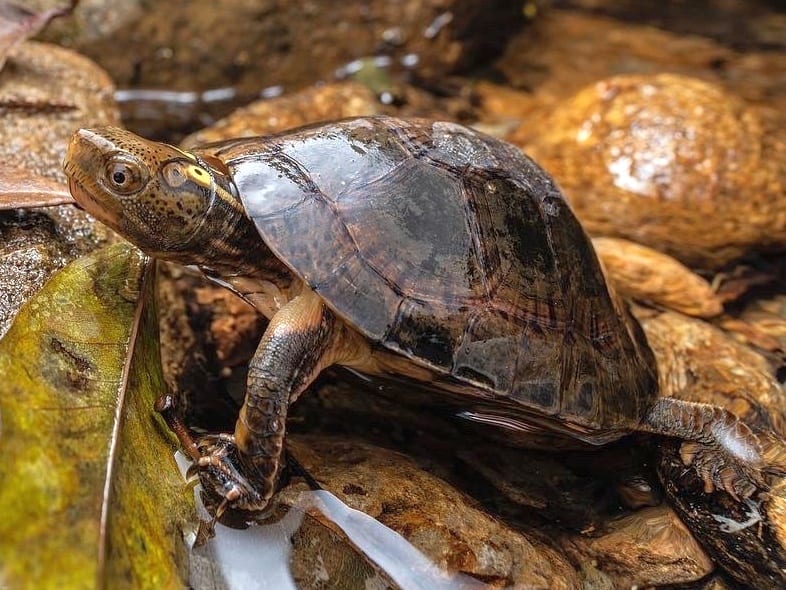
 © Lawrence Hylton / CC BY 4.0
Beale's Eyed Turtle
Beale's Eyed Turtle is a freshwater turtle native to mountain streams in southern China. Its signature feature is two pairs of eye-like markings with dark centers on the back of the head, set against a flattened, tan-colored carapace speckled with black spots, giving it a subdued, distinctive look. Naturally nocturnal and easily startled, this turtle tends to stay hidden for much of the day, carrying itself with a quiet, watchful presence. The longest captive record is about 27 years, and because it requires careful attention to water quality and temperature, it's generally considered a species best suited to experienced reptile and amphibian keepers. It is also a CITES Appendix II-listed species.
View Beale's Eyed Turtle encyclopedia →Breeder Wanted!
List on BreederDirect and sell directly to customers nationwide!
BreederDirect's 6 Transparency Commitments
Every Reptiles & Amphibians from verified Breeder breeders includes complete information: morph, genetics, feeding requirements, and temperament details.
- Morph Information
- Actual Photos
- Feeding Information
- Temperament Information
- Genetics Information
- Age (Months)
Browse all 319 breeds
Difficulty Level
Feeding Type
Temperament
No listings match your filters
Adjust your filters, or get notified when new listings arrive.
Getting alerts is free with a member account. When new listings match your saved search, we'll notify you by email and in-app.
Browse other categories
Verified breeders (preview)


Are you raising reptiles & amphibians?
Register as a breeder and connect with buyers directly.
Apply as a breederBeale's Eyed Turtle key facts
- Care level
- Advanced
- Lifespan
- up to about 27 years (captive record)
- Size
- Maximum carapace length about 16-18 cm
- Diet
- Mainly carnivorous (crayfish, worms)
- Housing
- It lives in forested mountain streams, so provide a clean-water semi-aquatic setup with many large stones for cover.
- Diet & Feeding
- Wild animals eat crayfish and worms, and captives accept meat; combine shrimp, worms and pellets.
- Temperament
- A timid, nervous nocturnal species that flails with its claws when handled; keep handling to a minimum.
- Health & Cautions
- It lays only one clutch of about six eggs a year and wild numbers are falling; choose captive-bred animals and plan for long-term care.
- Notes
- It is easily confused with the four-eyed turtle (S. quadriocellata), so check the scientific name. Despite "ishigame" in its Japanese name, it belongs to a different genus from Japan's native Japanese pond turtle (Mauremys japonica). Never release a captive animal into the wild.
About Beale's Eyed Turtle
Beale's Eyed Turtle: a nocturnal, shy species from southern China's mountain streams, known for its dark eye-like head markings. A CITES Appendix II species suited to experienced keepers.
7 things to know before welcoming a Beale's Eyed Turtle
1For Experienced Keepers
Beale's Eyed Turtle is sensitive to changes in water quality and temperature, requiring careful, attentive management. It's best suited to keepers who already have experience with reptiles or amphibians.
2Shy and Nocturnal
This turtle is easily startled by noise and human presence, and tends to spend much of its time hidden away. It's naturally more active at night than during the day, so its enclosure should be set up with this rhythm in mind.
3Provide Plenty of Hiding Spots
Because of its shy nature, providing multiple shelters, driftwood, and aquatic plants helps it feel secure. Reducing stress through good environmental design supports its overall health.
4Replicate Mountain Stream Water
In the wild, this species lives in mountain streams in southern China. Keeping water temperatures from rising too high and avoiding sudden shifts in water quality are key to maintaining its condition, along with regular water changes.
5Adults Reach 16-18cm
Adults typically reach a shell length of around 16 to 18 cm. Prepare an enclosure with enough space for its adult size before bringing one home.
6Longest Captive Record: About 27 Years
The longest captive record for this species is about 27 years. Since it can be a very long commitment, it's important to be ready to care for it over the long term.
7CITES Appendix II Species
Beale's Eyed Turtle is listed under CITES Appendix II. Consider that it's a rare species with declining wild populations before deciding to bring one home.
Frequently asked questions about Beale's Eyed Turtle
- Q.Is this turtle suitable for beginners?
- A.Because it requires careful management of water quality and temperature, it's generally considered a species for experienced keepers. We recommend gaining experience with reptiles or amphibians before taking one on.
- Q.Is it inactive during the day?
- A.Yes, being nocturnal and naturally shy, it tends to spend daytime hours hidden away. It's also sensitive to noise and human presence, so a quiet environment helps it feel secure.
- Q.How big does it grow?
- A.As an adult, its shell length reaches around 16 to 18 cm. It's important to prepare an enclosure with enough space for its adult size in advance.
- Q.How long does it live?
- A.The longest captive record for this species is about 27 years. It's best to consider keeping one with a long-term commitment in mind.
- Q.Are there any legal considerations?
- A.Beale's Eyed Turtle is listed under CITES Appendix II. Keep in mind that it's a rare species when considering bringing one home.
Useful tools for Beale's Eyed Turtle care
Learn more about Beale's Eyed Turtle in the encyclopedia
View Beale's Eyed Turtle encyclopedia entry →
Care difficulty, lifespan, size and diet — all basics covered.
More in this category
Can't find the one you're looking for?
Post your wishes for free and breeders with matching animals will contact you with introductions.