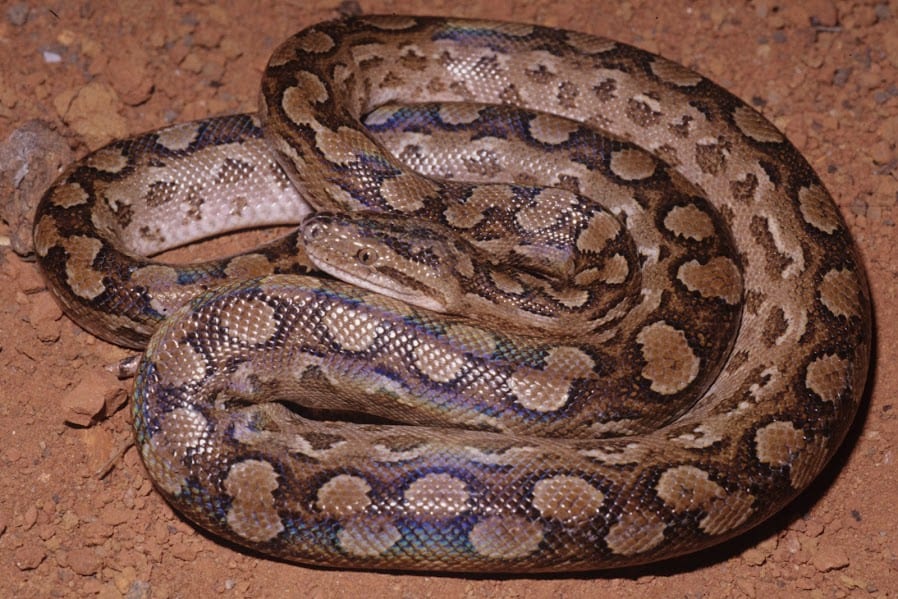
 © Otavio A Marques / CC BY 4.0
Argentine Rainbow Boa
The Argentine Rainbow Boa is a member of the rainbow boa group native to a range spanning northern Argentina, southeastern Bolivia, and the Chaco region of western Paraguay. Its understated gray to grayish-brown base coloring, the trait that helps distinguish it from other mainland rainbow boas, catches the light with the iridescent sheen typical of the group. Formally recognized as its own species in 2008, it is a relatively recent addition to reptile taxonomy. Individual temperament varies, but with patient, consistent handling most animals settle into calmer adults. Because care calls for some know-how around temperature and humidity, this species is generally considered better suited to keepers with some reptile-keeping experience rather than absolute beginners.
View Argentine Rainbow Boa encyclopedia →0% commission on your first sales!Register by September 30, 2026 and your first 2 sales are commission-free!
Breeder Wanted!
List on BreederDirect and sell directly to customers nationwide!
6 Transparency Promises from Br-Choku
Every Reptiles & Amphibians from verified Breeder breeders includes complete information: morph, genetics, feeding requirements, and temperament details.
- Morph Information
- Actual Photos
- Feeding Information
- Temperament Information
- Genetics Information
- Age (Months)
Browse all 319 breeds
Difficulty Level
Feeding Type
Temperament
No listings match your filters
Adjust your filters, or get notified when new listings arrive.
Getting alerts is free with a member account. When new listings match your saved search, we'll notify you by email and in-app.
Browse other categories
Verified breeders (preview)
Are you raising reptiles & amphibians?
Register as a breeder and connect with buyers directly.
Apply as a breederArgentine Rainbow Boa key facts
- Care level
- Intermediate
- Lifespan
- Few data on lifespan in captivity
- Size
- Few species-specific size data
- Diet
- Carnivore (mice and other rodents)
- Housing
- It is partly arboreal, so provide climbing branches in addition to floor space.
- Temperature & Humidity
- Its range centers on the Chaco of central South America. Do not simply copy the high-humidity regime used for the rainforest Brazilian rainbow boa; adjust by watching the snake.
- Diet & Feeding
- Rainbow boas can be maintained on rodents such as mice; offer prey sized to the snake's girth.
- Notes
- It is a different species from the Brazilian rainbow boa (E. cenchria) and others sold as "rainbow boas". Check the scientific name and avoid hybridizing species.
- Health & Cautions
- Species+ records that Argentina bars export of live native reptiles with few exceptions, so animals in trade are mainly captive-bred; check their origin. Never release a captive animal into the wild.
About Argentine Rainbow Boa
The Argentine Rainbow Boa is a rainbow boa native to the Chaco region of Argentina, Bolivia, and Paraguay, known for its gray to grayish-brown coloring and best suited to intermediate keepers.
7 things to know before welcoming a Argentine Rainbow Boa
1Recreate Its Native Habitat
This species' native range across northern Argentina, southeastern Bolivia, and the Chaco region of western Paraguay is dry to semi-arid. Set up the enclosure with a temperature gradient, plus hides and climbing branches so your boa has places to feel secure.
2Care Level: Intermediate
The Argentine Rainbow Boa is generally considered suitable for intermediate keepers. Some prior experience with reptile husbandry, particularly temperature and humidity management, will help you feel confident caring for one.
3A Distinctive Iridescent Sheen
Its gray to grayish-brown base color is the key feature that distinguishes it from other mainland rainbow boas. Like other rainbow boas, its scales catch the light with an iridescent, almost rainbow-like sheen.
4Temperament Varies by Individual
Some individuals are more skittish than others, while some settle down more readily. Rather than forcing interaction, build trust gradually through regular, gentle care.
5A Recently Recognized Species
The Argentine Rainbow Boa was formally described as its own species in 2008, making it a relatively recent addition within the rainbow boa group. Knowing this can help when researching care information, since older sources may not distinguish it from related species.
6Watch Humidity for Healthy Sheds
Like other boas, this species can experience incomplete sheds if humidity isn't properly maintained. Providing a humid hide and monitoring enclosure conditions helps support healthy, complete shedding.
7Listed Under CITES Appendix II
The Argentine Rainbow Boa is listed under CITES Appendix II. When considering bringing one home, it's a good idea to confirm the animal's origin and transaction history with the seller.
Frequently asked questions about Argentine Rainbow Boa
- Q.How difficult is the Argentine Rainbow Boa to keep?
- A.It's generally considered suitable for intermediate keepers. Having some basic reptile-keeping knowledge and experience will help you care for one with confidence.
- Q.How large does it get as an adult?
- A.There isn't yet enough documented data on adult size specific to this species to give a definite figure. It's wise to plan for a reasonably spacious enclosure, referencing related rainbow boas as a general guide.
- Q.What is its lifespan in captivity?
- A.Documented data on captive lifespan for this species is still limited, so no established figure is available. Since it may become a long-term companion, it's important to set up a stable, well-maintained care environment from the start.
- Q.How can it be told apart from other rainbow boas?
- A.Its gray to grayish-brown base color is the main clue used to distinguish it from other mainland rainbow boas. It's also taxonomically distinct, having been formally recognized as its own species only in 2008.
- Q.Is there anything to know about its trade status?
- A.The Argentine Rainbow Boa is listed under CITES Appendix II. When considering one, it's worth asking the seller about the animal's origin and transaction background.
Useful tools for Argentine Rainbow Boa care
Learn more about Argentine Rainbow Boa in the encyclopedia
View Argentine Rainbow Boa encyclopedia entry →
Care difficulty, lifespan, size and diet — all basics covered.
More in this category
Can't find the one you're looking for?
Post your wishes for free and breeders with matching animals will contact you with introductions.