Source: Wikimedia Commons
Argentine Rainbow Boa
IntermediateEpicrates alvarezi
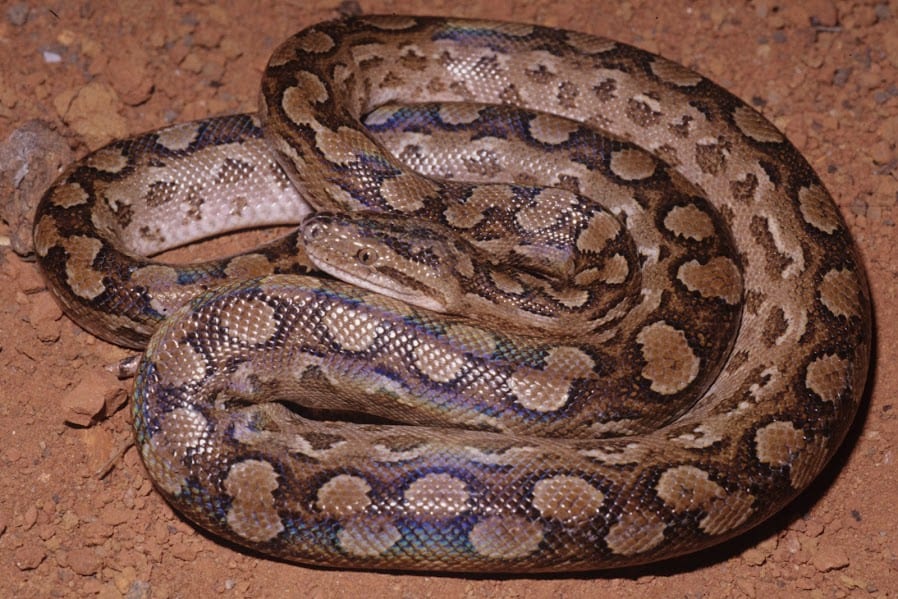
A rainbow boa from northern Argentina, south-eastern Bolivia and the western Paraguayan Chaco. Its grey to greyish-brown ground color helps separate it from other mainland rainbow boas.
Difficulty
Intermediate
Temperature
25〜32℃
Lifespan
Few data on lifespan in captivity
Size
Few species-specific size data
Humidity
40〜70%
Diet
Carnivore (mice and other rodents)
About
The Argentine rainbow boa is a boid snake of the genus Epicrates found in northern Argentina, south-eastern Bolivia and the Chaco of western Paraguay, with its type locality in Santiago del Estero Province, Argentina. It was long treated as E. cenchria alvarezi, a subspecies of the same species as the Brazilian rainbow boa, until Passos and Fernandes (2008) raised it to species level in their review of mainland Epicrates. Their diagnosis separates it from other mainland rainbow boas by more than 40 anterior dorsal scale rows, many interrictal and gular scales, a divided loreal scale and a grey to greyish-brown dorsal ground color. It is regarded as partly arboreal. It is a different species from the Brazilian and Colombian boas sold under the same "rainbow boa" name, with a different range and coloration, so care advice written for those species should be applied with its habitat in mind. In Japan small numbers of captive-bred animals are sold at specialist shops and reptile shows.
Source: Wikipedia (CC BY-SA 4.0)
Lifespan of the Argentine Rainbow Boa
Species-specific data on size and lifespan are limited.
Basic Info
Origin
Northern Argentina, south-eastern Bolivia and western Paraguay (Chaco)
Lifespan
Few data on lifespan in captivity
Size
Few species-specific size data
Temperature
25〜32℃
Humidity
40〜70%
Diet
Carnivore (mice and other rodents)
Care Guide
Housing
It is partly arboreal, so provide climbing branches in addition to floor space.
Temperature & Humidity
Its range centers on the Chaco of central South America. Do not simply copy the high-humidity regime used for the rainforest Brazilian rainbow boa; adjust by watching the snake.
Diet & Feeding
Rainbow boas can be maintained on rodents such as mice; offer prey sized to the snake's girth.
Notes
It is a different species from the Brazilian rainbow boa (E. cenchria) and others sold as "rainbow boas". Check the scientific name and avoid hybridizing species.
Health & Cautions
Species+ records that Argentina bars export of live native reptiles with few exceptions, so animals in trade are mainly captive-bred; check their origin. Never release a captive animal into the wild.
BoaSnakeRainbow boaArgentinaCITES II
Argentine Rainbow Boa FAQ
QHow difficult is it to keep Argentine Rainbow Boa?
A
Intermediate. This is an intermediate-level species. Some prior experience and knowledge of environmental management are recommended.
QWhat should I feed Argentine Rainbow Boa?
A
Argentine Rainbow Boa feeds on: Carnivore (mice and other rodents). Aim for a balanced diet with appropriate feeding frequency.
QWhat is the typical price for Argentine Rainbow Boa?
A
The price of Argentine Rainbow Boa varies significantly depending on morph, size, and lineage. Check our market price page for the latest pricing information.
Last updated: September 28, 2026
References & Sources
Edited & verified by: BreederDirect editorial team
The taxonomic, regulatory, and husbandry data on this page are compiled and verified against the authoritative primary sources below.
Taxonomy & Authority
Accepted name: Epicrates alvarezi Abalos, Baez & Nader, 1964
Synonyms: Epicrates cenchria alvarezi Abalos, Baez & Nader, 1964
Authority databases: GBIF · The Reptile Database: Epicrates alvarezi · GBIF: Epicrates alvarezi
Nomenclature follows global taxonomic authority databases.
Regulations & Conservation Status
CITES Appendix II
Listed in CITES Appendix II. International trade requires an export permit from the country of origin, but no registration is needed to keep or transfer the animal within Japan. The entire family Boidae has been listed since 1977. Species+ also records an Argentine domestic measure that generally bars export of live native reptiles.
Sources: Species+ (CITES): Epicrates alvarezi
Regulations may change. Always verify the latest information with the relevant authorities.
Related Species
Argentine Rainbow Boa Listings
Loading latest listingsFind listings for this species
Related Articles
Rainbow Boa Care Guide | Brazilian Rainbow Boa's Iridescent Sheen, Cage Setup, and High Humidity Management
Explains how to care for Brazilian Rainbow Boas (Epicrates cenchria). Covers the features of iridescent scales, why high humidity is necessary, cage setup, temperature and humidity management, feeding with frozen mice, how to acclimate them to handling, and common care issues.
Rainbow Shark & Red-tailed Black Shark Care Guide | Territory Behavior, Tank Mates & Water Chemistry
Rainbow Sharks and Red-tailed Black Sharks are popular bottom-dwelling fish known for their vivid coloration. They have strong territorial instincts and require careful consideration when kept with other fish. Complete guidance on water chemistry, aquascaping, and breeding.
Rainbow Fish (Melanotaenia) Care Guide | Enjoying the Iridescent Brilliance of a Tropical Fish
A comprehensive guide to caring for Rainbow Fish (Melanotaenia genus). From species characteristics, tank setup, water quality management, feeding, tank mates, and breeding—a practical guide for long-term care of these brilliantly iridescent tropical fish native to Australia and New Guinea.
Rainbow Lorikeet Care Guide | Diet, Vocalizations, and the Secret of Their Special Tongue
A practical guide to Rainbow Lorikeet care, covering diet management for these nectar-feeding birds with specialized tongues, maintaining their vibrant plumage, addressing loud vocalizations, and managing sticky droppings.