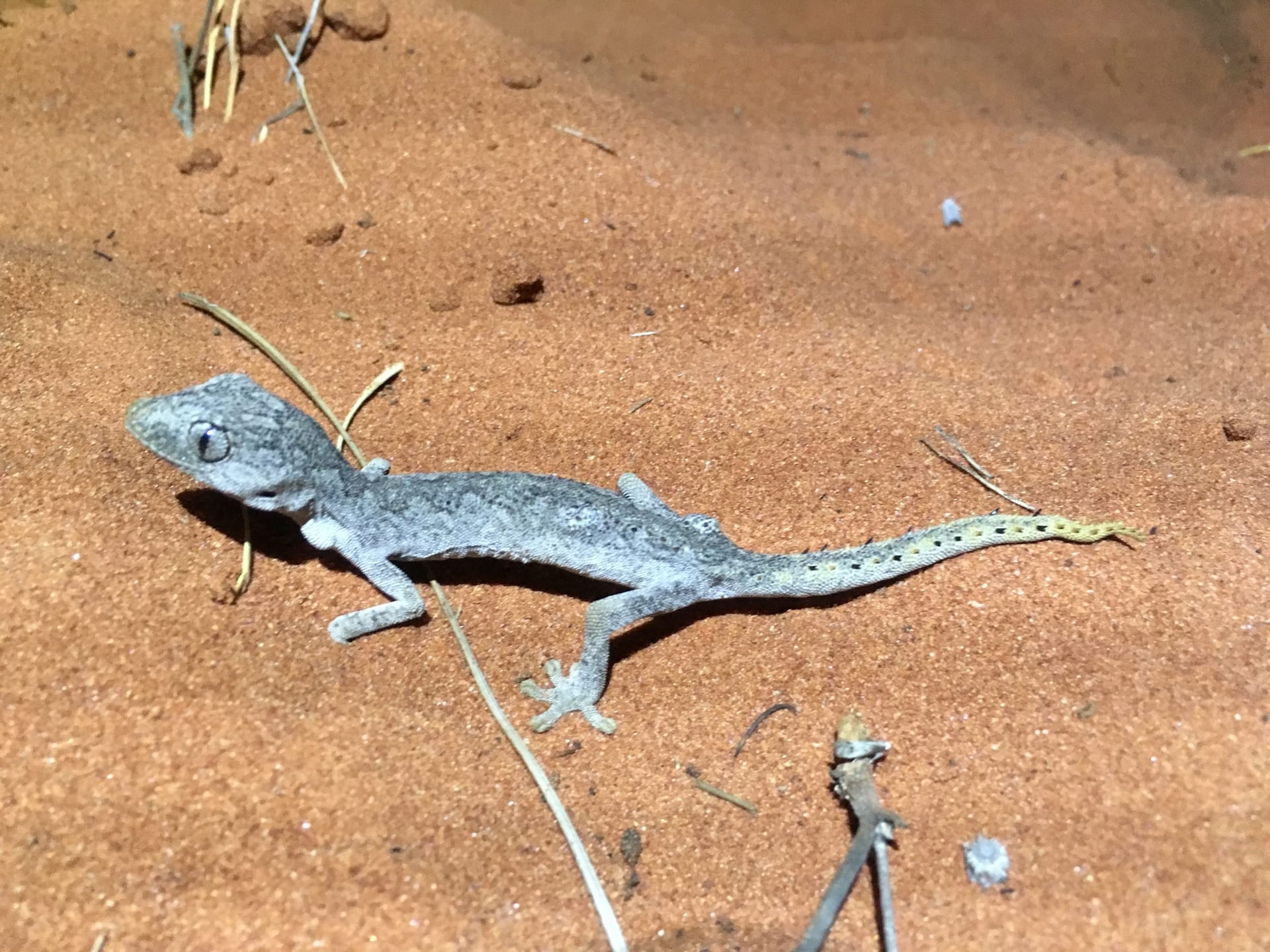
 © Nicole Kearney / CC BY 4.0
Northern Spiny-Tailed Gecko
The Northern Spiny-Tailed Gecko is an Australia-native, tree-dwelling species named for the sharp, spine-like projections above its eyes and along its tail. Reaching a maximum total length of around 13.8cm, it's a manageably sized gecko that's fun to watch as it climbs branches and driftwood with ease. Like other spiny-tailed geckos, it has a distinctive defense mechanism: when it feels threatened, it can spray a foul-smelling liquid from its tail. Care is generally considered suited to intermediate keepers rather than complete beginners. Despite its spiky appearance, it has a calm demeanor that rewards keepers willing to get to know it.
View Northern Spiny-Tailed Gecko encyclopedia →Breeder Wanted!
List on BreederDirect and sell directly to customers nationwide!
BreederDirect's 6 Transparency Commitments
Every Reptiles & Amphibians from verified Breeder breeders includes complete information: morph, genetics, feeding requirements, and temperament details.
- Morph Information
- Actual Photos
- Feeding Information
- Temperament Information
- Genetics Information
- Age (Months)
Browse all 319 breeds
Difficulty Level
Feeding Type
Temperament
No listings match your filters
Adjust your filters, or get notified when new listings arrive.
Getting alerts is free with a member account. When new listings match your saved search, we'll notify you by email and in-app.
Browse other categories
Verified breeders (preview)
Are you raising reptiles & amphibians?
Register as a breeder and connect with buyers directly.
Apply as a breederNorthern Spiny-Tailed Gecko key facts
- Care level
- Intermediate
- Lifespan
- 10-15 years
- Size
- Up to 13.8cm total length
- Diet
- Carnivorous: small insects and other arthropods
- Temperature & Humidity
- It inhabits arid and semi-arid inland Australia. Because it basks on outer branches by day, place a basking spot high in the enclosure and keep a genuinely cooler area in the same enclosure so the animal can choose along the gradient.
- Enclosure
- An arboreal species living among shrubs and hummock grass, so use a tall enclosure densely furnished with thin branches and dried plant material. It descends to the ground only to warm up or to mate. Gravid females use the extra warmth of rocks and ground, so provide a warm spot at floor level as well.
- Diet & Feeding
- It feeds on small insects and other arthropods. In captivity offer small feeders scaled to its size, such as small crickets, fruit flies and roach nymphs, dusted with calcium and vitamin supplements.
- Temperament
- When alarmed it squirts a foul-smelling fluid from glands in the tail. It is not harmful to people, but handle with care to keep it out of the eyes and keep handling to a minimum. Do not house males together.
- Notes
- Listed on CITES Appendix III as Strophurus spp. at Australia's request, effective 22 June 2022. Appendix III requires an export permit from the listing state and a certificate of origin from other states; no Japanese registration certificate is needed. Australia bans the export of its native wildlife, so legitimately traded animals are captive-bred. The IUCN assesses it as Least Concern.
About Northern Spiny-Tailed Gecko
Australia's Northern Spiny-Tailed Gecko: arboreal, with spine-tipped eyes and tail, up to 13.8cm long, intermediate care level, and known for spraying liquid from its tail if threatened.
7 things to know before welcoming a Northern Spiny-Tailed Gecko
1Vertical Enclosure Setup
Because this species is arboreal, its enclosure needs height as much as floor space, along with branches or driftwood to climb. It's active up near the walls and ceiling of its terrarium, so check that the enclosure's height and layout are stable before your gecko arrives.
2Handle the Tail with Care
When startled or stressed, it defends itself by spraying a foul-smelling liquid from the base of its tail. Avoid grabbing the tail during handling, and approach calmly to avoid triggering this response.
3Nocturnal Habits
This gecko spends most of the day resting out of sight and becomes active after dark. Since you won't see much activity during daylight hours, it suits keepers who enjoy observing their pets in the evening.
4Insect-Based Diet
Like most geckos, its diet is centered on insects. Feeding size and frequency need to be adjusted as it grows, so make sure you have a reliable source of feeder insects lined up before bringing one home.
5Temperature and Humidity
As an Australian native arboreal species, it needs its enclosure's temperature and humidity kept within an appropriate range to stay healthy. Set up a thermometer and hygrometer, and be ready to adjust for seasonal changes.
6Best for Intermediate Keepers
Care for this species is generally considered suited to intermediate keepers, and some prior reptile-keeping experience helps things go smoothly. First-time reptile owners should research its care requirements thoroughly beforehand.
7Prepare Before Arrival
Set up climbing branches, plants, and other arboreal-friendly furnishings in the enclosure before your gecko arrives. It may stay hidden while adjusting to its new home, so provide several secure hiding spots.
Frequently asked questions about Northern Spiny-Tailed Gecko
- Q.How big does this gecko get?
- A.The Northern Spiny-Tailed Gecko reaches a maximum total length of around 13.8cm. That makes it a manageably sized gecko compared to many other species.
- Q.How long does it live?
- A.There isn't a firmly established lifespan figure for this species at this time. Longevity can vary with individual health and husbandry, so keeping a close eye on its condition and maintaining proper temperature and humidity will help it thrive.
- Q.Is this gecko suitable for beginners?
- A.Its care is generally considered suited to intermediate keepers rather than complete beginners. If you're new to reptile keeping, it's a good idea to research its care needs thoroughly before bringing one home.
- Q.Is it true it sprays liquid from its tail?
- A.Yes, this is a defense behavior shared across the genus. When it feels threatened, it sprays a foul-smelling liquid from the base of its tail, so handle it gently and avoid startling it.
- Q.Is it listed under CITES?
- A.Northern Spiny-Tailed Gecko is listed in CITES Appendix III (listed by Australia for its own populations). International trade needs documents such as a certificate of origin, but as far as CITES is concerned, no registration is needed to buy or sell in Japan.
Useful tools for Northern Spiny-Tailed Gecko care
Learn more about Northern Spiny-Tailed Gecko in the encyclopedia
View Northern Spiny-Tailed Gecko encyclopedia entry →
Care difficulty, lifespan, size and diet — all basics covered.
More in this category
Can't find the one you're looking for?
Post your wishes for free and breeders with matching animals will contact you with introductions.