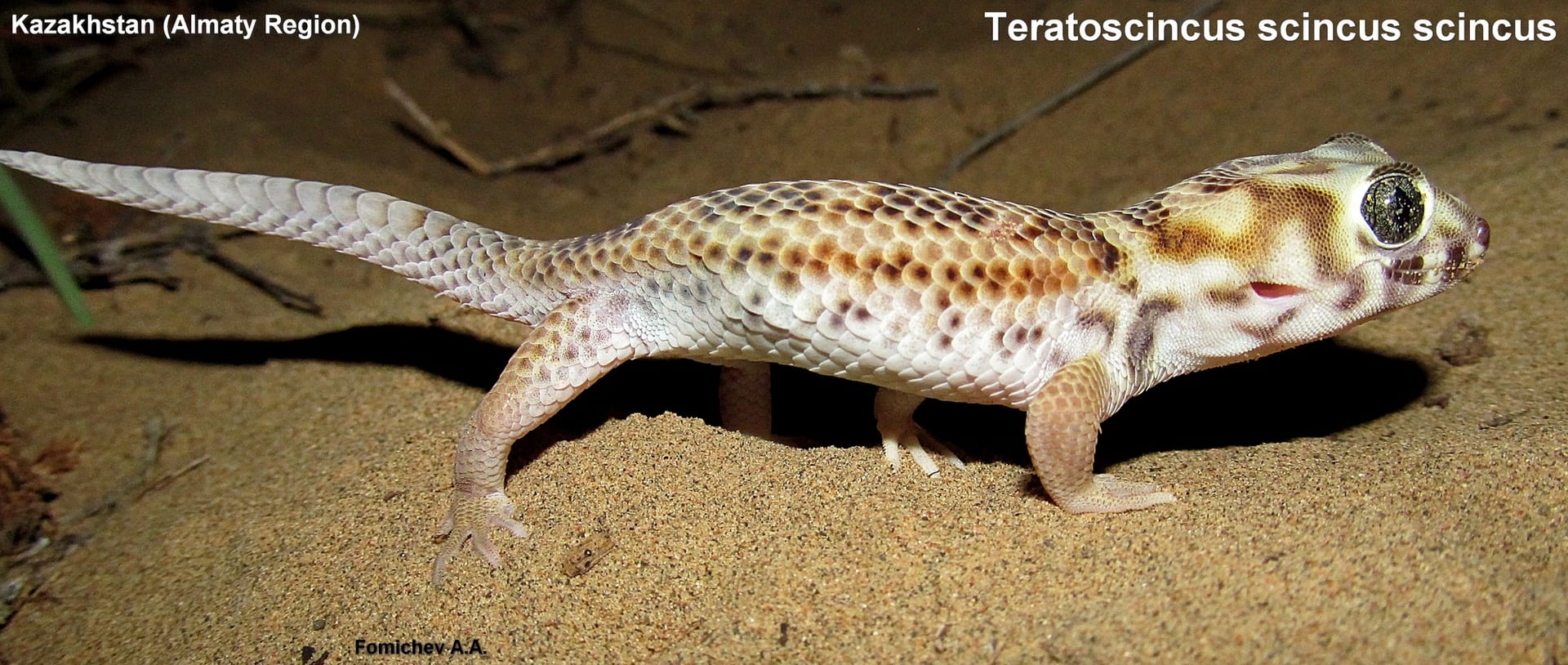
 © Alexander A. Fomichev / CC BY 4.0
Frog-Eyed Gecko
The Frog-Eyed Gecko is a ground-dwelling species native to desert and semi-arid sand dunes. Its body is covered in large, semicircular scales, and its broad head features strikingly large eyes that give it an almost comical expression — hence the common name. Fringed, comb-like scales along its toes help it move across loose sand, and when threatened, it can shed its easily-detachable scales to escape predators, regrowing them at the next shed. Mostly nocturnal and generally calm, it's an engaging species to watch as it forages along the ground after dark. Adults reach roughly 16 cm in total length, a compact size, but because the scales come off so easily it is a species to watch rather than handle. With some baseline reptile-keeping knowledge, this intermediate-level gecko can make a rewarding long-term companion.
View Frog-Eyed Gecko encyclopedia →Breeder Wanted!
List on BreederDirect and sell directly to customers nationwide!
BreederDirect's 6 Transparency Commitments
Every Reptiles & Amphibians from verified Breeder breeders includes complete information: morph, genetics, feeding requirements, and temperament details.
- Morph Information
- Actual Photos
- Feeding Information
- Temperament Information
- Genetics Information
- Age (Months)
Browse all 319 breeds
Difficulty Level
Feeding Type
Temperament
No listings match your filters
Adjust your filters, or get notified when new listings arrive.
Getting alerts is free with a member account. When new listings match your saved search, we'll notify you by email and in-app.
Browse other categories
Verified breeders (preview)

Are you raising reptiles & amphibians?
Register as a breeder and connect with buyers directly.
Apply as a breederFrog-Eyed Gecko key facts
- Care level
- Intermediate
- Lifespan
- Up to 13 years
- Size
- About 16cm total length (up to 18-20cm)
- Diet
- Carnivorous, mainly small insects and other arthropods; it also takes fruit and berries at times
- Temperature & Humidity
- As a desert species it needs a localised hot spot by day. At the same time the enclosure must not be allowed to dry out throughout: keep the base of the substrate damp. It rests for several months through the cold season.
- Enclosure
- Terrestrial and an active burrower, so keep it in a terrarium with a deep sand substrate. It lacks toe pads and cannot climb smooth walls. Layering the substrate dry on top and damp at the base keeps burrows from collapsing. Seat rocks and hides on the enclosure floor before adding substrate.
- Diet & Feeding
- It feeds mainly on small insects and will occasionally take fruit and berries. In captivity offer crickets and roaches dusted with calcium and vitamin supplements. It also preys on small reptiles, so do not house animals of markedly different sizes together.
- Temperament
- The scales come away very easily and will slough off if the animal is grasped, so avoid handling and move it by guiding it into a container when necessary. The tail is also readily autotomised. Poorly transported imports were once common, but animals in recent trade are considered comparatively robust.
- Notes
- Not listed on any CITES appendix. The IUCN assesses it as Least Concern. It appears neither on the schedule of designated dangerous animals under the Order for Enforcement of the Act on Welfare and Management of Animals nor on Japan's list of invasive alien species. Note the naming conflict: the Japanese name sasakure-yamori is also applied to the Madagascan genus Paroedura.
About Frog-Eyed Gecko
A guide to the Frog-Eyed Gecko's traits, temperament, and care basics — a desert-dwelling gecko known for its huge eyes and easily-shed scales.
7 things to know before welcoming a Frog-Eyed Gecko
1Recreate a Desert Setup
Use a deep layer of sand that is dry on the surface but moist at the bottom, which keeps burrows from collapsing. Don't let the whole enclosure dry out completely, and provide a warm spot with a localized heat source during the day.
2Scales Detach Easily
This gecko sheds its scales to escape a threat, and grabbing it makes them come off easily. Avoid handling; when a move is needed, guide it into a container. The scales regrow at the next shed.
3Nocturnal by Nature
They rest hidden away during the day and become active after dark. Provide several hides in the enclosure so they can retreat and follow a natural day-night rhythm.
4Suited to Intermediate Keepers
Temperature and humidity management, plus careful handling, make this species a bit more demanding than some popular beginner geckos. Some prior reptile-keeping experience is recommended before bringing one home.
5Plan for a Long Lifespan
This species can live up to around 13 years, so bringing one home is a long-term commitment. Make sure you can maintain consistent care for that entire span before deciding.
6A Compact, Manageable Size
Adults reach only about 16 cm in length (up to 18–20 cm at most), so they don't require an especially large enclosure compared with bigger gecko species.
7Feeding Requires Some Prep
Their diet centers on insects such as crickets, which should be dusted with calcium and vitamin supplements before feeding. Keep an eye on prey size and the insects' own care as well.
Frequently asked questions about Frog-Eyed Gecko
- Q.Is it safe to handle a Frog-Eyed Gecko by hand?
- A.It is not recommended. Grabbing it makes the scales come off easily, and the tail can also be dropped. Avoid handling, and when a move is needed, guide it into a container.
- Q.What does it do during the day?
- A.Being nocturnal, it typically rests quietly inside a hide during daylight hours. It becomes active and starts moving around the enclosure once it gets dark.
- Q.What should I feed it?
- A.Its diet is based on insects such as crickets, dusted with calcium and vitamin supplements. Choose prey sized appropriately for the gecko's body size.
- Q.Can it be kept in the same enclosure as other geckos?
- A.It may prey on small reptiles and its scales detach easily, so avoid housing it with animals of different sizes. Keeping it alone is the basic approach.
- Q.Is this a good choice for a first-time reptile keeper?
- A.This species is considered suited to intermediate keepers, requiring attention to temperature, humidity, and careful handling. Some prior reptile-keeping experience is recommended before taking one on.
Useful tools for Frog-Eyed Gecko care
Learn more about Frog-Eyed Gecko in the encyclopedia
View Frog-Eyed Gecko encyclopedia entry →
Care difficulty, lifespan, size and diet — all basics covered.
More in this category
Can't find the one you're looking for?
Post your wishes for free and breeders with matching animals will contact you with introductions.