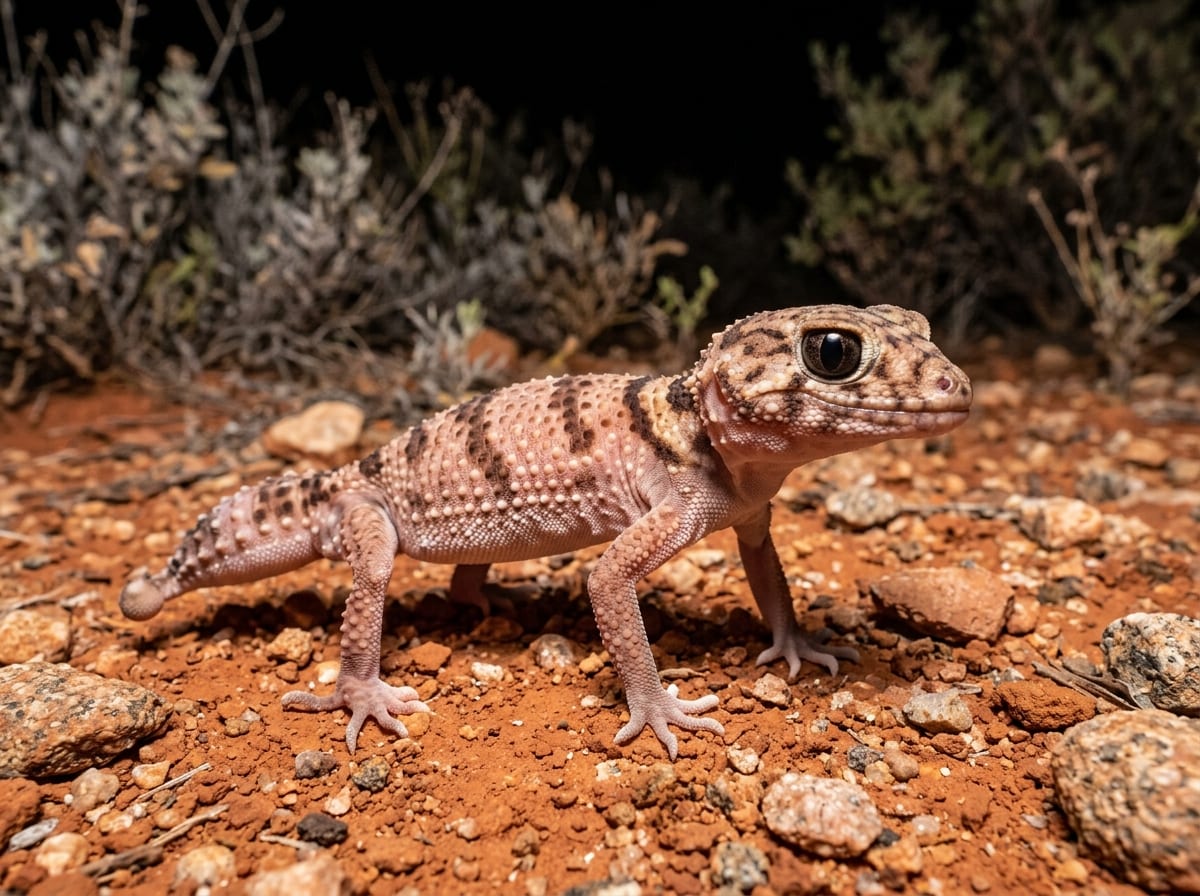
Southern Banded Knob-tailed Gecko
The Southern Banded Knob-tailed Gecko is a rock-dwelling species native to the arid Murchison River region of Western Australia. Its signature feature is the small, ball-like knob at the tip of its short tail, which gives this species its endearing, distinctive look. Being nocturnal, it spends daylight hours tucked away in shelter and becomes active after dark, prowling across gravelly ground in search of food. As a terrestrial gecko, it rarely climbs, and tends to move about calmly within its enclosure. With its quiet temperament and striking appearance, it appeals to keepers who enjoy observing a more understated species. Because this gecko is considered suitable for intermediate keepers, some prior reptile-keeping experience is recommended before bringing one home.
View Southern Banded Knob-tailed Gecko encyclopedia →Breeder Wanted!
List on BreederDirect and sell directly to customers nationwide!
BreederDirect's 6 Transparency Commitments
Every Reptiles & Amphibians from verified Breeder breeders includes complete information: morph, genetics, feeding requirements, and temperament details.
- Morph Information
- Actual Photos
- Feeding Information
- Temperament Information
- Genetics Information
- Age (Months)
Browse all 319 breeds
Difficulty Level
Feeding Type
Temperament
No listings match your filters
Adjust your filters, or get notified when new listings arrive.
Getting alerts is free with a member account. When new listings match your saved search, we'll notify you by email and in-app.
Browse other categories
Verified breeders (preview)

Are you raising reptiles & amphibians?
Register as a breeder and connect with buyers directly.
Apply as a breederSouthern Banded Knob-tailed Gecko key facts
- Care level
- Intermediate
- Lifespan
- Few data on lifespan in captivity
- Size
- Few size data
- Diet
- Insectivore (crickets, roaches)
- Housing
- A ground-dwelling gecko of stony soils around granite outcrops; prioritize floor space and provide hides under flat stones or boards.
- Temperature & Humidity
- A nocturnal species of dry country; provide daytime hides, dry ground for night activity and a temperature gradient.
- Diet & Feeding
- A nocturnal insectivore: feed moving live insects such as crickets and roaches, dusted with calcium.
- Health & Cautions
- It is oviparous; provide a moist laying site if breeding.
- Notes
- Knob-tailed gecko species and forms are easily confused under trade names, so check the scientific name and lineage. Never release a captive animal into the wild.
About Southern Banded Knob-tailed Gecko
A nocturnal, ground-dwelling gecko from the rocky arid Murchison River region of Western Australia, known for the small ball-like knob at its tail tip. Considered suitable for intermediate keepers.
7 things to know before welcoming a Southern Banded Knob-tailed Gecko
1Recreate a Rocky, Arid Setup
This species comes from the rocky arid country of Western Australia, so a dry substrate paired with rock or driftwood hides suits it well. Keep the overall enclosure on the dry side, with hiding spots the gecko can retreat into during the day.
2A Nocturnal Rhythm
This gecko rests quietly in its hide during the day and becomes active after the lights go out. Avoid disturbing it during daylight hours so it can keep its natural rhythm.
3A Ground-Dwelling Gecko
It rarely climbs and instead spends its time moving across the ground. A wider floor area matters more than enclosure height when planning its home.
4Tails Can Drop Under Stress
Like other knob-tailed geckos, this species may drop its tail if it feels threatened or is handled roughly. A regrown tail isn't guaranteed to return to its original ball-shaped form, so avoid grabbing or forcing handling.
5Best Kept Alone
Males in particular can be territorial and may fight if housed together, so keeping this gecko singly is the standard approach. If keeping more than one is considered, watch compatibility and behavior closely.
6Humidity for Shedding
While this gecko generally prefers dry conditions, sheds can get stuck if humidity is too low. Providing a humid hide with damp moss in one corner gives it access to extra moisture only when needed.
7Set Up Heating in Advance
Since this gecko is nocturnal, set up a temperature gradient within the enclosure so it has both a warmer and a cooler area to choose from. Arrange the heating setup and hides before the gecko arrives so its environment is ready from day one.
Frequently asked questions about Southern Banded Knob-tailed Gecko
- Q.Is this gecko suitable for beginners?
- A.The Southern Banded Knob-tailed Gecko is generally considered suitable for intermediate keepers rather than complete beginners. If you're new to reptile keeping, it's a good idea to research its care requirements thoroughly before bringing one home.
- Q.What does it eat?
- A.This gecko is insectivorous, fed mainly on live prey such as crickets or dubia roaches. Dusting feeders with a calcium supplement helps keep its nutrition balanced.
- Q.How long does it live in captivity?
- A.Data on captive lifespan for this species is also limited at this time. Regular observation and consistent care are the best way to support a long, healthy life for your gecko.
- Q.Can it be housed with other geckos?
- A.Individuals, especially males, can be territorial and prone to fighting, so solitary housing is the standard recommendation. If you're considering keeping more than one together, watch their compatibility and behavior closely.
- Q.Can I handle it often?
- A.As a quiet, nocturnal species, this gecko isn't well suited to frequent handling. Stress can cause it to drop its tail, so it's best to keep hands-on interaction minimal and gentle, focused on routine care.
Useful tools for Southern Banded Knob-tailed Gecko care
Learn more about Southern Banded Knob-tailed Gecko in the encyclopedia
View Southern Banded Knob-tailed Gecko encyclopedia entry →
Care difficulty, lifespan, size and diet — all basics covered.
More in this category
Can't find the one you're looking for?
Post your wishes for free and breeders with matching animals will contact you with introductions.