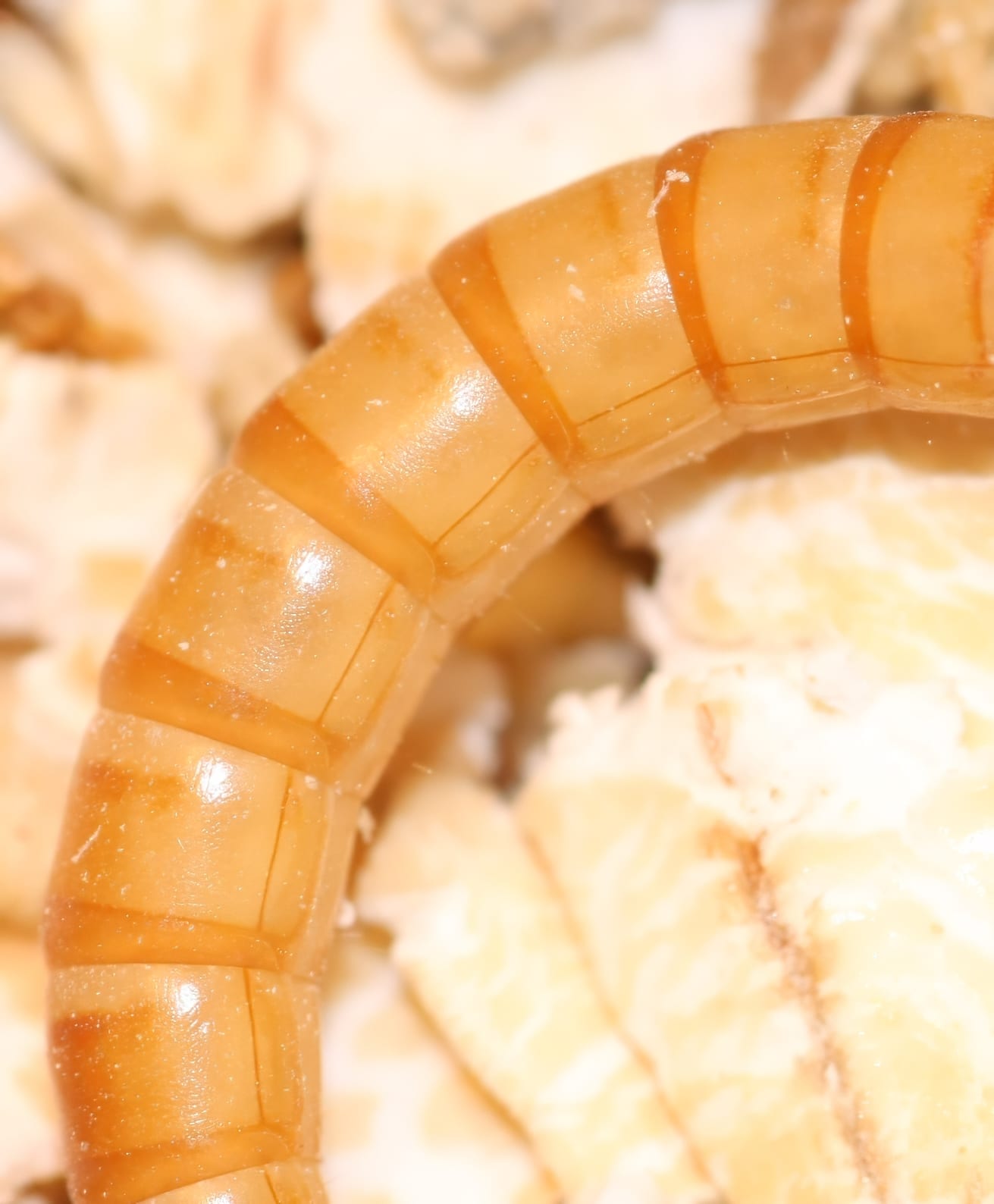
 © ImagePerson / CC BY 4.0
Mealworm
Mealworms are the larvae of the darkling beetle (Tenebrio molitor), a staple feeder insect for reptiles, amphibians, birds, and small mammals. Their yellowish-brown, plump segmented bodies move slowly and pose virtually no bite risk, making them easy to handle. Because they can be bred using nothing more than wheat bran, mealworms are considered one of the most beginner-friendly feeder insects available. Over several months, the larvae molt roughly 9 to 20 times as they grow before transforming into dark brown adult beetles. They tolerate dry conditions well and slow down in cooler temperatures, which makes storage simple, and they are prized both as a nutritional feeder and as a subject for observing insect metamorphosis.
View Mealworm encyclopedia →0% commission on your first sales!Register by September 30, 2026 and your first 2 sales are commission-free!
Breeder Wanted!
List on BreederDirect and sell directly to customers nationwide!
6 Transparency Standards You Can Trust
When listing Insects, Breeders disclose the following. We guarantee transparency on growth stage and breeding unit.
- Life Stage Clarity
- Generation Info
- Real Photos
- Breeding Unit
- Country of Origin
- Body Length (mm)
Browse all 296 breeds
No listings match your filters
Adjust your filters, or get notified when new listings arrive.
Getting alerts is free with a member account. When new listings match your saved search, we'll notify you by email and in-app.
Browse other categories
Verified breeders (preview)
Mealworm key facts
- Care level
- Beginner-friendly
- Lifespan
- Adults 6-12 months; larval stage several months (9-20 instars)
- Size
- Larvae up to about 32mm, adults up to about 19mm
- Temperature
- 22〜28℃
- Humidity
- 40〜60%
- Diet
- Wheat bran or breadcrumbs, vegetable scraps as a moisture source
- Temperature & Humidity
- Keep at 22-28C and 40-60% humidity. Damp conditions cause fungal die-offs. Chilling at about 10C slows growth for storage.
- Breeding & Egg-laying
- Adults lay in the bran when kept in a bran-filled container. Eggs hatch in 4-19 days and pupae emerge in 3-30 days.
- Cohabitation
- Larvae and adults can share a container, but fresh pupae get eaten, so move pupae to a separate box.
- Lifespan & Rearing Period
- Adults live 6-12 months. Larvae pass through 9-20 instars before pupating, faster at higher temperatures.
- Health & Notes
- High in phosphorus and low in calcium; dust with calcium and gut-load with vegetables when using as feeder.
About Mealworm
Mealworms are the easy-to-breed larvae of the darkling beetle, a beginner-friendly feeder insect used to nourish reptiles, birds, and other pets.
7 things to know before welcoming a Mealworm
1Housing & Substrate
Mealworms can be kept in bran, oats, or wheat flour that doubles as both substrate and food. Since they prefer dry conditions, a deep container with plenty of substrate makes care simple.
2Providing Moisture
Instead of drinking water, mealworms get moisture from small pieces of carrot or apple. Adding too much can cause mold or spoil the substrate, so it's best to offer small amounts and replace them often.
3Growth & Molting
The larval stage lasts several months, during which mealworms molt roughly 9 to 20 times as they grow. They can reach up to about 32mm in length before pupating.
4Pupation to Adult
Once fully grown, the larva pupates and eventually emerges as a dark brown beetle. Adults typically live for about 6 to 12 months.
5Temperature Care
Cooler temperatures slow down their activity and growth, while excess heat and humidity can lead to mold or odor. A well-ventilated environment helps keep them healthy.
6Easy to Breed
One of mealworms' biggest advantages is that they can be bred using nothing more than bran or other grains. Successive generations multiply naturally within the container, making them easy to maintain.
7Feeding Amount & Timing
Offering too much at once can leave leftovers to rot or weaken the colony inside the substrate. It's best to feed small amounts matched to your pet's appetite and adjust as you observe.
Frequently asked questions about Mealworm
- Q.Do mealworms bite or sting?
- A.They have small jaws, but they're too weak to cause any real pain if you're bitten. Mealworms are generally safe to handle with bare hands.
- Q.Can adult beetles be used as feeders too?
- A.The adult beetle's shell hardens, making it harder for some pets to eat than the larva. Mealworms are typically fed to pets while still in the larval stage.
- Q.How long do they stay in the larval stage?
- A.The larval stage lasts several months, during which mealworms molt roughly 9 to 20 times. Keeping them cool slows their growth, which helps extend how long they stay larvae.
- Q.How big do mealworms get?
- A.Larvae can grow up to about 32mm long. Adult beetles reach up to about 19mm in length.
- Q.Is there a risk of them escaping?
- A.Mealworms rarely crawl out of their container on their own, but escapes can occasionally happen if there's no lid. Using a well-ventilated container with a secure lid keeps this from being an issue.
Useful tools for Mealworm care
Learn more about Mealworm in the encyclopedia
View Mealworm encyclopedia entry →
Care difficulty, lifespan, size and diet — all basics covered.
Mealworm related articles
Beginner's Guide to Edible Insects | Food Use and Breeding of Crickets and Mealworms
From basic knowledge of edible insects to breeding, processing, and cooking food-grade crickets and mealworms. This guide covers the safety, regulations, and how to get started with edible insects as a sustainable protein source with low environmental impact.
Mealworm Breeding Guide: Low-Cost Mass Production & Management Methods
This guide explains DIY mealworm breeding for feeding reptiles, amphibians, small birds, and tropical fish. We detail breeding container setup, food sources (wheat bran, etc.), humidity management, and the complete lifecycle from pupae to adults.
Guide to Breeding Crickets and Mealworms at Home | How to Secure Feeder Insects Reliably at Low Cost
A comprehensive guide to breeding feeder insects (crickets and mealworms) at home. Covers breeding container setup, egg management, gut-loading (nutritional enhancement), escape prevention, and odor control in practical detail.
More in this category
Can't find the one you're looking for?
Post your wishes for free and breeders with matching animals will contact you with introductions.