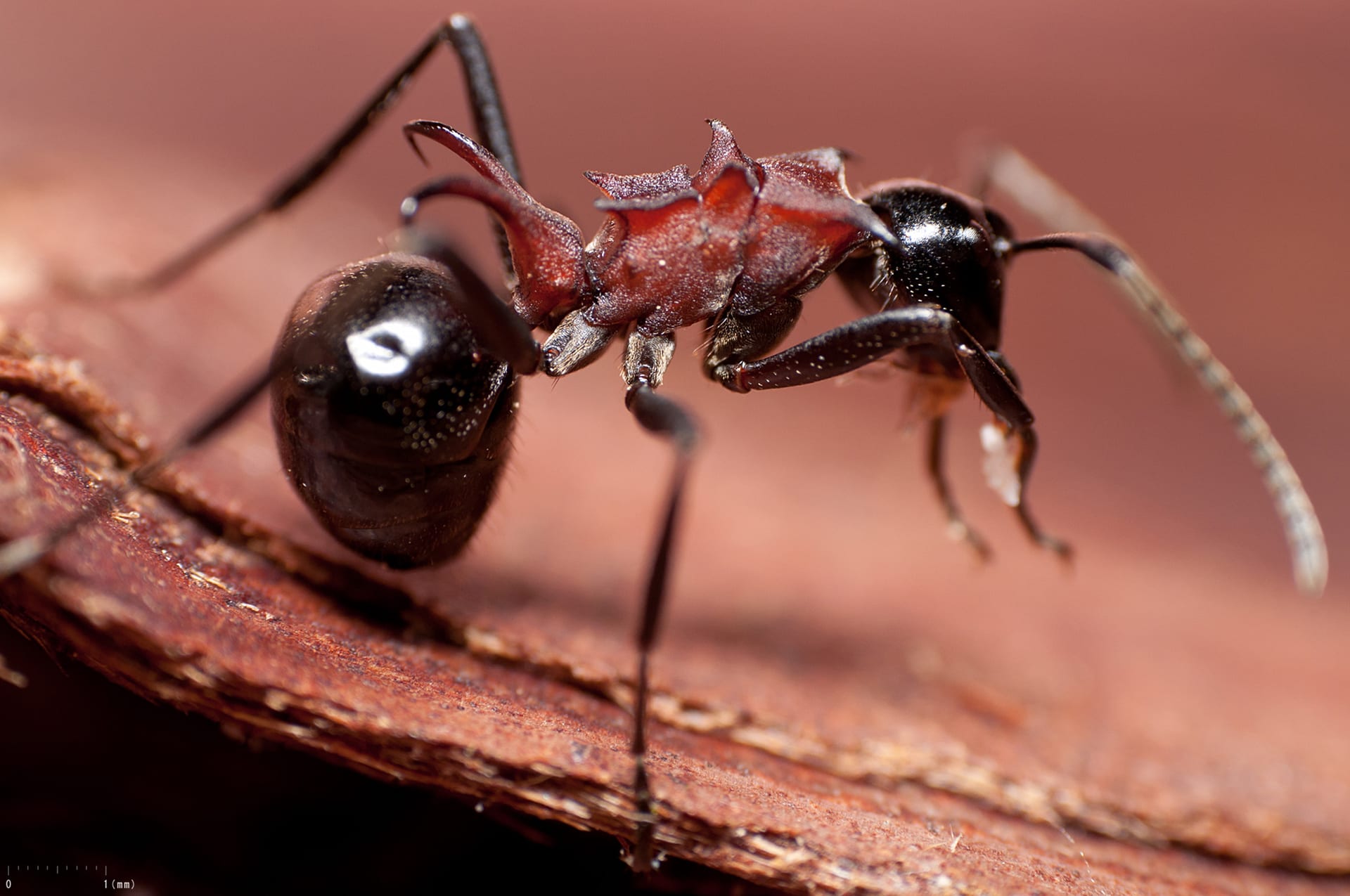
 © Yasunori Koide / CC BY-SA 3.0
Spiny Ant
The spiny ant is a striking species with a reddish-brown thorax and distinctive curved spines running along its body. Its most fascinating trait is the founding behavior of new queens, which practice temporary social parasitism -- infiltrating the nest of a host species such as Camponotus japonicus and taking it over to establish their own colony. Watching this unusual colony-founding process is a rare experience among ants, but the takeover itself is delicate, and keeping these ants successfully calls for real expertise, which is why they are considered an advanced-keeper species. The spines and reddish coloring also make for a striking ant to observe up close.
View Spiny Ant encyclopedia →0% commission on your first sales!Register by September 30, 2026 and your first 2 sales are commission-free!
Breeder Wanted!
List on BreederDirect and sell directly to customers nationwide!
6 Transparency Standards You Can Trust
When listing Insects, Breeders disclose the following. We guarantee transparency on growth stage and breeding unit.
- Life Stage Clarity
- Generation Info
- Real Photos
- Breeding Unit
- Country of Origin
- Body Length (mm)
Browse all 296 breeds
No listings match your filters
Adjust your filters, or get notified when new listings arrive.
Getting alerts is free with a member account. When new listings match your saved search, we'll notify you by email and in-app.
Browse other categories
Verified breeders (preview)
Spiny Ant key facts
- Care level
- Advanced
- Lifespan
- Several years to about 10 years in captivity
- Size
- Workers 7-8mm, queens 12mm
- Temperature
- 23〜25℃
- Diet
- Sugars (honeydew, sugar water) and insects (omnivorous)
- Temperature & Humidity
- Keep at 23-25C, never above 30C. Although a tree-hollow nester it does well in a plaster nest; do not let it dry out. Honshu stock overwinters indoors unheated.
- Breeding & Egg-laying
- Nuptial flights occur in September-November. A new queen cannot rear workers alone; she must be given host workers or cocoons of Camponotus japonicus or relatives and accepted by them. The host workers raise her brood until a pure colony forms.
- Cohabitation
- Cohabitation is possible only with workers of host species (Camponotus japonicus, C. obscuripes, C. kiusiuensis). Do not mix with other colonies or species.
- Lifespan & Rearing Period
- Once parasitism succeeds and the colony is established, it can reportedly be kept for several years to about ten years.
- Health & Notes
- Queens are at high risk of being killed by host workers before parasitism succeeds. Assessed as Vulnerable (VU) on the MOE Red List 2020, so wild collection should be kept to a minimum.
About Spiny Ant
A striking ant with a reddish-brown thorax and curved spines, known for its unusual founding behavior: new queens take over the nests of other ant species through temporary social parasitism, making this a delicate, advanced-level species to keep.
7 things to know before welcoming a Spiny Ant
1An advanced-keeper species
Spiny ants are considered an advanced-level species to keep. The queen's nest-founding process -- a form of temporary social parasitism -- is especially delicate, so prior ant-keeping experience and some background knowledge are recommended. If you're new to ant keeping, it's a good idea to gain experience with an easier species first.
2Temporary social parasitism
Rather than founding her own nest from scratch, a new spiny ant queen invades the nest of another ant species, such as Camponotus japonicus, and takes it over to start her colony. This behavior, known as temporary social parasitism, sets the species apart from most other ants' reproductive strategies.
3Size and appearance
Workers measure about 7-8mm and queens around 12mm, with a reddish-brown thorax and curved spines as the species' signature feature. The spines are thought to serve a defensive purpose and also give the ant a striking appearance.
4A lifespan of years, not months
In captivity, spiny ants can live anywhere from a few years up to around a decade, making them a long-term species to observe. How well a colony develops, though, depends heavily on temperature, humidity, and feeding conditions.
5Handling and temperament
The spines on a spiny ant's body are a hint that these ants can be fairly active and sensitive to disturbance. Avoid direct contact with bare hands, and handle observation and care through the enclosure to minimize stress on both the ants and yourself.
6Learn the biology first
Because temporary social parasitism differs so much from how most ants reproduce, it's worth learning about the species' founding behavior and nest-takeover process before bringing one home. Going in informed helps you avoid common pitfalls during care.
7Preparing the setup
To help a colony settle in after the nest takeover, prepare a well-regulated enclosure or ant farm that can maintain suitable temperature and humidity beforehand. It also helps to have feeder insects and insect jelly ready for feeding.
Frequently asked questions about Spiny Ant
- Q.Can beginners keep spiny ants?
- A.Spiny ants are considered an advanced-level species. The nest-takeover process carried out by new queens is especially delicate, so it's best to gain some ant-keeping experience first.
- Q.How does a new queen start her colony?
- A.Rather than building her own nest, a new queen invades the nest of another ant species, such as Camponotus japonicus, and takes it over. This strategy, called temporary social parasitism, is one of the spiny ant's defining traits.
- Q.How big do spiny ants get?
- A.Workers grow to about 7-8mm, while queens reach around 12mm. Their reddish-brown thorax and curved spines are the species' most distinctive visual features.
- Q.How long do spiny ants live?
- A.In captivity, they're said to live anywhere from a few years up to around a decade. That makes them a species you can observe and enjoy over the long term.
- Q.What is the purpose of the spines?
- A.The curved spines on the thorax are thought to play a defensive role. They also give the species its striking, distinctive look.
Useful tools for Spiny Ant care
Learn more about Spiny Ant in the encyclopedia
View Spiny Ant encyclopedia entry →
Care difficulty, lifespan, size and diet — all basics covered.
More in this category
Can't find the one you're looking for?
Post your wishes for free and breeders with matching animals will contact you with introductions.