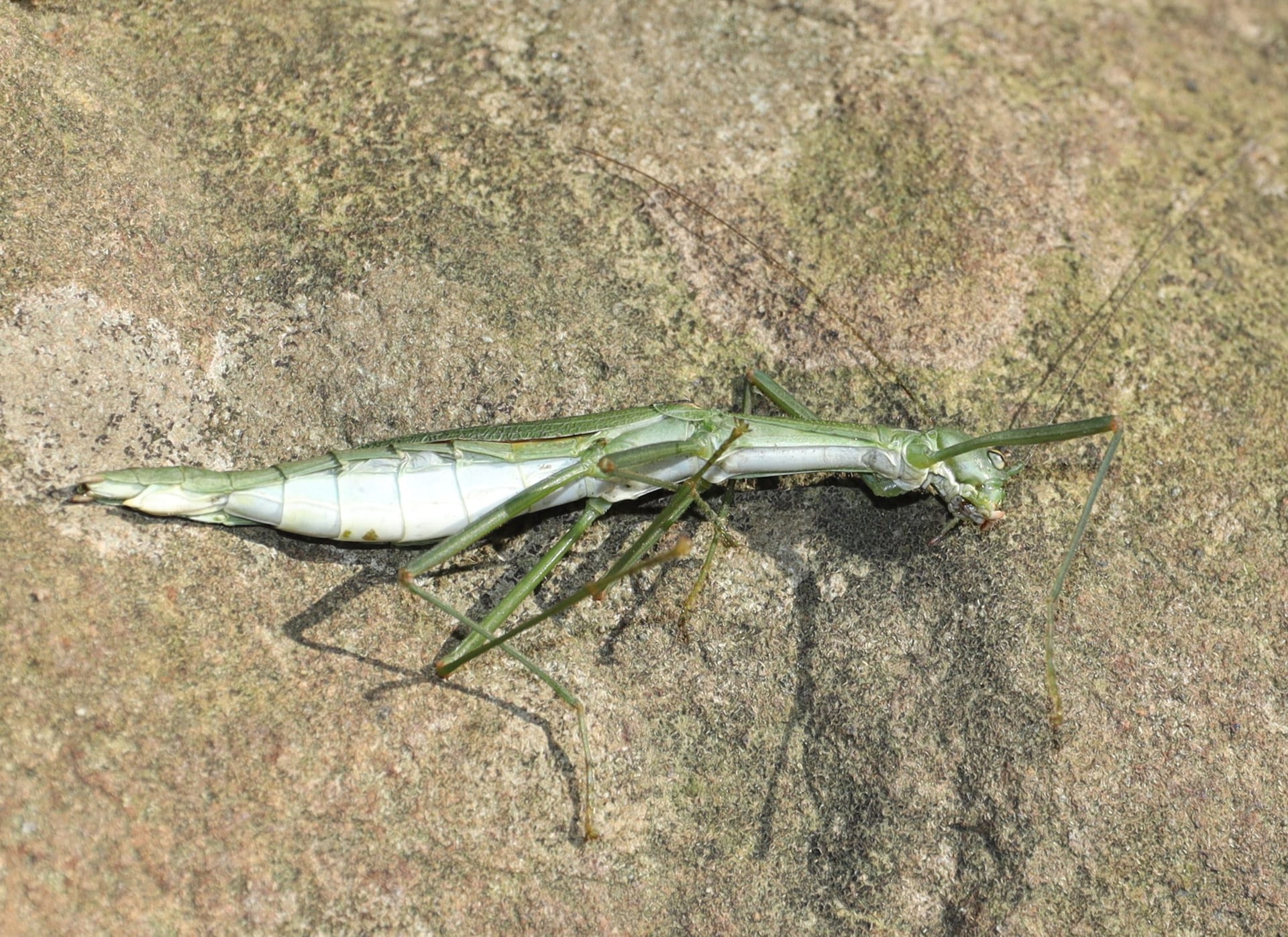
 © Alpsdake / CC BY-SA 4.0
Japanese Winged Stick Insect
The Japanese winged stick insect is a small phasmid known for its functional wings, and true to its name, it's sometimes seen taking short flights. Males measure 36–40mm while females grow slightly larger at 46–56mm. Their movements are slow and deliberate, and their calm temperament makes them easy to observe without startling them. Interestingly, populations on Honshu reproduce parthenogenetically, with females alone producing offspring, while those from Yakushima southward reproduce sexually — a geographic quirk that makes this species a fascinating window into stick insect biology. Rated beginner-friendly, it's a great starting point for anyone new to keeping insects.
View Japanese Winged Stick Insect encyclopedia →0% commission on your first sales!Register by September 30, 2026 and your first 2 sales are commission-free!
Breeder Wanted!
List on BreederDirect and sell directly to customers nationwide!
6 Transparency Standards You Can Trust
When listing Insects, Breeders disclose the following. We guarantee transparency on growth stage and breeding unit.
- Life Stage Clarity
- Generation Info
- Real Photos
- Breeding Unit
- Country of Origin
- Body Length (mm)
Browse all 296 breeds
No listings match your filters
Adjust your filters, or get notified when new listings arrive.
Getting alerts is free with a member account. When new listings match your saved search, we'll notify you by email and in-app.
Browse other categories
Verified breeders (preview)
About Japanese Winged Stick Insect
A guide to the Japanese winged stick insect — its body size, unique region-based reproduction, and why it suits beginner keepers.
7 things to know before welcoming a Japanese Winged Stick Insect
1Suitable Habitat Setup
This species prefers warm, humid conditions, so a well-ventilated enclosure misted regularly works best. Avoid direct sunlight and overly dry conditions, and provide some shaded cover where it can settle.
2Food Plants Needed
In the wild, this insect feeds on a variety of broadleaf plant leaves, so a steady supply of fresh food plants is essential in captivity. It's worth lining up a source of suitable leaves before bringing one home.
3Size Difference by Sex
Males measure 36–40mm while females reach 46–56mm, making females noticeably larger. Wing use also differs between the sexes, with the smaller males more often seen taking flight.
4Reproduction Varies by Region
Honshu populations reproduce parthenogenetically, with females alone producing offspring, while populations from Yakushima southward reproduce sexually with both males and females. It's worth knowing how an individual's origin affects its reproduction.
5Calm Temperament
This insect moves slowly and stays calm even when disturbed. Rather than handling it frequently or startling it, quiet observation in a settled environment suits this species best.
6Growth Through Molting
Nymphs grow gradually through repeated molting. Right before and after each molt, the body is soft and vulnerable, so it's best to avoid unnecessary handling or disturbing the enclosure during this time.
7Great for Beginners
Rated beginner-friendly, this species is one of the more approachable stick insects to keep. With a basic care routine in place, it makes a great long-term entry point into insect keeping.
Frequently asked questions about Japanese Winged Stick Insect
- Q.Is this species suitable for beginners?
- A.Yes, it's rated beginner-friendly. With basic temperature and humidity management and a steady supply of food plants, it's an approachable choice even for first-time insect keepers.
- Q.How can I tell males and females apart?
- A.Body size is the clearest indicator — males measure 36–40mm while females reach 46–56mm, making females noticeably larger. Wing use also tends to differ between the sexes.
- Q.What does parthenogenetic reproduction mean?
- A.It means females can produce offspring on their own, without mating. Honshu populations reproduce this way, while populations from Yakushima southward reproduce sexually, with both males and females involved.
- Q.Do I need any special equipment to keep one?
- A.No major special equipment is needed beyond a well-ventilated enclosure and regular misting for humidity. Keeping a steady supply of fresh food plants on hand is the main preparation required.
- Q.Is it okay to handle or hold this insect?
- A.It's generally calm and slow-moving, but frequent handling can be stressful for it. It's best observed quietly in a settled environment rather than picked up often.
Useful tools for Japanese Winged Stick Insect care
Learn more about Japanese Winged Stick Insect in the encyclopedia
View Japanese Winged Stick Insect encyclopedia entry →
Care difficulty, lifespan, size and diet — all basics covered.
More in this category
Can't find the one you're looking for?
Post your wishes for free and breeders with matching animals will contact you with introductions.