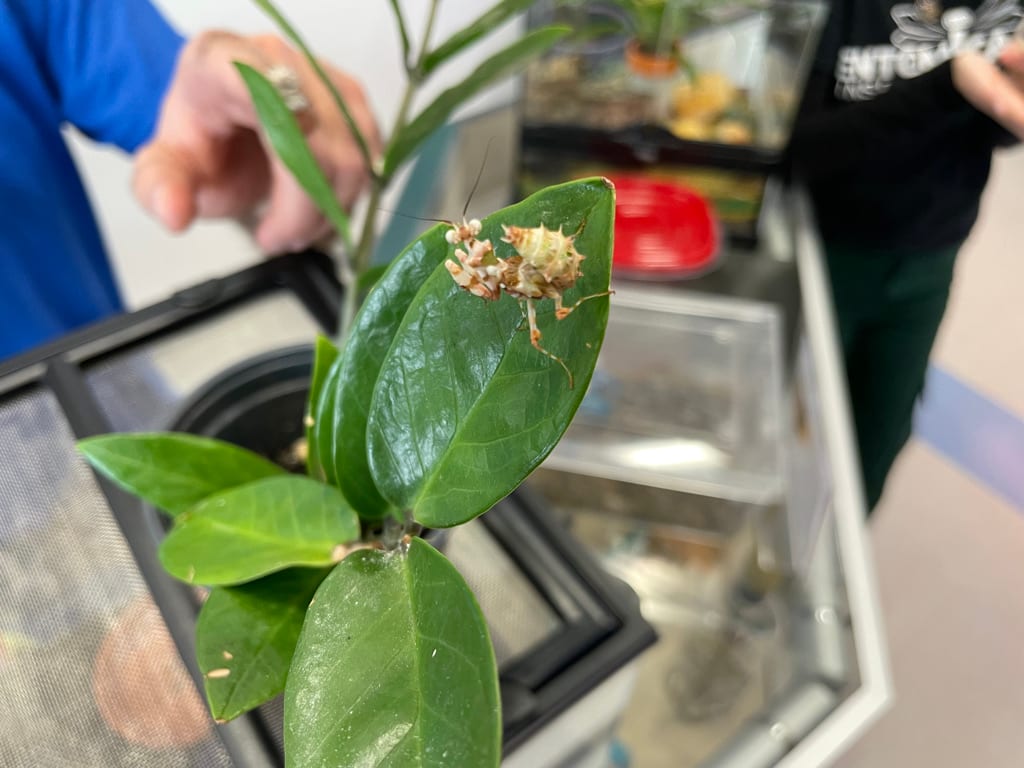
 © Fungus Guy / CC BY-SA 4.0
Thistle Mantis
The Thistle Mantis is the sole species in its genus, native to arid regions stretching from North Africa through the Middle East to South Asia. Its cream-colored body is traced with green, vein-like markings, giving it a withered, leaf-like look that blends into dry vegetation. Its signature trait is a dramatic threat display: when startled, it flashes vivid orange and blue patches hidden on the inside of its forelegs. Despite this striking defense, it's generally calm and quiet in temperament. Because it needs consistently high heat (30-40°C) and low humidity, it suits keepers already comfortable with more demanding mantis care.
View Thistle Mantis encyclopedia →0% commission on your first sales!Register by September 30, 2026 and your first 2 sales are commission-free!
Breeder Wanted!
List on BreederDirect and sell directly to customers nationwide!
6 Transparency Standards You Can Trust
When listing Insects, Breeders disclose the following. We guarantee transparency on growth stage and breeding unit.
- Life Stage Clarity
- Generation Info
- Real Photos
- Breeding Unit
- Country of Origin
- Body Length (mm)
Browse all 296 breeds
No listings match your filters
Adjust your filters, or get notified when new listings arrive.
Getting alerts is free with a member account. When new listings match your saved search, we'll notify you by email and in-app.
Browse other categories
Verified breeders (preview)
Thistle Mantis key facts
- Care level
- Advanced
- Lifespan
- Adults 3-6 months
- Size
- About 5-6cm
- Temperature
- Humidity
- 30〜40%
- Diet
- Flying insects only such as flies and moths (fruit flies for nymphs)
- Temperature & Humidity
- 30-40C by day, ideally around 34C, and never below 21C at night. Keep it dry at 30-40% humidity, misting lightly just once a week for drinking. Cooler conditions sharply reduce growth and survival.
- Breeding & Egg-laying
- Attempt mating 2-4 weeks after the final moult. Females are fairly calm but may attack the male, so feed her well first. If eggs fail to fertilise, holding the pair at 35-40C for a few days before mating is said to help.
- Cohabitation
- Not strongly cannibalistic, but it will hunt its own kind if food is short. House singly from the fourth instar.
- Lifespan & Rearing Period
- Without sustained heat, growth slows and many fail to reach adulthood.
- Health & Notes
- Feed only flies and moths; crickets are said to harm fertility and health. It cannot climb glass or plastic, so line a wall with cork and add dry leaves. The heat requirement makes it unsuitable for beginners.
About Thistle Mantis
The sole species in its genus, native to arid regions of North Africa, the Middle East, and South Asia. Cream-colored with green venation, it flashes orange and blue on its forelegs when threatened. It favors high heat and low humidity, making it a mantis best suited to experienced keepers.
7 things to know before welcoming a Thistle Mantis
1Needs Heat and Dry Air
This species thrives at 30-40°C with low humidity. Keep the enclosure drier than a typical mantis setup and avoid excess moisture, since good ventilation is key to keeping it healthy.
2The Threat Display Is Defense
When startled, it reveals vivid orange and blue patches hidden on the inside of its forelegs. This is a defensive bluff rather than an attack, so try not to flinch or drop it when it happens.
3Diet Centers on Flies
Its main food is fly-type prey, which means feeder prep differs from cricket-based mantis care. Line up a reliable source or breeding setup for feeder flies before bringing one home.
4Adults Reach About 5-6cm
Adults reach roughly 5-6cm, putting them in the mid-size range for mantises. Choose an enclosure with room to grow as the mantis molts toward adulthood.
5Difficulty: Advanced
Its specific need for high heat and low humidity places it in the advanced category. Prior experience keeping other mantis species will make it easier to dial in the right environment.
6House Individually
Mantises are prone to cannibalism, so each individual should be housed in its own enclosure rather than grouped together. Prepare a separate cage for each mantis before bringing them home.
7Ventilation and Perches
As a species adapted to dry habitats, good airflow in the enclosure is essential. Also provide enough height and sturdy branches or perches to support successful molting.
Frequently asked questions about Thistle Mantis
- Q.Is it hard to keep? Suitable for beginners?
- A.The Thistle Mantis is considered an advanced-level species. It needs consistent temperatures of 30-40°C and low humidity, requiring more environmental management than many other mantises.
- Q.What should I feed it?
- A.Fly-type feeders are the typical diet for this species. If you're used to cricket-based feeding, it's worth confirming a source for flies before you bring one home.
- Q.Why does it show that threat display?
- A.When startled or disturbed, it flashes the orange and blue markings hidden on the inside of its forelegs to intimidate whatever is threatening it. It's a natural defensive bluff, not an act of aggression.
- Q.Are there any legal restrictions?
- A.The Thistle Mantis falls outside CITES. It's a species where regulatory concerns are generally not a major consideration for prospective keepers.
- Q.How big does it get as an adult?
- A.Adults grow to roughly 5-6cm, placing them in the mid-size range among mantises. It's a good idea to choose an enclosure with room to spare as it matures.
Useful tools for Thistle Mantis care
Learn more about Thistle Mantis in the encyclopedia
View Thistle Mantis encyclopedia entry →
Care difficulty, lifespan, size and diet — all basics covered.
More in this category
Can't find the one you're looking for?
Post your wishes for free and breeders with matching animals will contact you with introductions.