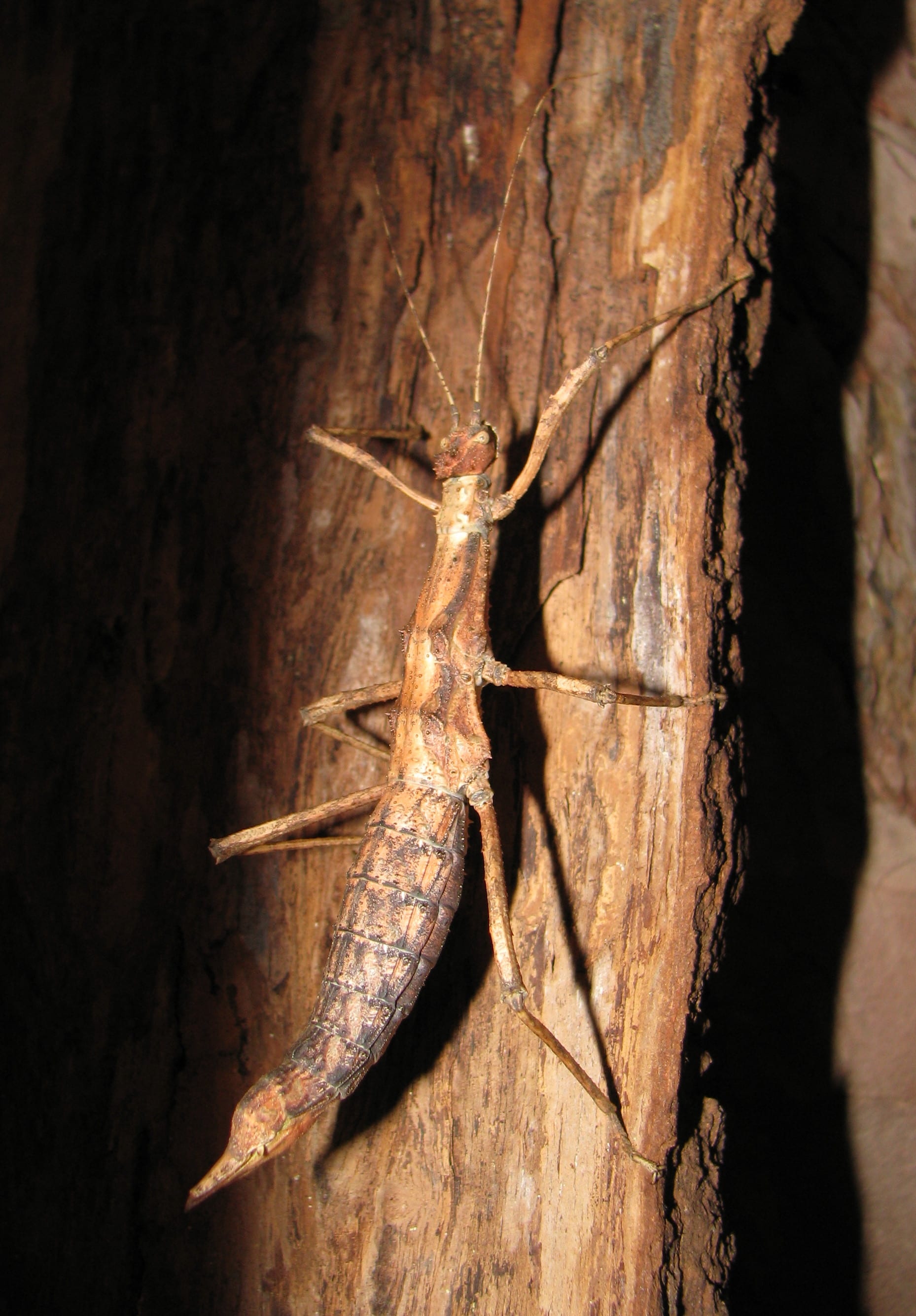
 © Drägüs / CC BY-SA 3.0
Sungaya Stick Insect
The Sungaya stick insect is a species native to Luzon Island in the Philippines. Females grow to about 80–85mm in length and weigh around 5g, with distinctive spines on the back of the head and thorax. This species reproduces parthenogenetically in captivity, meaning females alone can produce offspring — no need to source a pair, which makes it approachable for first-time insect keepers. It also accepts a wide range of food plants, so keeping it fed is rarely a struggle. Calm and non-aggressive, Sungaya stick insects do well when housed together in small groups. Watching them blend into leaves and branches with their muted green-brown coloring makes for a rewarding, low-pressure introduction to stick insect keeping.
View Sungaya Stick Insect encyclopedia →0% commission on your first sales!Register by September 30, 2026 and your first 2 sales are commission-free!
Breeder Wanted!
List on BreederDirect and sell directly to customers nationwide!
6 Transparency Standards You Can Trust
When listing Insects, Breeders disclose the following. We guarantee transparency on growth stage and breeding unit.
- Life Stage Clarity
- Generation Info
- Real Photos
- Breeding Unit
- Country of Origin
- Body Length (mm)
Browse all 296 breeds
No listings match your filters
Adjust your filters, or get notified when new listings arrive.
Getting alerts is free with a member account. When new listings match your saved search, we'll notify you by email and in-app.
Browse other categories
Verified breeders (preview)
Sungaya Stick Insect key facts
- Care level
- Beginner-friendly
- Lifespan
- Adults 4-8 months
- Size
- Females 80-85mm, weighing about 5g
- Temperature
- 22〜27℃
- Humidity
- 60〜80%
- Diet
- Guava, bramble, hazel, rose, beech, hornbeam, maple, ivy, dogwood, ash and many other broadleaf leaves; cucumber is taken as well
- Temperature & Humidity
- Hold them at 22-27 °C and 60-80 % humidity. They are nocturnal and spend the day motionless among foliage that matches their own colour. Stand leafy branches of the food plant in a narrow-necked vase inside the enclosure and mist them about every two days.
- Breeding & Egg-laying
- The cultured strain is parthenogenetic, so a single female can carry a line forward. Cover the floor with about five centimetres of a lightly damp humus and sand mixture for laying. The amphora-shaped eggs, roughly 4.5 mm long and 3.7 mm wide, are pushed into the earth and hatch after four to six months. They can be left in the substrate or moved to a simple incubator if closer control is wanted.
- Cohabitation
- They eat leaves and do not attack one another, so a group can share an enclosure. The wide choice of food plants, most of them common broadleaf trees, makes a colony easy to sustain. Choosing a container deep enough for a good laying layer also makes collecting eggs simpler when several are kept together.
- Lifespan & Rearing Period
- Eggs hatch after four to six months and the nymphs, 17 mm at hatching, mature in a further three to four months. The first generation laid in batches of ten to twelve every fortnight, while later generations placed their eggs singly into the damp soil.
- Health & Notes
- A genetic study led to further species being split from the genus in 2023, and the sexual strains introduced from 2008 onward, first called 'Lowland', are not considered to belong to this species; check which line is being offered when buying. Foreign phasmids count as quarantine pests under Japan's Plant Protection Act and live specimens may not be imported except with ministerial permission, so choose animals bred within Japan. They must never be released or abandoned outdoors.
About Sungaya Stick Insect
Sungaya stick insects are native to Luzon, Philippines. Females reach 80–85mm and about 5g, reproduce parthenogenetically, and accept many food plants — an approachable species for beginners.
7 things to know before welcoming a Sungaya Stick Insect
1Reproduces Without Mating
Sungaya stick insects kept in captivity are typically parthenogenetic — females alone can produce the next generation. There's no need to find a male, so even a single female can keep a colony going.
2Eats a Wide Variety of Plants
They accept a broad range of food plants, so you're not locked into sourcing one specific species. This flexibility makes feeding easier for first-time keepers.
3Does Well in Groups
Calm and low in aggression, this species tolerates being housed with others in the same enclosure. You can keep several individuals together depending on the space you have.
4Spines Mark the Head and Thorax
Females are identifiable by spines on the back of the head and thorax. Getting familiar with this feature helps you check on an individual's condition at a glance.
5Needs Steady Humidity
Like other stick insects, Sungaya are sensitive to dryness, so regular misting to maintain enclosure humidity matters. At the same time, avoid letting the enclosure stay overly damp.
6Egg Care Takes Patience
If you collect and incubate eggs, hatching can take a while. Keep the eggs from drying out and be prepared for a long wait.
7Prepare the Enclosure First
Before bringing one home, prepare a well-ventilated enclosure with food plants and substrate for humidity so the insect can settle in smoothly.
Frequently asked questions about Sungaya Stick Insect
- Q.Are Sungaya stick insects suitable for beginners?
- A.Yes, they're generally considered a beginner-friendly species. Because they reproduce parthenogenetically, you don't need to pair up males and females, and they accept a wide range of food plants — both of which keep the learning curve low.
- Q.Do I need both a male and a female?
- A.Captive lines reproduce parthenogenetically, with females alone producing offspring, so there's generally no need to seek out a male. Even a single female can keep a colony going across generations.
- Q.Can they be housed together in one enclosure?
- A.Sungaya stick insects are calm and tolerate being kept together in groups within the same enclosure. If mixing with a different species, though, check compatibility individually first.
- Q.How large do they get?
- A.Females reach about 80–85mm in length and roughly 5g in weight. Spines on the back of the head and thorax are a distinguishing feature.
- Q.Are they subject to any regulations?
- A.Sungaya stick insects are not subject to CITES.
Useful tools for Sungaya Stick Insect care
Learn more about Sungaya Stick Insect in the encyclopedia
View Sungaya Stick Insect encyclopedia entry →
Care difficulty, lifespan, size and diet — all basics covered.
More in this category
Can't find the one you're looking for?
Post your wishes for free and breeders with matching animals will contact you with introductions.