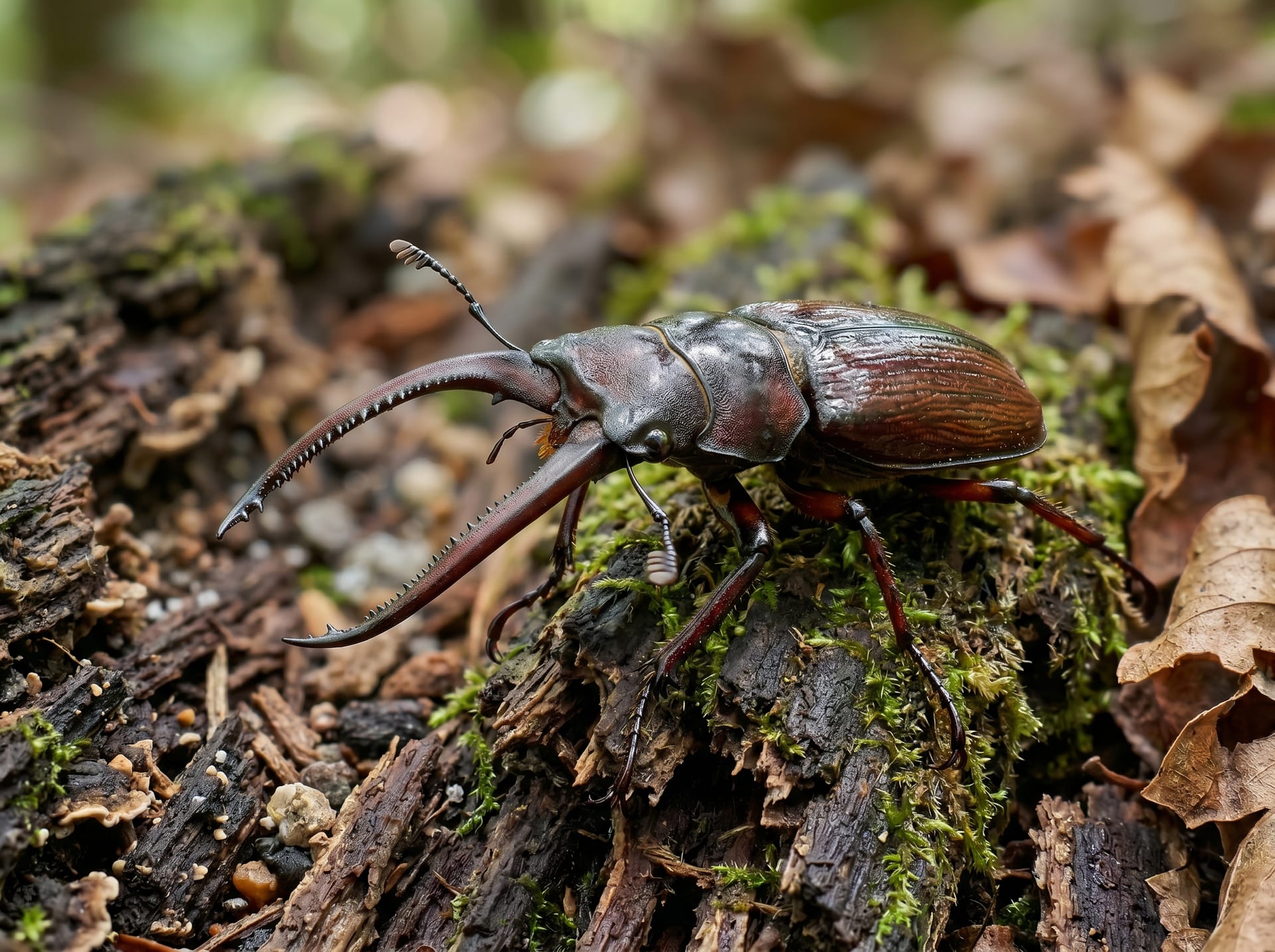
Didier's Stag Beetle
Didier's Stag Beetle is native to Vietnam and southern China, prized for the distinctive antler-like mandibles that give the species its common name. Paired with a glossy black body, this dramatic silhouette makes it a striking beetle to display. It's considered relatively easy to keep among imported stag beetles and is often chosen as a gateway species by hobbyists ready to move beyond native insects, though a few care details place it in the intermediate category. Adults typically live six months to a year, giving keepers plenty of time to enjoy watching them.
View Didier's Stag Beetle encyclopedia →0% commission on your first sales!Register by September 30, 2026 and your first 2 sales are commission-free!
Breeder Wanted!
List on BreederDirect and sell directly to customers nationwide!
6 Transparency Standards You Can Trust
When listing Insects, Breeders disclose the following. We guarantee transparency on growth stage and breeding unit.
- Life Stage Clarity
- Generation Info
- Real Photos
- Breeding Unit
- Country of Origin
- Body Length (mm)
Browse all 296 breeds
No listings match your filters
Adjust your filters, or get notified when new listings arrive.
Getting alerts is free with a member account. When new listings match your saved search, we'll notify you by email and in-app.
Browse other categories
Verified breeders (preview)
About Didier's Stag Beetle
Didier's Stag Beetle, native to Vietnam and southern China, features antler-like mandibles and a glossy black body. A popular beginner-friendly import species, adults reach 30-70mm and live six months to a year.
7 things to know before welcoming a Didier's Stag Beetle
1Mandible shape varies by individual
Mandible shape and size vary noticeably between individual males, and larval-stage care can influence the final result. If you're drawn to a particular mandible shape, pay attention to rearing conditions during the larval stage.
2Temperature control is key
This species is sensitive to heat, so keeping the environment cool during summer is important for longevity. Keep the enclosure out of direct sunlight and away from rooms that get too warm.
3Adult activity period is limited
Adults typically live for six months to a year. Beetles often enter a dormant period right after emerging, so don't worry if yours isn't active right away.
4Don't house males together
Males fight using their mandibles, so keeping multiple beetles means housing them in separate enclosures. Unless you're aiming to breed them, it's also safer to keep males and females apart.
5Prepare substrate and anti-tip materials
Use insect substrate or leaf mold as bedding, and add climbing branches or bark so the beetle can right itself if it flips over. Mist occasionally to keep humidity from dropping too low.
6Keep insect jelly stocked
Insect jelly is the main food source and should always be kept fresh and available. Running out of food for an extended time can quickly weaken the beetle.
7Prepare with intermediate care in mind
Care level is considered intermediate, so first-time keepers should review basic beetle-keeping basics beforehand. Set up the enclosure and temperature control before bringing one home.
Frequently asked questions about Didier's Stag Beetle
- Q.Can beginners keep this species?
- A.It's considered relatively easy to keep, but the care level is classified as intermediate. Having some basic beetle-keeping knowledge beforehand will help you get started smoothly.
- Q.How large do adults get?
- A.Adults range from about 30 to 70mm. Mandible shape and size also vary noticeably between individuals.
- Q.How long do adults live?
- A.Adults typically live for six months to a year. They may go through a dormant period right after emerging.
- Q.Is it okay to keep several together?
- A.Males fight with their mandibles, so they should be housed separately rather than together. Unless breeding is the goal, it's also safer to keep males and females apart.
- Q.Are there any import or keeping restrictions?
- A.Didier's Stag Beetle is not subject to CITES.
Useful tools for Didier's Stag Beetle care
Learn more about Didier's Stag Beetle in the encyclopedia
View Didier's Stag Beetle encyclopedia entry →
Care difficulty, lifespan, size and diet — all basics covered.
More in this category
Can't find the one you're looking for?
Post your wishes for free and breeders with matching animals will contact you with introductions.