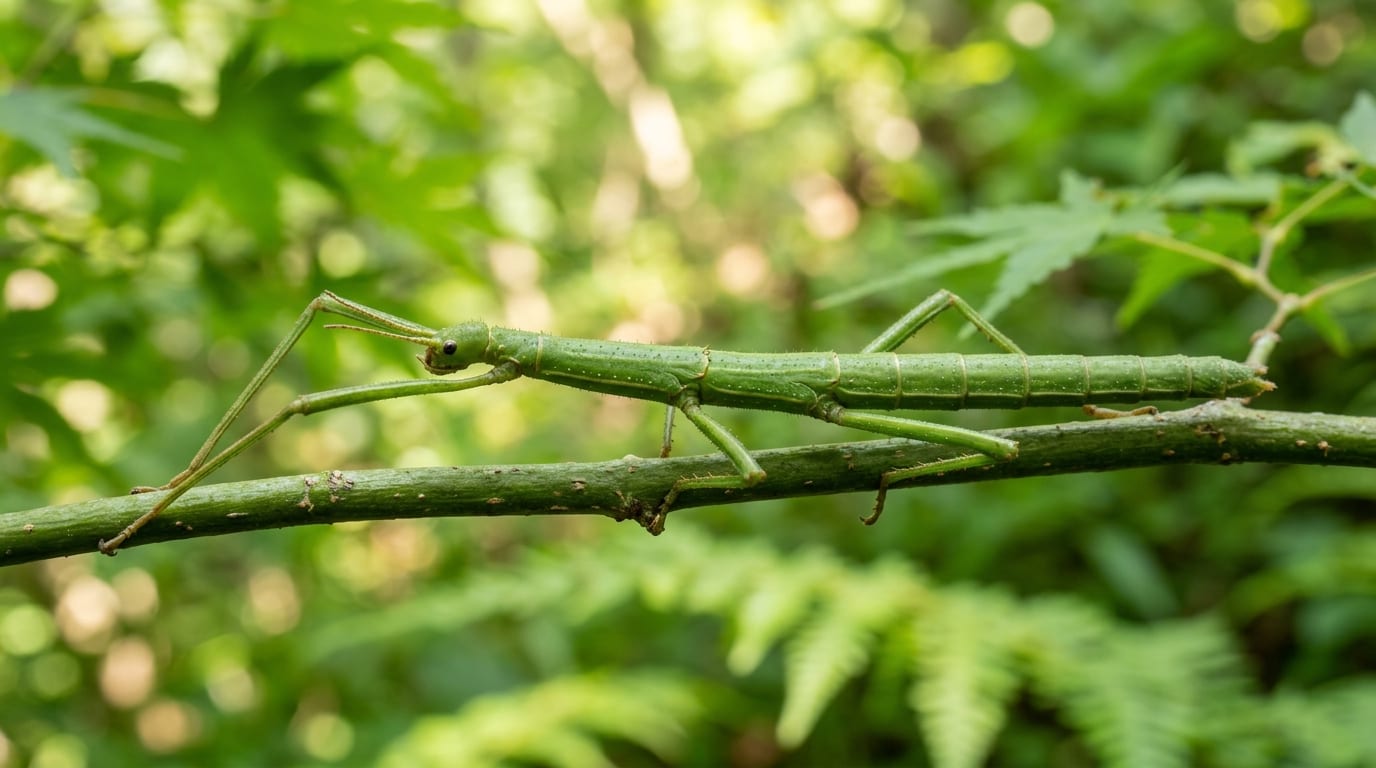
Japanese Stick Insect
The Japanese stick insect is found from Honshu to Kyushu and is the best-known stick insect species in Japan. Its long, slender body resembles a twig, letting it blend into its surroundings, and it moves slowly with a calm, unhurried manner. Its most striking trait is how it reproduces: males are extremely rare, so females typically reproduce on their own through parthenogenesis, laying eggs without mating. It can be distinguished from the similar twig stick insect by its shorter antennae. Rated beginner-friendly to keep, it suits anyone who enjoys quiet, patient observation.
View Japanese Stick Insect encyclopedia →0% commission on your first sales!Register by September 30, 2026 and your first 2 sales are commission-free!
Breeder Wanted!
List on BreederDirect and sell directly to customers nationwide!
6 Transparency Standards You Can Trust
When listing Insects, Breeders disclose the following. We guarantee transparency on growth stage and breeding unit.
- Life Stage Clarity
- Generation Info
- Real Photos
- Breeding Unit
- Country of Origin
- Body Length (mm)
Browse all 296 breeds
No listings match your filters
Adjust your filters, or get notified when new listings arrive.
Getting alerts is free with a member account. When new listings match your saved search, we'll notify you by email and in-app.
Browse other categories
Verified breeders (preview)
About Japanese Stick Insect
Japan's best-known stick insect, found from Honshu to Kyushu. Females reproduce via parthenogenesis and are told apart from a similar species by their shorter antennae. Beginner-friendly to keep.
7 things to know before welcoming a Japanese Stick Insect
1Setting Up the Enclosure
Keep them in a well-ventilated enclosure with branches and foliage to climb on. Mist regularly so it doesn't dry out too much. They don't need a lot of floor space since they move very little, but some height is important to allow room for molting.
2Food and Host Leaves
In the wild they feed on the leaves of a variety of plants. In captivity, keep a steady supply of fresh leaves and replace wilted ones promptly to keep them healthy.
3Reproducing Without Males
Males are extremely rare, so this species typically continues its generations through parthenogenesis, with females laying eggs on their own. This means keepers don't need to worry about pairing males and females.
4Telling It Apart from a Look-Alike
It closely resembles the twig stick insect, but can be told apart by its shorter antennae. It's easy to confuse the two by appearance alone, so this is a useful point to remember.
5Watching Over Molts
They go through several molts as they grow. Around each molt they may become sluggish or change color slightly, so it's best to leave them undisturbed and simply watch.
6Sensitive to Disturbance
They are calm and slow-moving, but if startled they may freeze up or shed a leg in self-defense. Observe them in a quiet setting and avoid unnecessary vibration or handling.
7Preparing Before You Bring One Home
Before bringing one home, prepare a well-ventilated enclosure and make sure you can keep a steady supply of fresh host-plant leaves. It's worth checking in advance that you can regularly gather suitable leaves nearby.
Frequently asked questions about Japanese Stick Insect
- Q.Are there no males of this species?
- A.Males are found only very rarely, and this species typically reproduces through parthenogenesis, with females laying eggs on their own. There's no need to keep a pair, as a single female can potentially reproduce.
- Q.How can I tell it apart from a twig stick insect?
- A.They look very similar, but can be distinguished by antenna length. If you're unsure when choosing one, check how short the antennae are.
- Q.Can beginners keep this species?
- A.Yes, this species is considered beginner-friendly. As long as you can supply host-plant leaves and maintain reasonable humidity, it's an easy species to start with.
- Q.How large do they grow?
- A.Adult females typically reach about 74-100mm in length. Males are extremely rare, with recorded sizes of around 57-62mm, but only a handful of specimens have ever been found.
- Q.What should I watch for during molting?
- A.They are especially vulnerable just before and after molting, so avoid shaking the enclosure or handling them. Providing several sturdy branches gives them secure footholds to molt from.
Useful tools for Japanese Stick Insect care
Learn more about Japanese Stick Insect in the encyclopedia
View Japanese Stick Insect encyclopedia entry →
Care difficulty, lifespan, size and diet — all basics covered.
More in this category
Can't find the one you're looking for?
Post your wishes for free and breeders with matching animals will contact you with introductions.