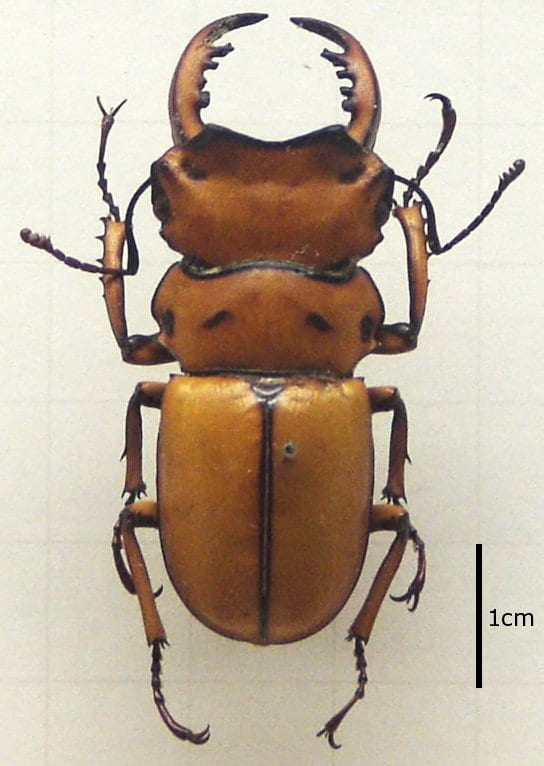
 © Sarefo / CC BY-SA 3.0
Melly's Stag Beetle
Melly's Stag Beetle is a tawny-brown beetle native to Central Africa. Males develop a large, partition-like ridge on the head — the feature behind the species' Japanese nickname, which literally means "mask-shaped." The pronotum typically carries two or four black spots, and the pattern varies a little from beetle to beetle, adding to its individual charm. This species suits intermediate keepers who already have some hands-on experience, and its lifespan tends to be short once sexual maturity is reached. Give a newly arrived beetle a calm, low-disturbance setup so it can settle in at its own pace.
View Melly's Stag Beetle encyclopedia →0% commission on your first sales!Register by September 30, 2026 and your first 2 sales are commission-free!
Breeder Wanted!
List on BreederDirect and sell directly to customers nationwide!
6 Transparency Standards You Can Trust
When listing Insects, Breeders disclose the following. We guarantee transparency on growth stage and breeding unit.
- Life Stage Clarity
- Generation Info
- Real Photos
- Breeding Unit
- Country of Origin
- Body Length (mm)
Browse all 296 breeds
No listings match your filters
Adjust your filters, or get notified when new listings arrive.
Getting alerts is free with a member account. When new listings match your saved search, we'll notify you by email and in-app.
Browse other categories
Verified breeders (preview)
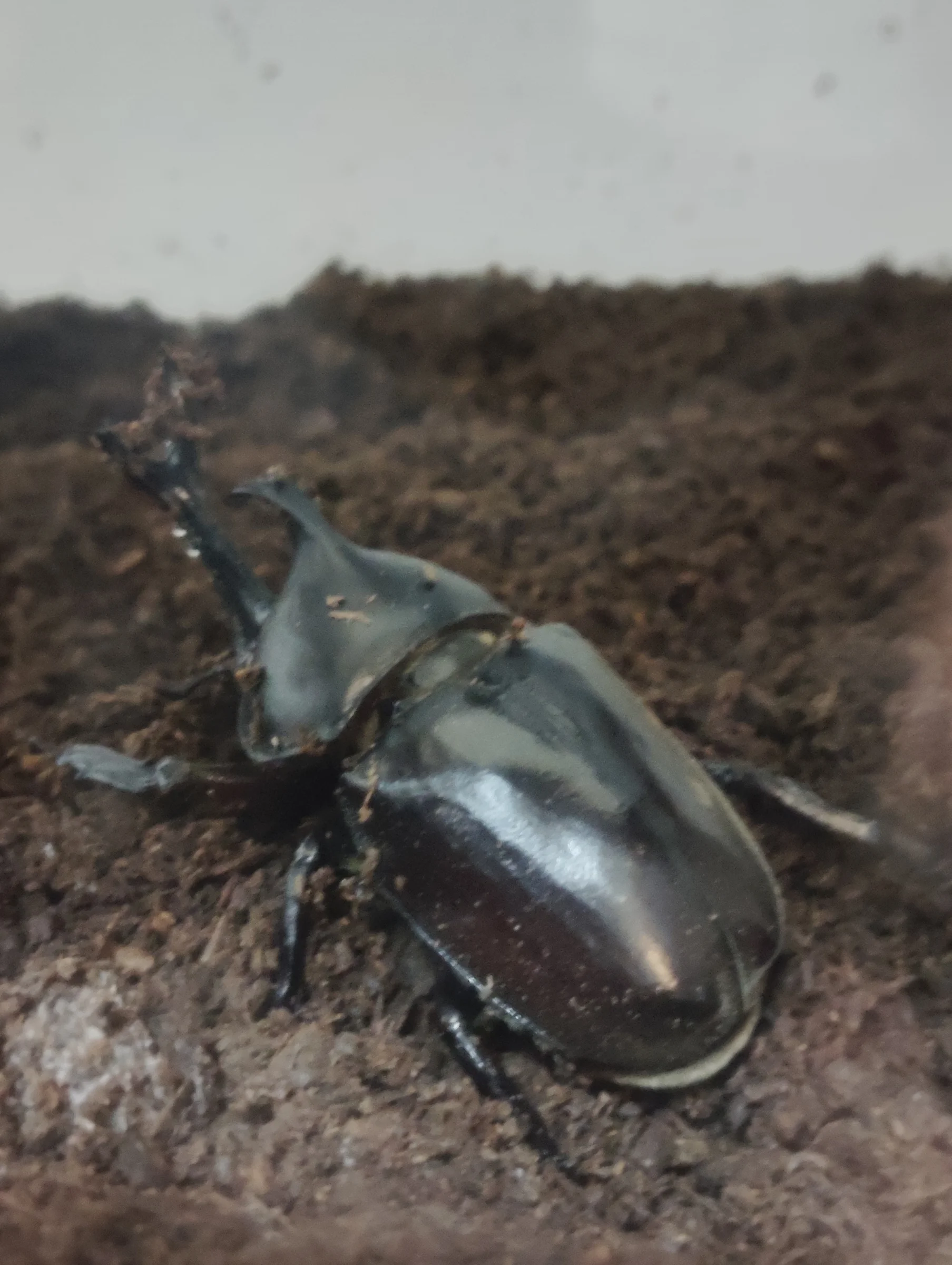
Melly's Stag Beetle key facts
- Care level
- Intermediate
- Lifespan
- Short once sexually mature
- Size
- Captive record 58.5mm, wild record 53.6mm
- Diet
- Adults take tree sap and beetle jelly; larvae are reared on fermented substrate or in mycelium bottles
- Temperature & Humidity
- Both adults and larvae are said to prefer warm, humid conditions, though the larvae can endure dry spells for quite a while. Held at a constant 20 degrees, they are said to reach a large size even on fermented substrate.
- Breeding & Egg-laying
- The female lays into the surface of soft white-rotted wood, leaving the clear scars familiar from Dorcus rectus. Getting eggs is not difficult, and dormant adults warmed from directly above with an incandescent lamp have been brought into activity and, after mating inside a day, produced over thirty eggs. The larvae can be reared in mycelium bottles or on fermented substrate. The captive record stands at 58.5 mm.
- Cohabitation
- In fights between males the head process works as a shield. The adults are kept singly and are put together only for pairing. Several observers have described the male mounting the female's back and presenting his genitalia in front of her head before moving into the usual mating position.
- Lifespan & Rearing Period
- The larvae eclose in about six months, but under Japanese conditions the adults need a dormancy of over six months to reach sexual maturity. Eggs are not hard to obtain, but the long wait for maturity against a short life after it makes the species awkward to manage.
- Health & Notes
- Its refusal to begin breeding until exposed to a certain warmth, and the laying scars that help it control humidity, are thought to reflect the wet and dry seasons of its African home. It most likely passes the cool wet season as a larva and emerges as an adult in the hot dry season to breed within a short window. Importing live Scarabaeoidea requires the species identification certificate.
About Melly's Stag Beetle
Melly's Stag Beetle, native to Central Africa, is known for the partition-like ridge on the male's head and its black-spotted pronotum. Suited to intermediate keepers, with a short lifespan after reaching maturity.
7 things to know before welcoming a Melly's Stag Beetle
1Best Suited to Intermediate Keepers
Melly's Stag Beetle is generally considered a species for intermediate keepers. Some prior experience with beetle care helps you keep conditions stable. First-time keepers may want to learn the basics of stag beetle husbandry before bringing one home.
2Short Lifespan After Maturity
This species is known to have a relatively short lifespan once it reaches sexual maturity. If the beetle you bring home is already mature, focus on providing a comfortable, low-stress setup for the time it has.
3The Head Ridge Marks the Males
Males develop a distinctive, partition-like ridge on the head, which is actually the origin of the species' Japanese nickname. Females lack this feature, making it fairly easy to tell the sexes apart at a glance.
4Spot Patterns Vary by Individual
The pronotum carries two or four black spots. Because the number and placement of these spots vary from beetle to beetle, comparing patterns between individuals is one of the small pleasures of keeping this species.
5Choose a Quiet, Stable Spot
Stag beetles are sensitive to vibration, strong light, and temperature swings. Keep the enclosure out of direct sunlight, in a quiet spot with minimal temperature fluctuation.
6Insect Jelly Is the Staple Food
Commercial insect jelly makes up the core of an adult's diet. Sugary fruit can attract fruit flies or upset the beetle's condition if overused, so it's best to rely mainly on insect jelly.
7Set Up the Enclosure Before Arrival
Before your beetle arrives, it helps to have the basics ready: an insect case, substrate, a climbing branch, and a food dish. Choose a case size appropriate for the beetle's build.
Frequently asked questions about Melly's Stag Beetle
- Q.Where does the name "Melly's Stag Beetle" come from?
- A.The Japanese nickname references the large, partition-like ridge on the male's head, which resembles a mask. This distinctive feature appears only on males.
- Q.Can beginners keep this species?
- A.Melly's Stag Beetle is generally regarded as suited to intermediate keepers. Having some basic knowledge of stag beetle care makes for a smoother experience, so first-timers may want to learn the fundamentals before getting started.
- Q.How large does this beetle grow?
- A.The captive-bred record stands at 58.5mm, while the wild record is 53.6mm. Actual size varies by individual and by rearing conditions.
- Q.Where is this species originally from?
- A.Melly's Stag Beetle is native to Central Africa. It has adapted to the environmental conditions typical of that region.
- Q.Is this species listed under CITES?
- A.Melly's Stag Beetle is not listed under CITES.
Useful tools for Melly's Stag Beetle care
Learn more about Melly's Stag Beetle in the encyclopedia
View Melly's Stag Beetle encyclopedia entry →
Care difficulty, lifespan, size and diet — all basics covered.
More in this category
Can't find the one you're looking for?
Post your wishes for free and breeders with matching animals will contact you with introductions.