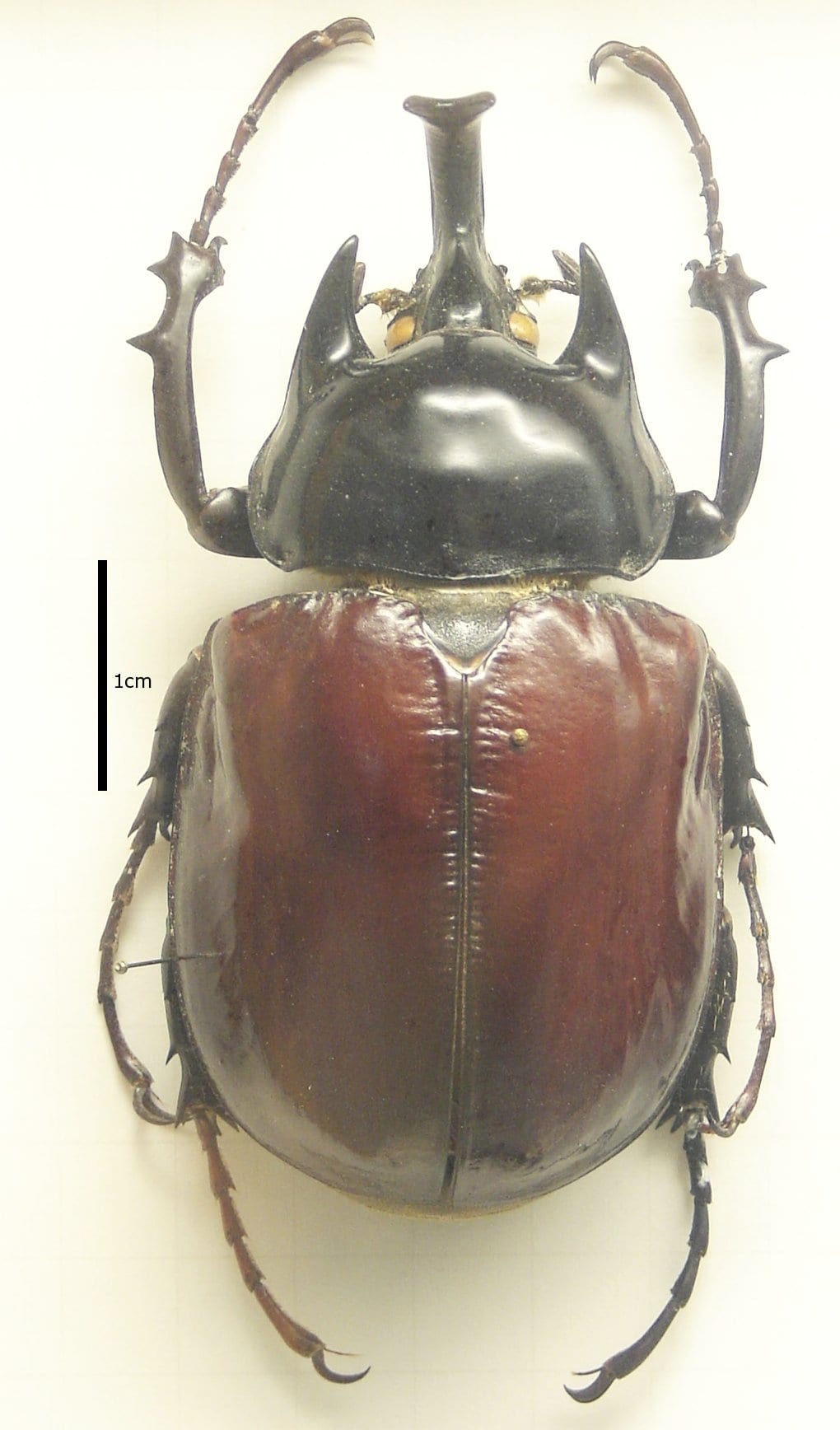
 © User:Sarefo / CC BY-SA 3.0
Janus Elephant Beetle
The Janus Elephant Beetle is a hairless elephant beetle native to South America, so similar in appearance to the Actaeon beetle that it was classified as one of its subspecies until fairly recently. Three regional subspecies are now recognized, each sharing the same glossy, hairless body and imposing horn. Compared to other giant beetles, its temperament tends to be calm, making it an engaging species to simply observe. Because it spends a long time in the larval stage before reaching adulthood, keepers get to watch its growth unfold gradually rather than all at once. Raising one well takes a bit of experience, but that makes the eventual reward of seeing it mature all the more satisfying — a great choice for hobbyists who already have some beetle-keeping under their belt.
View Janus Elephant Beetle encyclopedia →0% commission on your first sales!Register by September 30, 2026 and your first 2 sales are commission-free!
Breeder Wanted!
List on BreederDirect and sell directly to customers nationwide!
6 Transparency Standards You Can Trust
When listing Insects, Breeders disclose the following. We guarantee transparency on growth stage and breeding unit.
- Life Stage Clarity
- Generation Info
- Real Photos
- Breeding Unit
- Country of Origin
- Body Length (mm)
Browse all 296 breeds
No listings match your filters
Adjust your filters, or get notified when new listings arrive.
Getting alerts is free with a member account. When new listings match your saved search, we'll notify you by email and in-app.
Browse other categories
Verified breeders (preview)
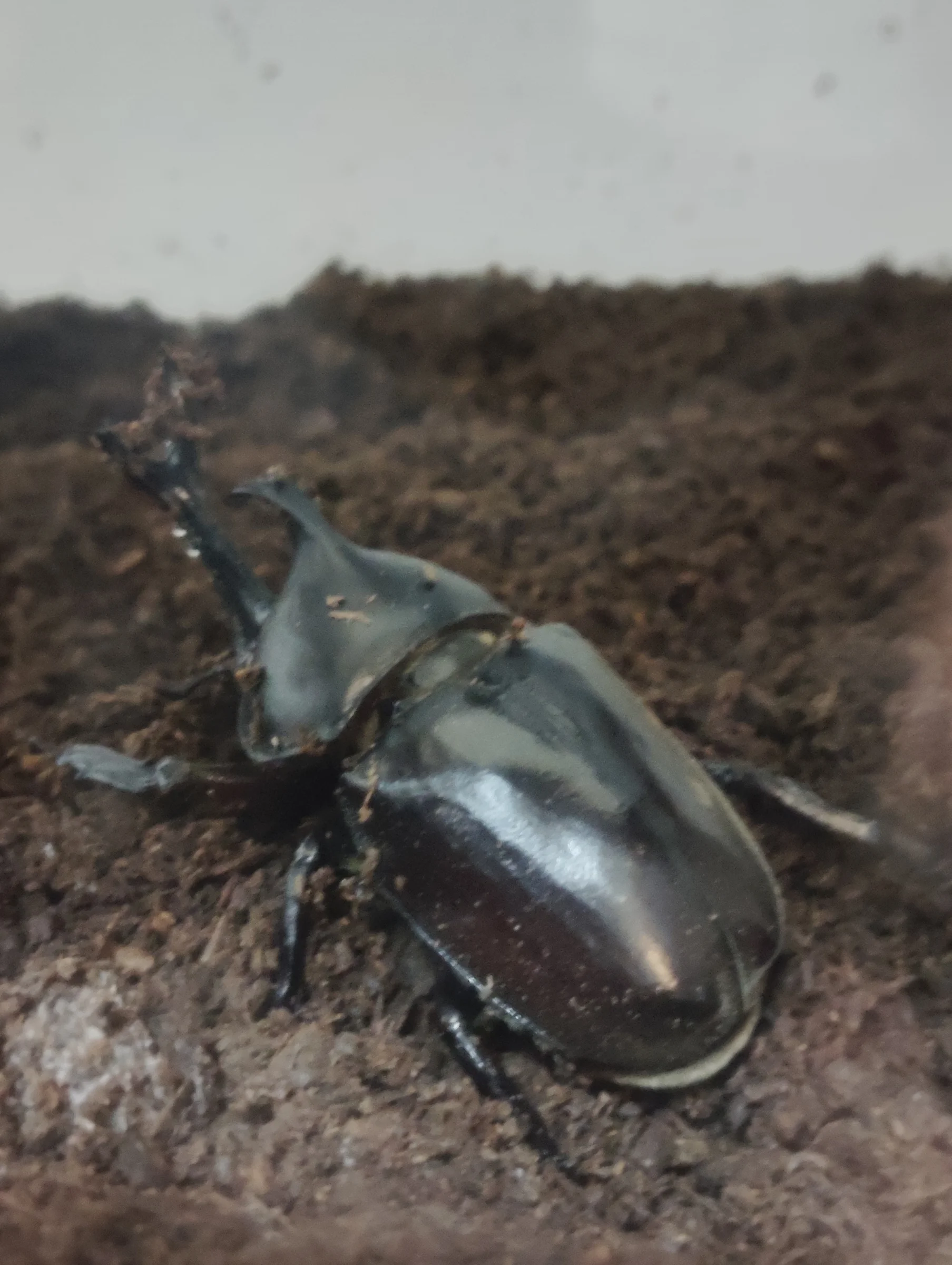
About Janus Elephant Beetle
A care guide to the Janus Elephant Beetle, a large hairless South American beetle closely related to Actaeon — covering key traits, temperament, and what to know before bringing one home.
7 things to know before welcoming a Janus Elephant Beetle
1Housing for a Large Species
As a large beetle, adult Janus Elephant Beetles need a correspondingly roomy enclosure. Use a deep substrate layer so they have plenty of room to move around.
2A Long Larval Stage
The larval stage lasts roughly 2 to 3 years, so it takes considerable time before the beetle reaches adulthood. Plan for a long-term commitment and enjoy watching its gradual growth.
3Close Ties to the Actaeon Beetle
This species closely resembles the Actaeon beetle and was treated as one of its subspecies until fairly recently. Three regional subspecies are now recognized, so it's worth checking the origin of any individual you're considering.
4Hairless Body, Special Care
Its body is smooth and glossy, without the hair found on many related species. It can be sensitive to dryness and sudden temperature swings, so keep a close eye on humidity in its enclosure.
5A Generally Calm Temperament
Compared with other giant beetles, this species tends to have a fairly calm temperament, making it enjoyable to simply observe. That said, it's quite strong, so handle it carefully to avoid injury.
6Stable Conditions for the Larvae
Because the larval period is so long, maintaining stable temperature and humidity over an extended time is essential. Sudden changes in its environment can become a source of stress.
7Prepare Supplies Before Bringing One Home
Gather the right enclosure, substrate, and feeding setup for both the larval and adult stages before you bring one home. Since this is a long-term commitment, it also helps to plan where you'll keep it.
Frequently asked questions about Janus Elephant Beetle
- Q.How is the Janus Elephant Beetle different from the Actaeon beetle?
- A.The two look extremely similar, and the Janus Elephant Beetle was treated as a subspecies of Actaeon until fairly recently. It's now recognized as its own species, with three regional subspecies identified based on locality.
- Q.Is this beetle suitable for beginners?
- A.Its care level is generally rated as intermediate. Because the larval stage is long and requires patience, it's best suited to keepers who already have some experience raising beetles.
- Q.How long does the larval stage last?
- A.The larval stage typically lasts around 2 to 3 years, which is on the longer side for the genus. Be prepared for a long, gradual growth process before it reaches adulthood.
- Q.Is this species aggressive?
- A.Compared with other giant beetles, it's generally considered to have a fairly calm temperament. That said, it is physically strong, so handle it carefully to avoid getting pinched.
- Q.Is the Janus Elephant Beetle subject to CITES?
- A.The Janus Elephant Beetle is not subject to CITES. Keep this in mind when considering bringing one home.
Useful tools for Janus Elephant Beetle care
Learn more about Janus Elephant Beetle in the encyclopedia
View Janus Elephant Beetle encyclopedia entry →
Care difficulty, lifespan, size and diet — all basics covered.
More in this category
Can't find the one you're looking for?
Post your wishes for free and breeders with matching animals will contact you with introductions.