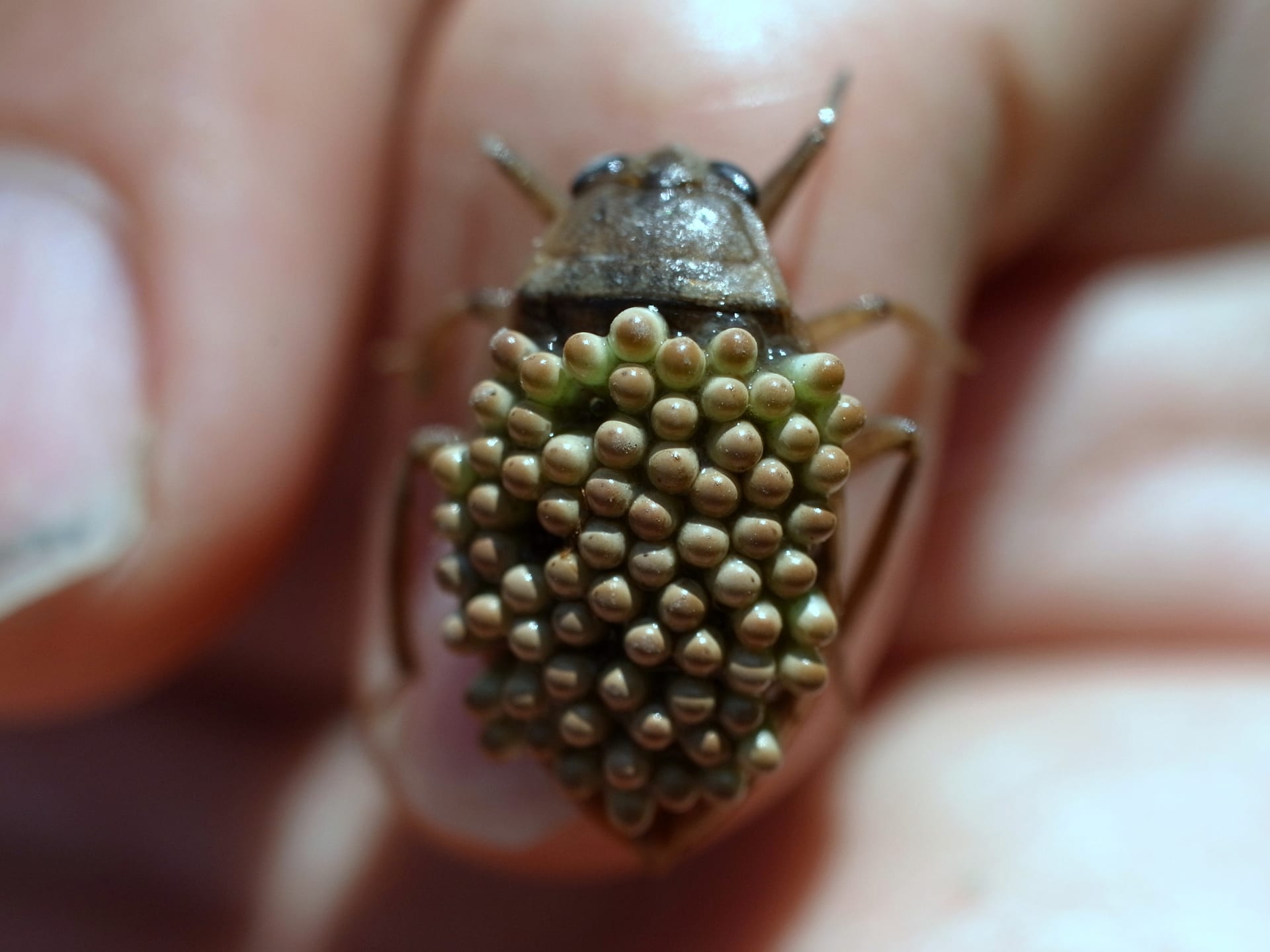
 © wasabinouta / CC BY 2.0
Japanese Water Bug
The Japanese water bug, kooimushi, is famous for one striking behavior: females lay their eggs directly onto a male's back, and he carries and guards the egg mass until it hatches, the origin of its Japanese name meaning child-carrying bug. Watching a male diligently protect his brood is genuinely endearing and gives this species a personality that's easy to grow attached to. Kooimushi tend to get along well with their own kind, and cannibalism is said to be uncommon even when several individuals share the same tank, making group-keeping more approachable than you might expect. At 17-20mm as adults, they're a manageable size that's easy to observe up close. This species is generally considered suited to intermediate keepers, but it's a rewarding choice for anyone curious about aquatic insect behavior.
View Japanese Water Bug encyclopedia →0% commission on your first sales!Register by September 30, 2026 and your first 2 sales are commission-free!
Breeder Wanted!
List on BreederDirect and sell directly to customers nationwide!
6 Transparency Standards You Can Trust
When listing Insects, Breeders disclose the following. We guarantee transparency on growth stage and breeding unit.
- Life Stage Clarity
- Generation Info
- Real Photos
- Breeding Unit
- Country of Origin
- Body Length (mm)
Browse all 296 breeds
No listings match your filters
Adjust your filters, or get notified when new listings arrive.
Getting alerts is free with a member account. When new listings match your saved search, we'll notify you by email and in-app.
Browse other categories
Verified breeders (preview)
Japanese Water Bug key facts
- Care level
- Intermediate
- Lifespan
- About two years
- Size
- 17-20mm
- Diet
- Small fish, pond snails, aquatic insects and terrestrial insects
- Temperature & Humidity
- Keep the water a few centimetres deep with plants or twigs to climb, and provide a dry area, since the bug likes to dry itself off. From about October it overwinters on land and in the water.
- Breeding & Egg-laying
- The laying season runs from April to August. The male courts by pumping to make ripples on the surface, and the female lays a mass of 30-40 eggs on his back. A male carrying eggs cannot fly and tends them constantly, yet he goes on feeding as usual and will sometimes attack and eat the eggs another male is carrying.
- Cohabitation
- Adults get on well with one another and can live at densities of several dozen per square metre, so they may be kept in groups. The larvae, however, do eat one another, so switch to individual containers once they hatch.
- Lifespan & Rearing Period
- Activity begins in late March and the new adults eclose from late July into August. The bug lives about two years and overwinters as an adult.
- Health & Notes
- It will seize even carrion or motionless food if it is dropped on the surface and moved, and will drive its rostrum into a piece of fish. It takes poor water quality fairly well. It flies, so keep the container covered. Once common in paddies and ponds, it declined sharply with heavy pesticide use and the loss of paddy land, so keep collecting to a minimum.
About Japanese Water Bug
Kooimushi, the Japanese water bug, is known for males carrying and guarding eggs on their backs. Adults reach 17-20mm and live about two years, with an intermediate care level and good tolerance for group keeping.
7 things to know before welcoming a Japanese Water Bug
1Eggs Carried by Males
In kooimushi, females lay their eggs on the male's back, and he carries the egg mass until hatching, a distinctive breeding behavior you can observe firsthand in the tank. It's one of the most memorable things about keeping this species.
2Group-Friendly Nature
Kooimushi get along well with their own kind, and cannibalism is said to be uncommon even at higher densities. That said, individual behavior varies, so providing plenty of hiding spots is a good precaution.
3Water Quality Matters
As an aquatic insect, kooimushi is sensitive to sudden changes in water quality. Use dechlorinated water and change it regularly to keep the environment clean and healthy.
4Suited to Intermediate Keepers
Some familiarity with temperature and water quality management is helpful, so this species may not be the best first insect for complete beginners. It's worth researching care basics before bringing one home.
5About a Two-Year Lifespan
Kooimushi typically live around two years, so it's worth setting up a tank and routine you can maintain over the long term. Consistent water changes and layout upkeep matter more than any single decision at the start.
6Carnivorous, Needs Live Food
Kooimushi is a predatory aquatic insect that feeds on small crustaceans and insects. Make sure you have a reliable source of live food lined up before bringing one home.
7Watch for Escapes or Flight
Like many aquatic insects, kooimushi can climb out through gaps or take flight, so a securely lidded enclosure is important. Consider how the tank is set up near the water's surface as well.
Frequently asked questions about Japanese Water Bug
- Q.Is it true that males guard the eggs?
- A.Yes, that's accurate. Females lay their eggs on the male's back, and he carries and guards the egg mass until it hatches. This behavior is even the origin of the species' Japanese name, which translates to child-carrying bug.
- Q.Can kooimushi be kept together in groups?
- A.Kooimushi tend to cooperate well with their own kind, and cannibalism is said to be uncommon even at higher densities. Individual behavior can still vary, though, so it's wise to provide plenty of hiding spots.
- Q.Is this species suitable for beginners?
- A.This species is generally considered suited to intermediate keepers. It helps to be comfortable with water quality and temperature management before taking one on.
- Q.How big do they get and how long do they live?
- A.Adults typically reach 17-20mm and live for about two years. It's worth planning a setup you can maintain consistently over that time.
- Q.What should I feed my kooimushi?
- A.Kooimushi is a carnivorous aquatic insect that preys on small crustaceans and insects. Make sure you can reliably source live food before bringing one home.
Useful tools for Japanese Water Bug care
Learn more about Japanese Water Bug in the encyclopedia
View Japanese Water Bug encyclopedia entry →
Care difficulty, lifespan, size and diet — all basics covered.
More in this category
Can't find the one you're looking for?
Post your wishes for free and breeders with matching animals will contact you with introductions.