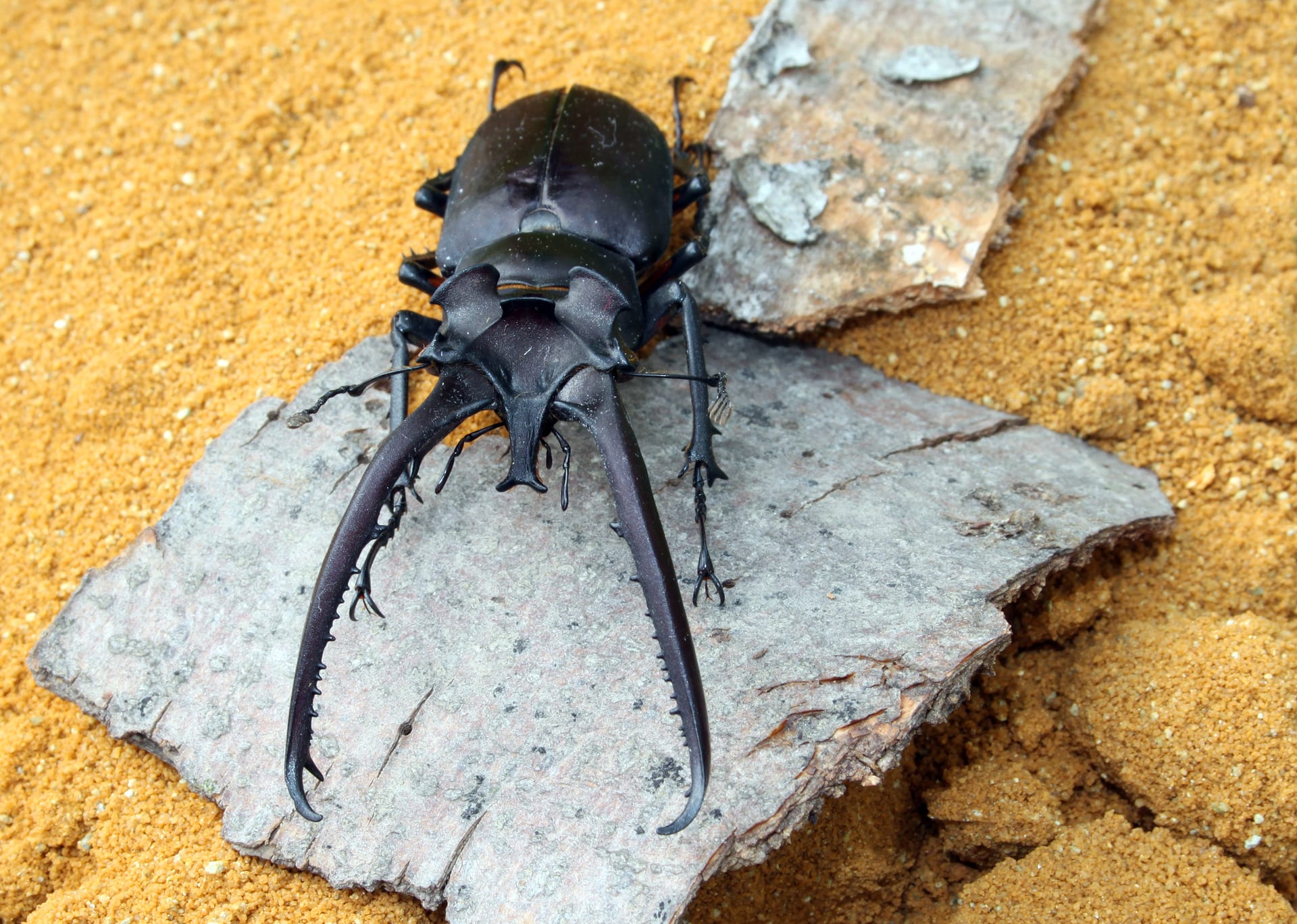
 © Holger Krisp / CC BY 3.0
Herman's Stag Beetle
Herman's Stag Beetle is a large species native to China, belonging to the Lucanus genus of stag beetles. It closely resembles the Planet Stag Beetle, but can be distinguished by an inner tooth at the base of its mandibles. Captive-bred specimens have reached 92.1mm, placing it among the largest members of its genus. Because this species calls for confident, experienced husbandry, it's best suited to keepers who already have some stag beetle experience under their belt. For those ready for the challenge, raising a specimen toward its full imposing size can be a deeply rewarding project.
View Herman's Stag Beetle encyclopedia →0% commission on your first sales!Register by September 30, 2026 and your first 2 sales are commission-free!
Breeder Wanted!
List on BreederDirect and sell directly to customers nationwide!
6 Transparency Standards You Can Trust
When listing Insects, Breeders disclose the following. We guarantee transparency on growth stage and breeding unit.
- Life Stage Clarity
- Generation Info
- Real Photos
- Breeding Unit
- Country of Origin
- Body Length (mm)
Browse all 296 breeds
No listings match your filters
Adjust your filters, or get notified when new listings arrive.
Getting alerts is free with a member account. When new listings match your saved search, we'll notify you by email and in-app.
Browse other categories
Verified breeders (preview)
Herman's Stag Beetle key facts
- Care level
- Advanced
- Lifespan
- Adults 2-4 months
- Size
- Captive record 92.1mm, wild record 92.0mm
- Diet
- Adults take beetle jelly; larvae eat fermented substrate
- Temperature & Humidity
- No published figures for rearing temperature or humidity could be found for this species, so none are given. For the Japanese L. maculifemoratus the Japanese Wikipedia notes that egg-laying is not difficult below 25C and that cool rearing is needed to bring out large beetles, which indicates the tendency of the genus. Keep the substrate at a moisture that forms a ball when squeezed.
- Breeding & Egg-laying
- The BE-KUWA 2025 edition gives a captive record of 92.1mm for foreign stag beetles (Hitoshi Morishita, registered 2010; wild record 92.0mm, expected maximum 97mm). Lucanus species have long larval periods and many rest after eclosion, so years can pass between egg-laying and an active adult.
- Cohabitation
- Adults are kept singly and put together only for pairing. Males fight with their mandibles and must always be separated. It looks much like L. planeti, so take care not to mix the two species.
- Lifespan & Rearing Period
- No confirmed published figures for adult lifespan or larval period were found for this species, so none are given. Adults of the genus Lucanus are generally short-lived while the larval stage is long.
- Health & Notes
- The presence of an inner tooth at the base of the mandible is what separates it from L. planeti. Beetles pass 90mm, so allow generous container sizes for both egg-laying and larval rearing. Importing foreign stag beetles falls under the Plant Protection Act, and whether a given species may enter depends on the country it comes from, so domestically bred stock is the safe choice.
About Herman's Stag Beetle
A large stag beetle native to China, distinguished from the similar Planet Stag Beetle by an inner tooth at the mandible base; captive records reach 92.1mm, making it a species for experienced keepers.
7 things to know before welcoming a Herman's Stag Beetle
1Suited to Experienced Keepers
This species calls for a certain level of husbandry experience, making it a bit demanding for first-time beetle keepers. It's best approached once you're comfortable managing a beetle's environment.
2Telling It Apart from Relatives
It can be distinguished from the similar Planet Stag Beetle by an inner tooth at the base of the mandibles. Look closely at this feature, especially as the beetle matures.
3An Impressively Large Beetle
Captive-bred specimens have reached 92.1mm, with wild records of 92.0mm, placing it among the larger members of its genus. Males with well-developed mandibles have a particularly striking presence.
4Temperature and Humidity Care
Both larvae and adults do best when protected from sudden temperature swings, with humidity inside the enclosure kept at an appropriate level. Keeping the environment stable is the foundation of good care.
5Prepare the Setup in Advance
Before bringing one home, gather the basics: an enclosure, insect substrate, and a climbing branch or perch. Since this is a large species, choose a roomy enclosure for peace of mind.
6Feeding Basics
Offer adults insect jelly regularly, and check for leftover or spoiled jelly. In warmer months especially, jelly can spoil quickly, so replace it often.
7Handling with Care
With its large mandibles, this species requires careful handling to avoid getting pinched. Take time to get comfortable handling it rather than grabbing it bare-handed right away.
Frequently asked questions about Herman's Stag Beetle
- Q.Can beginners keep this species?
- A.This species is generally considered suited to experienced keepers, so it's best approached after you've kept other stag beetles first. It suits keepers already comfortable with temperature and humidity management.
- Q.How does it differ from the Planet Stag Beetle?
- A.The two can be told apart by an inner tooth at the base of the mandibles. Herman's Stag Beetle is distinguished by the presence of this tooth.
- Q.How large does it grow?
- A.Captive-bred records reach 92.1mm, with wild specimens recorded at 92.0mm, placing it among the larger members of its genus. Individual size varies, and not every specimen reaches this maximum.
- Q.Is it subject to CITES?
- A.No, Herman's Stag Beetle is not subject to CITES.
- Q.Where is it originally found?
- A.It is native to China. Since it closely resembles a related species, it's a good idea to check its distinguishing features carefully at the time of purchase.
Useful tools for Herman's Stag Beetle care
Learn more about Herman's Stag Beetle in the encyclopedia
View Herman's Stag Beetle encyclopedia entry →
Care difficulty, lifespan, size and diet — all basics covered.
More in this category
Can't find the one you're looking for?
Post your wishes for free and breeders with matching animals will contact you with introductions.