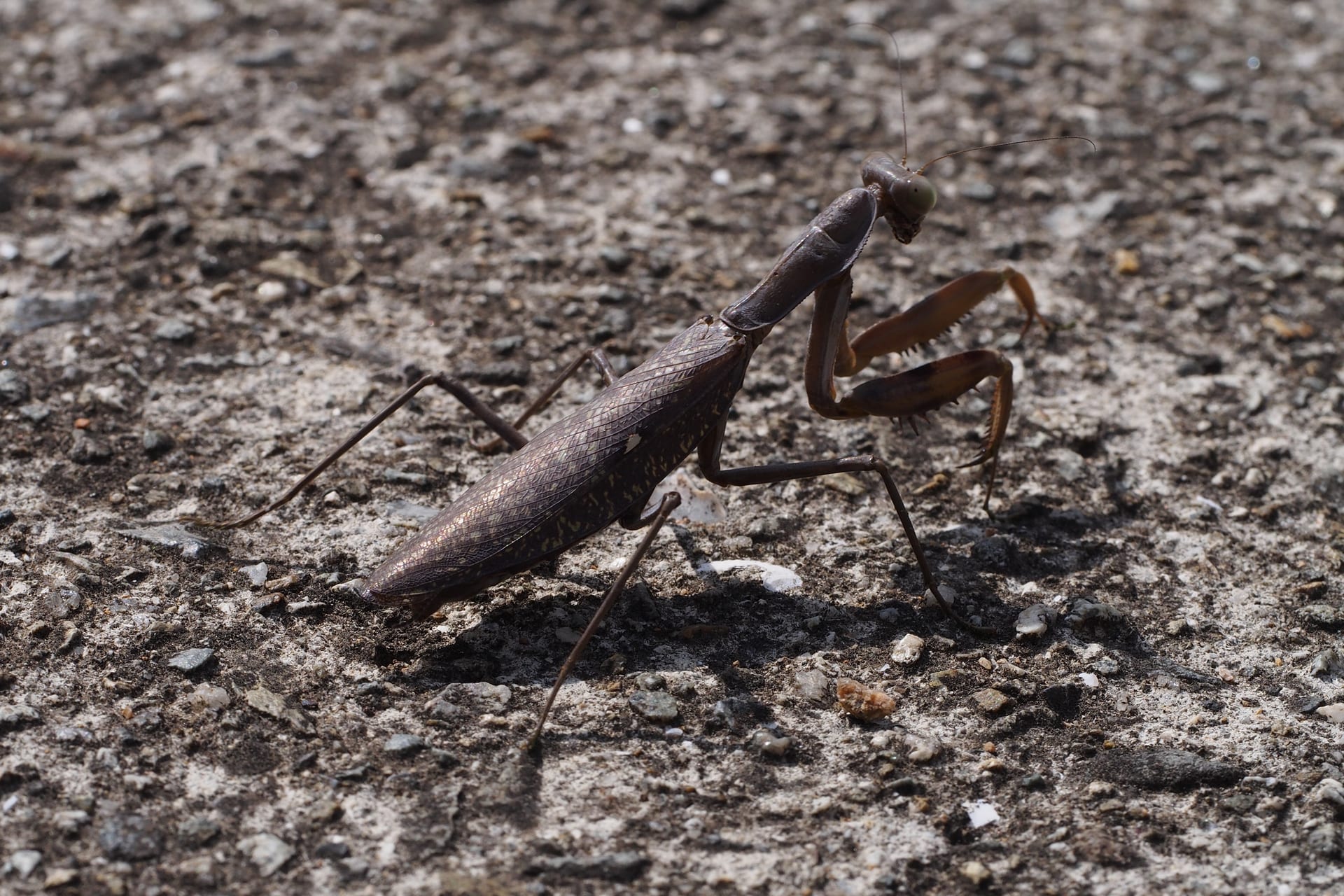
 © harum.koh from Kobe city, Japan / CC BY-SA 2.0
Giant Asian Mantis (Japan)
The giant Asian mantis is a mid-to-large mantis species known for its broad, stocky abdomen, the pale yellow-white tubercles lining its front legs, and the white markings on its forewings. Most individuals are green, though brown-colored individuals also appear, adding some visual variety. Highly arboreal by nature, it spends much of its time perched on branches and leaves, patiently waiting to ambush prey — a sight that never fails to impress. Its feisty temperament often shows in dramatic threat displays, and that untamed character is part of what makes keeping mantises so rewarding. Because the nymphs are extremely tiny right after hatching, feeding them takes some care, making this species a bit more demanding to raise — but that effort pays off in a real sense of accomplishment once it reaches adulthood.
View Giant Asian Mantis (Japan) encyclopedia →0% commission on your first sales!Register by September 30, 2026 and your first 2 sales are commission-free!
Breeder Wanted!
List on BreederDirect and sell directly to customers nationwide!
6 Transparency Standards You Can Trust
When listing Insects, Breeders disclose the following. We guarantee transparency on growth stage and breeding unit.
- Life Stage Clarity
- Generation Info
- Real Photos
- Breeding Unit
- Country of Origin
- Body Length (mm)
Browse all 296 breeds
No listings match your filters
Adjust your filters, or get notified when new listings arrive.
Getting alerts is free with a member account. When new listings match your saved search, we'll notify you by email and in-app.
Browse other categories
Verified breeders (preview)
About Giant Asian Mantis (Japan)
The giant Asian mantis is a stocky, mid-to-large mantis with a broad abdomen, white forewing markings, and pale tubercles on its front legs. Arboreal and feisty, it suits intermediate keepers.
7 things to know before welcoming a Giant Asian Mantis (Japan)
1Built for Life in the Trees
The giant Asian mantis is highly arboreal, spending most of its time up in branches and foliage. Give it climbing perches and leafy branches taller than its body, since it also needs vertical space to molt safely.
2Green or Brown Coloring
Most individuals are green, but brown-colored specimens turn up as well. Either color form carries the species' distinctive markings, so no two mantises look quite the same.
3Bold and Quick to Bluff
This mantis has a feisty temperament and will often raise its front legs in a threat display when disturbed. Handle it calmly and gently, since careless handling can result in a pinch from those raptorial forelegs.
4Tiny Nymphs Need Care
Newly hatched nymphs are extremely small, so choosing appropriately sized feeder insects takes some thought. Getting this early stage right is the main challenge behind the species' intermediate difficulty rating.
5How to Tell It Apart
Look for the white markings on the forewings and the small pale yellow-white tubercles along the front legs — both are reliable identifiers. Its broad, stocky abdomen also sets it apart from slimmer mantis species.
6When Adults Appear
This species completes one generation per year. On mainland Japan, adults are typically seen from late August through early December, while in the Nansei Islands adults can be found year-round.
7Setting Up Before Arrival
Prepare an arboreal setup with climbing branches and misting for humidity before your mantis arrives. Keep individuals housed separately, since mantises are solitary and prone to cannibalizing cage-mates.
Frequently asked questions about Giant Asian Mantis (Japan)
- Q.Can beginners keep this mantis?
- A.This species is generally considered suited to intermediate keepers rather than complete beginners. The newly hatched nymphs are very small and need careful feeding, so some prior mantis-keeping experience helps.
- Q.How long does it live?
- A.The giant Asian mantis completes one generation per year. Adults are seen from late August to early December on mainland Japan, while in the Nansei Islands adults can appear throughout the year.
- Q.How big do adults get?
- A.Males typically reach about 45–65mm, while females grow larger, around 52–71mm. Females also tend to have a stockier build than males.
- Q.Is it aggressive, and how should I handle it?
- A.It has a bold temperament and readily shows threat displays when disturbed. Move slowly and calmly around it, since its raptorial front legs can pinch if you startle it.
- Q.What should I feed it?
- A.Nymphs need feeder insects sized to match their small bodies, while adults can take larger prey suited to their size. Since this species is strongly arboreal, placing feeders on branches or leaves helps encourage its natural ambush-hunting behavior.
Useful tools for Giant Asian Mantis (Japan) care
Learn more about Giant Asian Mantis (Japan) in the encyclopedia
View Giant Asian Mantis (Japan) encyclopedia entry →
Care difficulty, lifespan, size and diet — all basics covered.
Giant Asian Mantis (Japan) related articles
See more Giant Asian Mantis (Japan) articles →More in this category
Can't find the one you're looking for?
Post your wishes for free and breeders with matching animals will contact you with introductions.