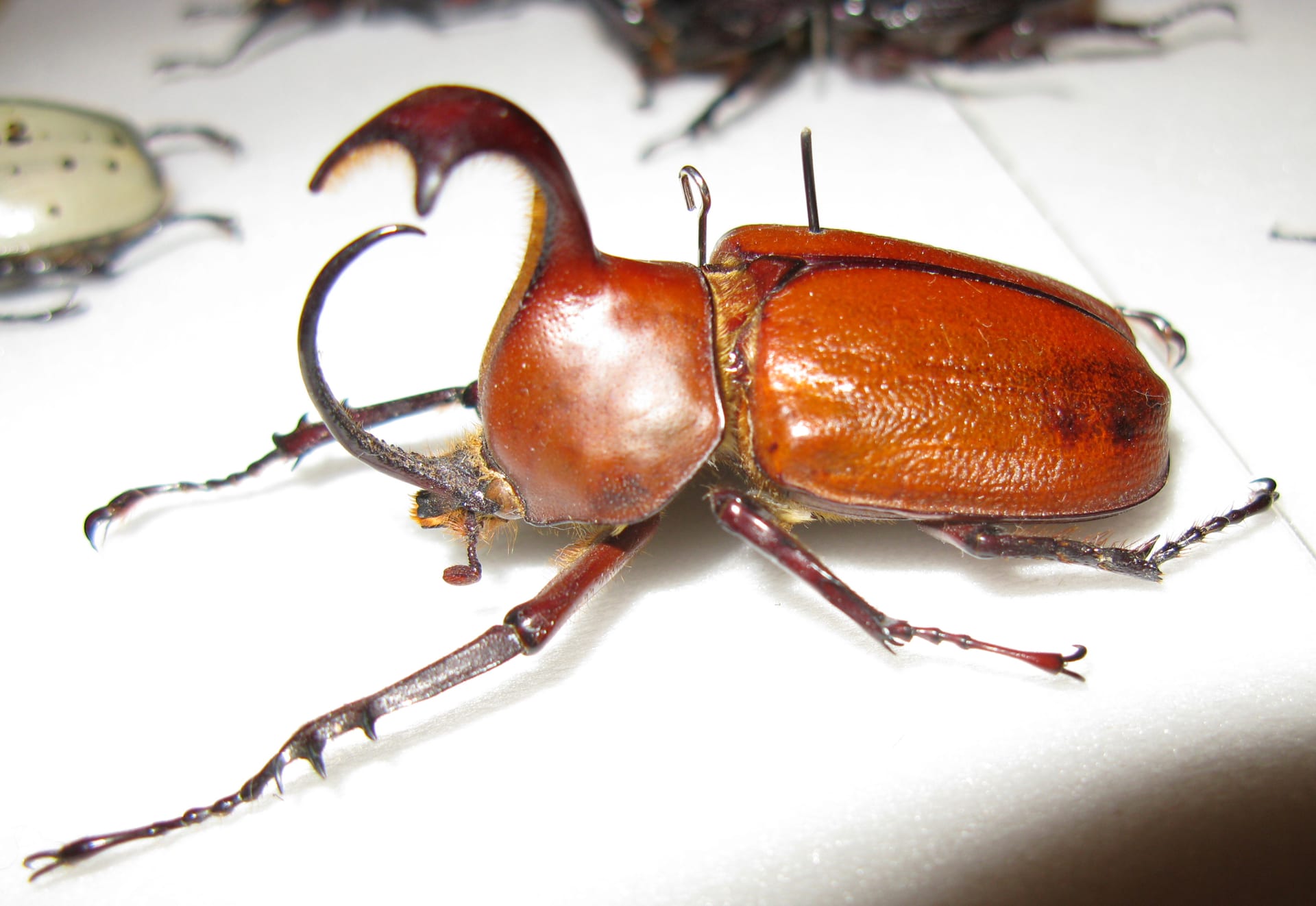
 © Anaxibia / CC BY-SA 3.0
Pizarro Golofa Beetle
The Pizarro Golofa beetle is a rhinoceros beetle native to Mexico and Central America, belonging to the genus Golofa — often called the "vertical-horn beetles" for their strikingly long, upright horns. Males sport a yellowish-brown body topped with a dramatically elongated thoracic horn, giving them a silhouette unlike almost any other beetle. As the northernmost-ranging species in the genus, it also carries a tangled taxonomic history, having been described under several different names over time. That scientific intrigue only adds to its appeal among serious beetle keepers. Successfully keeping this species calls for intermediate-level experience.
View Pizarro Golofa Beetle encyclopedia →0% commission on your first sales!Register by September 30, 2026 and your first 2 sales are commission-free!
Breeder Wanted!
List on BreederDirect and sell directly to customers nationwide!
6 Transparency Standards You Can Trust
When listing Insects, Breeders disclose the following. We guarantee transparency on growth stage and breeding unit.
- Life Stage Clarity
- Generation Info
- Real Photos
- Breeding Unit
- Country of Origin
- Body Length (mm)
Browse all 296 breeds
No listings match your filters
Adjust your filters, or get notified when new listings arrive.
Getting alerts is free with a member account. When new listings match your saved search, we'll notify you by email and in-app.
Browse other categories
Verified breeders (preview)
Pizarro Golofa Beetle key facts
- Care level
- Intermediate
- Lifespan
- Adults 3-5 months
- Diet
- Beetle jelly; tree sap
- Temperature & Humidity
- The congener Golofa claviger is kept at about 23-25C, and since most of the genus is montane, avoid the warm regime used for lowland species.
- Breeding & Egg-laying
- Egg-laying uses the same substrate set as for other rhinoceros beetles. For the congener Golofa claviger, mixing black soil into the substrate is said to raise the number of eggs; larvae are grown on rhinoceros-beetle substrate in a final bottle of 1400-1500 ml, and the larval period runs 10-12 months, sometimes two years. No measured figures have been published for this species.
- Cohabitation
- Males shove each other with their thoracic horns, so keep them singly and pair them only for the short time needed to see mating. Adults of the congener Golofa claviger are short-lived, and keepers are advised to pair beetles as soon as they start feeding.
- Lifespan & Rearing Period
- Neither adult lifespan nor larval period has been published for this species. The congener Golofa claviger is given as two to six months as an adult with a larval period of 10-12 months, which means allowing about eighteen months for a generation.
- Health & Notes
- A cramped pupal cell leaves the horns bent on emergence, so give the final instar a roomy container. Importing live beetles requires the species identification certificate demanded for live Scarabaeoidea.
About Pizarro Golofa Beetle
A Golofa rhinoceros beetle from Mexico and Central America. Males have a long thoracic horn and yellowish-brown body; an intermediate-level species with a complex taxonomic history.
7 things to know before welcoming a Pizarro Golofa Beetle
1Basic Housing Setup
House them in an insect substrate with good ventilation, keeping the material lightly moist rather than dry or waterlogged. Check the substrate regularly, since both extremes can stress the beetle.
2Handling the Long Horn
The male's signature feature is a long, slender thoracic horn on a yellowish-brown body. Because the horn is delicate, be careful not to knock it against tank decorations or during handling.
3Keep Males Apart
Males may use their horns to spar with one another, so housing multiple males together is best avoided. If you keep several beetles, give each male its own enclosure.
4A Patient Larval Stage
Beetles pass through a larval stage before becoming adults. Replace the substrate as it breaks down, and give the process time rather than rushing it.
5Feeding Adults
Adults feed mainly on commercial insect jelly. Because jelly dries out and spoils, replace it regularly to keep it fresh.
6A Taxonomically Complex Species
This species has many taxonomic synonyms and a complicated classification history within the genus Golofa. Knowing this can help when researching care information listed under different past names.
7Some Experience Helps
This species is rated as suitable for intermediate keepers. Having some prior experience with rhinoceros or stag beetle care makes it easier to notice changes in its condition.
Frequently asked questions about Pizarro Golofa Beetle
- Q.Can beginners keep this species?
- A.This beetle is rated as suitable for intermediate keepers, so some prior beetle-keeping experience is reassuring. It helps to be comfortable with basic temperature and humidity management, and jelly feeding, before bringing one home.
- Q.Do males and females look different?
- A.Males are distinguished by a long thoracic horn on a yellowish-brown body. Females typically lack this horn, making the sexes fairly easy to tell apart.
- Q.Can multiple beetles be kept together?
- A.Males may fight using their horns, so keeping multiple males in the same enclosure isn't recommended. If you're keeping several beetles, house them separately.
- Q.Why does this species seem to have several different names?
- A.It has many taxonomic synonyms and a complicated classification history within its genus. That's why care resources and references may refer to it under different names.
- Q.Is this species listed under CITES?
- A.The Pizarro Golofa beetle is not listed under CITES.
Useful tools for Pizarro Golofa Beetle care
Learn more about Pizarro Golofa Beetle in the encyclopedia
View Pizarro Golofa Beetle encyclopedia entry →
Care difficulty, lifespan, size and diet — all basics covered.
More in this category
Can't find the one you're looking for?
Post your wishes for free and breeders with matching animals will contact you with introductions.